





It is often said that democracy is messy. But the mess, it turns out, has rules. Mid-decade redistricting, particularly in Texas, is one of those rules that, though inconvenient to some, rests squarely within the bounds of constitutional authority and moral legitimacy. The cries of corruption now emanating from national Democrats, editorial boards, and progressive think tanks are neither new nor persuasive. They are, in fact, evidence that the Texas Legislature is doing precisely what the Framers intended: exercising its plenary constitutional authority to regulate congressional elections in a manner consistent with both law and democratic accountability.
The Constitution is not ambiguous on this point. Article I, Section 4, the Elections Clause, gives state legislatures the power to determine the “Times, Places and Manner of holding Elections for Senators and Representatives,” unless Congress chooses to act otherwise. The Supreme Court has made clear in Rucho v. Common Cause (2019) that partisan gerrymandering is not just legal, but fundamentally a political question outside the reach of federal courts. In Chief Justice John Roberts’s words, partisan gerrymandering “is not unconstitutional,” and the Court “does not possess the authority to reallocate political power between the two major political parties.”
But even before Rucho, the precedent was settled. In Vieth v. Jubelirer (2004), Justice Scalia wrote that no judicially manageable standard exists for determining when political influence in redistricting goes “too far.” The Court has refused repeatedly to intervene in cases where district maps were challenged solely on the grounds of political bias. The lesson? The act of drawing maps with political consequences is, itself, a political act entrusted to political actors.
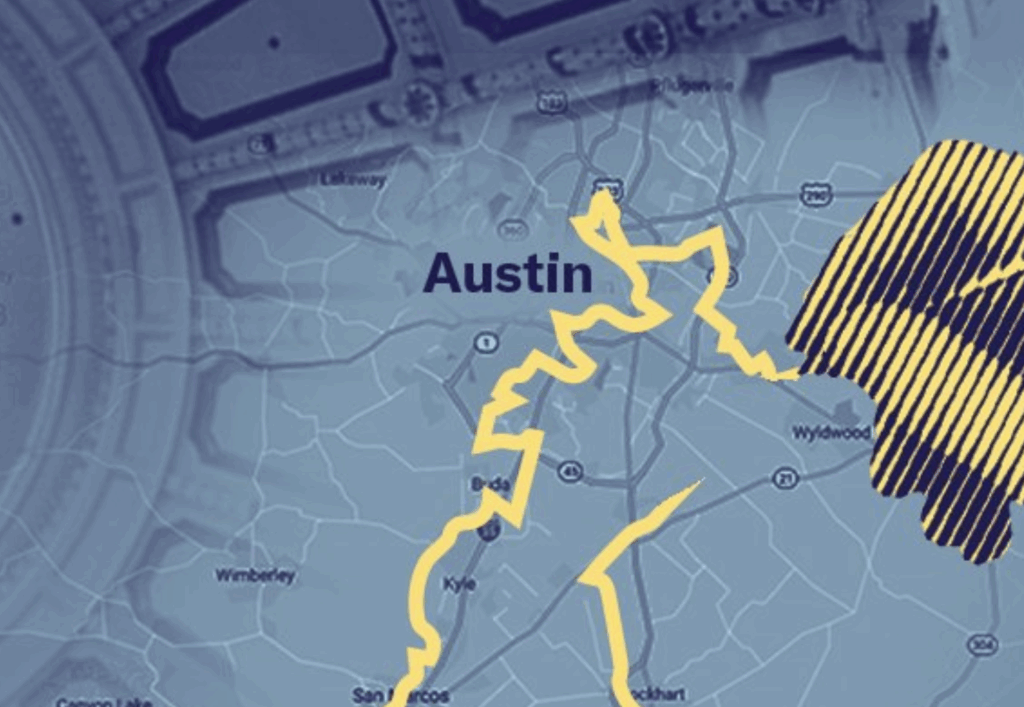
Some critics concede the legality but claim the practice undermines democracy. This argument is especially odd when applied to Texas, where current district lines leave at least five Republican-majority districts in Democratic hands. If elections are to be representative, then surely maps should reflect political reality. What moral principle obliges Republicans to leave control of these seats in the hands of Democrats, particularly when those seats are the result of outmoded or ill-conceived districting? When a legislature is elected to govern, that includes the power to draw maps that comport with the electoral will of its constituents.
Historical precedent supports this logic. In League of United Latin American Citizens v. Perry (2006), the Supreme Court upheld Texas’s 2003 mid-decade redistricting, which replaced court-drawn maps with new ones crafted by the legislature. The decision clarified that there is no federal prohibition against redrawing congressional maps mid-decade. In fact, the Court affirmed that such redistricting can occur whenever a legislature deems it necessary, provided basic requirements such as equal population and racial fairness are maintained.
Some insist that this power must be wielded only once every ten years, post-census. But the law does not support such a restriction. That belief rests on an imaginary rule, not a legal one. The decennial census is a trigger for reapportionment, not a leash. Indeed, were it otherwise, the Court would have said so. It has not.
The deeper objection, however, is political, not legal. Progressive critics fear that Texas Republicans will reclaim seats they believe ought to remain Democratic, regardless of how voters behave. But this cuts both ways. The same Democrats now decrying Texas’s efforts are, quite openly, plotting their own mid-decade redistricting campaigns in states like California, Colorado, and New Jersey. The difference? Texas is legally free to redraw maps now. Most Democratic states are not.
California, for instance, is bound by a state constitution and voter-approved propositions that prohibit mid-decade redistricting. To change this, Governor Gavin Newsom would need to amend the constitution or secure a ballot initiative, a tall order in an already polarized state. Colorado is similarly restricted. Its independent redistricting commission is tied to the decennial census and cannot be reconvened without a constitutional amendment. Washington State’s bipartisan commission would require a two-thirds vote to reactivate. Hawaii’s districts are already controlled by Democrats, and the minimal political upside precludes any real pressure for change. Even in New Jersey, where the rules are more flexible, there is little room for gains: the current map already skews entirely Democratic.
In sum, while Texas Republicans have both the legal authority and the political opportunity to redraw maps, most Democrat-led states would face enormous procedural hurdles to do the same. Some of those hurdles involve amending constitutions. Others require public referenda. Either way, the clock is ticking. By the time any of these states could legally redraw maps, the 2026 election cycle will be well underway.
This is not merely a procedural detail, it is a strategic advantage, and one earned, not stolen. Texas Republicans were elected by the people of Texas to govern, and that includes the power to secure fair and representative districts. There is no reason, legal, moral, or prudential, to forfeit that power in deference to progressive sensitivities or elite editorial disapproval.
The very concept of “gerrymandering” has been demagogued into a slur. But the practice is as old as the Republic. Patrick Henry once tried to redraw Virginia’s districts to block James Madison’s election to Congress. Governor Elbridge Gerry’s infamous salamander-shaped district in 1812 gave rise to the term itself. The practice has always existed because the Founders intended for it to exist. The political branches draw maps. The voters judge the results.
And voters do judge. What critics miss is that gerrymanders are not permanent. They are not self-sustaining. Demographics shift. Political tides change. Voters adapt. A map that advantages one party today can be undone by an electoral wave tomorrow. Indeed, history shows that supposedly bulletproof gerrymanders often collapse under the weight of public dissatisfaction.
There is also a principled reason to draw politically favorable districts: clarity. When districts are drawn to reflect political communities, voters get representation that aligns with their views. When they are spread too thin, they get moderation masquerading as centrism, politicians with no constituency and no conviction. The result is not compromise but confusion. By contrast, a well-crafted district can produce representatives who are responsive, accountable, and ideologically coherent. That is not anti-democratic. That is democracy working as intended.
Moreover, legislative control over redistricting promotes accountability. If voters dislike the maps their representatives draw, they can remove them from office. That is the essence of representative government. By contrast, when courts or unelected commissions take over, voters are left with little recourse. Who do you blame for a bad map drawn by an anonymous bureaucrat?
The left now warns of a Republican “power grab.” But one might just as well describe their opposition as an effort to freeze maps in place before the will of the voters can be fully expressed. It is not the exercise of redistricting power that subverts democracy, but its unjustified restraint. Power granted by the Constitution and affirmed by the courts cannot be theft. It is governance.
There is a final point. Texas, like all states, deserves a congressional delegation that reflects the political character of its electorate. Not perfectly, not mathematically, but directionally. The current maps fail that test. They underrepresent Republican voters in a state that, cycle after cycle, delivers Republican victories at the statewide level. That imbalance is not justice. It is distortion. And it ought to be corrected.
Redistricting is not a scandal. It is a signal. A signal that voters are paying attention, that majorities matter, and that elections have consequences. If Democrats wish to alter Texas’s political trajectory, they are free to persuade, to organize, and to win elections. What they may not do is deny the legitimacy of their opponents’ victories, nor the tools those victories unlock.
Texas has the right to redraw. More than that, it has the duty. The people spoke. The legislature listened. The maps will change. That is not tyranny. That is representative government doing what it was designed to do.
If you enjoy my work, please consider subscribing: https://x.com/amuse.
Sponsored by the John Milton Freedom Foundation, a nonprofit dedicated to helping independent journalists overcome formidable challenges in today’s media landscape and bring crucial stories to you.
READ NEXT: Homeless Hero Saves The Day, Stops Catastrophe






















Lets go for 7+ nationwide