








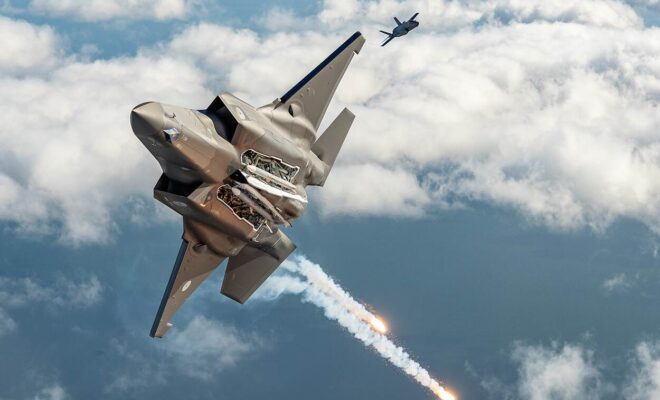
It is a curious fact of human behavior that the more we focus on what we wish to avoid, the more likely we are to encounter it. Pilots, athletes, and soldiers know this as target fixation or negative target acquisition. A hang glider who locks eyes on a distant set of power lines often drifts into them despite acres of open field nearby. The skier who obsesses over not hitting a tree finds himself wrapped around it. In each case, vision and attention become an unconscious steering mechanism. The body follows the eyes, the eyes follow the fear, and the feared outcome comes to pass.
Psychologists like Daniel Wegner have long observed that efforts to suppress a thought can make it more persistent. Tell someone not to think of a white bear, and the white bear will promptly march into their mind. Under stress, this paradox intensifies. The brain’s fear circuits narrow attention to the threat, locking the target into the center of vision. In sport, this leads the golfer to the water hazard. In leadership, it can make a feared political outcome all but inevitable.
President Volodymyr Zelensky appears to be caught in such a loop. His refusal to entertain negotiations with Vladimir Putin is rooted in a conviction that peace is impossible while Putin holds power. This is not a tactical pause to gain battlefield advantage. It is codified policy: in October 2022, Zelensky signed a decree banning talks with Putin outright. His language since has been absolute. Putin, he insists, will never honor any agreement. He is a man who wants war, not peace, and Ukraine must therefore continue to fight until it secures total victory on the battlefield.
One can understand the sentiment. Putin’s record is littered with broken promises, from denying the presence of Russian forces in Crimea to violating multiple ceasefires. But this understanding does not erase the psychological reality: by declaring peace unattainable, Zelensky cannot see it, cannot plan for it, and thus cannot achieve it. He has locked his gaze on the obstacle rather than the open field.
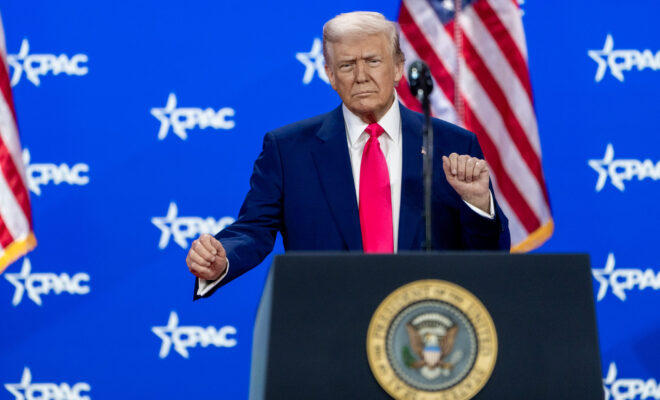
Contrast this with Donald Trump’s approach. Trump habitually assumes victory is possible, even when logic, precedent, and the counsel of experts suggest otherwise. He has declared that he could end the Ukraine war within 24 hours, confident that he could size up Putin in two minutes and broker a deal. His methods are blunt, his optimism unshakable. Whether one approves of his style or not, it is a textbook example of positive target acquisition: eyes on the goal, mind on the path, energy directed forward. This mindset, however imperfect, is the opposite of Zelensky’s.
Trump’s track record in office supports the view that such a mindset can yield results. During his first term, his administration facilitated or helped accelerate the end of several conflicts, from economic standoffs to military flare-ups, in rapid succession. He saw resolution as inevitable and acted accordingly. In the current case, he proposes high-risk negotiations, including the possibility of territorial concessions, to bring the bloodshed to an end. Zelensky, by contrast, treats any such proposal as both illegitimate and impossible, and thus he never steps toward it.
The consequence is a self-fulfilling prophecy. If Ukraine’s leader refuses to engage even in the testing of diplomatic waters, peace cannot be reached through diplomacy. If peace cannot be reached through diplomacy, the war must be won entirely on the battlefield. If the battlefield yields stalemate, the war continues indefinitely. And so the war continues.
The concept of negative target acquisition is instructive here because it bridges the physical and the political. In both cases, the core mechanism is the same: sustained focus on a feared outcome guides behavior toward that outcome. Zelensky fears a sham peace that enables Russian regrouping, so he rejects any negotiation. But this rejection also prevents any chance of finding terms that could be both enforceable and beneficial. Just as the motorcyclist must learn to look at the clear road, not the guardrail, so must the statesman learn to envision a peace worth pursuing rather than fixating on the betrayal that might occur.
Trump’s challenge is that his vision of a winnable peace depends on a partner willing to visualize it too. Negotiation requires two minds open to the possibility of success. One can be cynical and still negotiate, but one cannot believe success is impossible and expect to find it. This is why Trump’s instinct to mentor, to project confidence, might be Zelensky’s best untapped resource. A wartime leader consumed by distrust can benefit from the example of one who, for better or worse, assumes trust can be built in the room.
Critics will argue that optimism in the face of Putin is naïve. They will say that any deal struck today will be broken tomorrow, that the only real peace is total military victory. Perhaps. But optimism is not the same as credulity. A skilled negotiator can envision success while erecting safeguards against betrayal. The mindset is not “Putin will not cheat,” but “We will structure the deal so that cheating hurts him more than compliance.” This requires the imagination to picture a deal that benefits both sides enough to survive.
Zelensky has every reason to distrust his adversary. But he also has every reason to want the killing to stop if it can be done without surrender. Here the discipline of redirecting focus becomes crucial. It is possible to acknowledge the obstacle without steering into it. Pilots are trained to note the hazard, then fix their gaze on the path that will avoid it. For a political leader, this means holding in mind the possibility of a durable peace and scanning for openings to reach it, even if such openings are rare.
The great irony is that negative target acquisition is self-correcting if recognized. Once the hang glider realizes he is staring at the power lines, he can force his eyes to the field and, with them, his trajectory. The same holds in politics. Zelensky can decide, even now, to imagine what success might look like and to measure proposals against that image rather than against the certainty of defeat. Doing so would not guarantee peace, but it would make it possible.
In the end, the choice is between a mindset that forecloses the future and one that keeps it ajar. Trump embodies the latter, sometimes to a fault, but with results that speak to the power of expecting victory. Zelensky embodies the former, understandably but destructively, ensuring that the only peace Ukraine can have is the one it cannot yet win. Until he can picture a different outcome, his policies will continue to steer Ukraine toward the war he most wishes to end.
If you enjoy my work, please consider subscribing: https://x.com/amuse.
Sponsored by the John Milton Freedom Foundation, a nonprofit dedicated to helping independent journalists overcome formidable challenges in today’s media landscape and bring crucial stories to you.
READ NEXT: Decoding This Weekend’s Secretive Trump-Putin Meeting















I think this was the most well-thought-out and well-written analysis of how to achieve your negotiated outcome. I hope someone out there can send this article to President Zelensky. I know, hope is not a means to achieve an end result but look, maybe some reader has some friend or relative in Ukraine and voila, the article winds up in the hands of an advisor to President Zelensky.
This is spot on! “The Little Engine That Could!”
It may NOT be a WINNING vs losing MINDSET
It may have tore to do with that CONSTANT MONEY Flow that Biden maintained between America and Ukraine, i.e. Zelenzky, as we do NOT actually know for what purpose Zelensky utilized the regularly received BUNDLES
It’s not possible to negotiate with Putin. For a comparable situation see Chamberlain vs. Hitler.