




The release of the January 8 Files by investigative reporters David Ágape and Eli Vieira is not merely a revelation of misconduct. It is a window into a methodical abuse of judicial authority by Supreme Court Justice Alexandre de Moraes, the most powerful unelected man in Brazil. The documents show that in the wake of the January 8, 2023 protests in Brasília, Moraes orchestrated a clandestine operation that bypassed due process and redefined political speech as a criminal act. The official narrative has long been that these protests were a Brazilian mirror of the US January 6 Capitol riot, falsely claiming it was a premeditated attempt to overthrow a duly elected government. But these files reveal something more complex, and far darker. They show that the real coup was judicial, not popular.
On January 8, hundreds of Jair Bolsonaro supporters entered government buildings. Many were elderly, many were infirmed, and most committed no acts of violence. Nonetheless, they were all denounced as coup plotters and terrorists by Justice Moraes. The rhetoric served its purpose: it created the pretext for a sweeping crackdown. Now we have proof that this crackdown relied not on evidence of violent acts, but on the political affiliations and social media activity of the accused.
The January 8 Files show that Moraes oversaw a secret intelligence police force that operated outside any lawful mandate. This group, coordinated through a private WhatsApp chat, created illegal intelligence reports used to justify preventive imprisonment. Detainees were held in jail while their social media accounts were combed for evidence of ideological nonconformity. Lawyers were denied access to these reports, and the court relied on illegally obtained data from the TSE’s biometric database to identify individuals. The result was a parallel justice system where guilt was predetermined and political dissent was the principal crime.
The operation was meticulous in its procedural violations. First, detainee lists from the Federal Police were cross-referenced against biometric data, without warrants, to identify social media accounts. Then, posts were reviewed for signs of political opposition to the government or the Supreme Court. Sharing pro-Bolsonaro content, criticizing Lula, wearing Brazil’s green and yellow, or reposting articles labeled as disinformation were enough to mark someone as “positive,” meaning they would remain in jail. No one marked positive was released.
The files contain a particularly revealing WhatsApp message from Moraes’ chief of staff, Cristina Kusahara, dated February 13, 2023: “The Prosecutor General’s Office asked for their release, but the Justice doesn’t want to let them go before we check their social media.” This single sentence captures the inversion of justice at work: the decision to deprive citizens of their liberty was contingent not on proof of criminal acts but on a review of their online opinions.
The selective cruelty of the operation is underscored by its staging. On March 8, International Women’s Day, Moraes released 149 women from detention, earning media praise for his compassion. Yet leaked chats show that the release had been timed for political optics, and that these women had been kept in jail two extra months precisely so their liberation could serve as a symbolic gesture.
Errors, too, were common. A 74-year-old woman, Vildete da Silva Guardia, was mistakenly labeled positive. Though the mistake was corrected within minutes, she remained in jail and was released only after suffering severe intestinal bleeding. She would later be sentenced to nearly 12 years in prison. Her case exemplifies the casual brutality of a system that had abandoned any pretense of individualized justice.
The January 8 Files also reveal the depth of coordination between Moraes and officials like Eduardo Tagliaferro, head of the TSE’s anti-disinformation unit. That unit had no legal mandate to conduct criminal investigations, yet it served as the investigative arm of this shadow judiciary. The chat logs show Tagliaferro questioning whether his team’s work was legal, only to be told by Kusahara to continue at speed. The guiding principle was efficiency, not legality. As Kusahara put it: “We can’t afford to sit around philosophizing.”
The practical outcome of this arrangement was that the judge, his aides, and a handful of digital operatives became the arbiters of who would be jailed for months without trial. Moraes had, in effect, combined the offices of investigator, police, prosecutor, and judge into a single role: his own. This is not the rule of law; it is the law of rule.
That Moraes sees no problem with this approach is consistent with his broader judicial philosophy, one that treats dissent as inherently anti-democratic. Under his interpretation, to question him is to attack democracy itself. This is the same logic that has justified banning Bolsonaro from political office for eight years, censoring journalists, threatening Elon Musk, and imposing mass arrests and asset freezes on political opponents.
These revelations are not isolated scandals. They are part of a pattern. Moraes’ rise to power began with a political appointment following the suspicious death of Justice Teori Zavascki, who had been presiding over Operation Car Wash. Since then, Moraes has consolidated extraordinary authority within the Supreme Court, assuming powers never granted to any associate justice before him. His reach now extends beyond Brazil’s borders, as seen in his extraterritorial censorship orders against US companies like Facebook, Instagram, Youtube, X, Rumble, and Truth Social.
— @amuse (@amuse) July 7, 2025
That international reach has now provoked a major legal backlash in the US. In the civil case Rumble, Inc. and Trump Media & Technology Group Corp. v. Alexandre de Moraes, the plaintiffs have been allowed to proceed, and Moraes is currently in default for failing to respond. This is, in effect, Donald Trump versus Moraes, a legal showdown that could establish a precedent against foreign censorship orders targeting American companies. Moraes’ exposure in a US court strips away the immunity he enjoys in Brazil and places his conduct under the scrutiny of a system beyond his control.
— @amuse (@amuse) June 20, 2025
The pressure on him has intensified further with the announcement by Secretary of State Marco Rubio of sanctions against Moraes under the Global Magnitsky Act for human rights abuses, a move that freezes any US-based assets he may hold, bars him from entering the country, and prohibits US persons and companies from doing business with him. These sanctions, typically reserved for the world’s most egregious human rights violators, signal that Washington now regards Moraes as an authoritarian actor on par with sanctioned officials from regimes like Venezuela and Russia. Combined with the January 8 Files, these developments paint a picture of a judge whose unchecked power is now colliding with the hard limits of international law. The revelations could well be the last nail in his political coffin.
The January 8 Files connect the dots between Moraes’ domestic repression and his international overreach. In both contexts, the defining feature is the use of judicial authority to achieve political ends. In Brazil, that has meant reframing a protest as a coup attempt and criminalizing the political speech of thousands. Abroad, it has meant attempting to enforce Brazilian speech laws on American soil.
Legal scholars in Brazil have described Moraes’ actions as “nefarious” and “unconstitutional.” Former Supreme Court Justice Marco Aurélio Mello has openly questioned the disproportionate sentences handed down for January 8, noting that they are harsher than those for murderers or armed robbers. Attorney André Marsíglia has called the task force’s secret reports an unconstitutional usurpation of prosecutorial powers. Ives Gandra da Silva Martins has likened Moraes’ censorship to the guardianship of permissible speech in a dictatorship.
— @amuse (@amuse) February 22, 2025
President Lula insists that the democratic state of law is “sacred” to Brazilians who have lived through past dictatorships. In early August 2025, speaking in Acre, Lula made his stance unequivocally clear, urging parliamentarians not to support impeachment proceedings against Moraes and framing such efforts as attacks on Brazil’s sovereign institutions. He championed the separation of powers as sacrosanct and positioned himself as a bulwark defending the embattled justice. Yet despite Lula’s support, there is growing public and political momentum for Moraes’ impeachment and removal, driven now in large part thanks to the January 8 Files and mounting international pressure. These files strip away the remaining illusions. They show, in granular detail, how a judiciary can be transformed into a political weapon, and how easily the vocabulary of democracy can be repurposed to serve its opposite.
If you enjoy my work, please consider subscribing: https://x.com/amuse.
Sponsored by the John Milton Freedom Foundation, a nonprofit dedicated to helping independent journalists overcome formidable challenges in today’s media landscape and bring crucial stories to you.
READ NEXT: This ‘Clever’ Political Move Is Designed To Deceive You








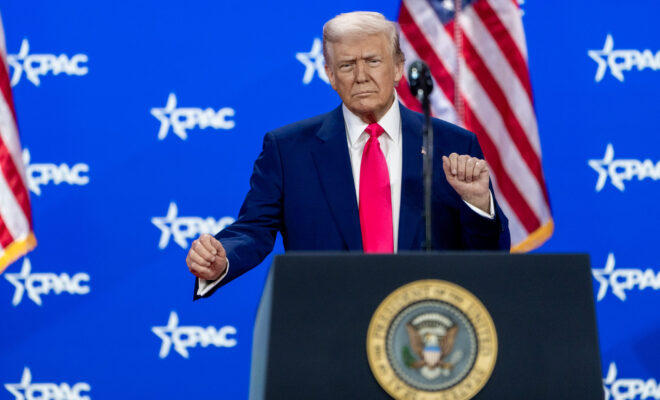








Note the similarities between the USS’s Jan 6 2021 and Brazils Jan 8 events?
That international reach has now provoked a major legal backlash in the US. In the civil case Rumble, Inc. and Trump Media & Technology Group Corp. v. Alexandre de Moraes, the plaintiffs have been allowed to proceed, and Moraes is currently in default for failing to respond. This is, in effect, Donald Trump versus Moraes, a legal showdown that could establish a precedent against foreign censorship orders targeting American companies. Moraes’ exposure in a US court strips away the immunity he enjoys in Brazil and places his conduct under the scrutiny of a system beyond his control.”
I’m betting on Trump
This is Jan 6 two-point-oh days later. Just like we KNEW at the time, we will learn that Lula was installed, and leftists decided to gaslight the world by persecuting the rightful leader Bolsonaro.
So does the deep state in America…
So does the deep state in Brazil…
So does the deep state in Israel (leftists trying to overthrow)…
So does the deep state in Romania…
So does the deep state in Canada…
And so on…