



In a whirlwind series of high-stakes meetings that spanned continents and rival world powers, President Donald Trump is a central broker in a long-sought peace deal between Russia and Ukraine. On Monday, Trump hosted a summit at the White House with top European leaders, fresh off separate meetings with Ukrainian President Volodymyr Zelenskyy and Russian President Vladimir Putin.
“Peace is in reach,” Trump declared from the East Room, seated alongside a striking lineup of leaders: France’s Emmanuel Macron, Britain’s Keir Starmer, Germany’s Friedrich Merz, Finland’s Alexander Stubb, Italy’s Giorgia Meloni, NATO Secretary-General Mark Rutte, and European Commission President Ursula von der Leyen.
Trump described the closed-door discussions as “very good” and revealed that the leaders had agreed on the framework of a peace plan that includes coordinated security guarantees for Ukraine. Zelenskyy confirmed the plan would be modeled after NATO’s Article 5, essentially offering Ukraine protections akin to those enjoyed by NATO member states. Putin has reportedly signaled a willingness to accept such guarantees, provided Ukraine relinquishes the Donbas region—a condition Zelenskyy has long opposed.
According to Trump, the next step is a trilateral summit between himself, Zelenskyy, and Putin, with arrangements already in progress. “Everyone is very happy about the possibility of PEACE for Russia/Ukraine,” Trump wrote on Truth Social, noting that Vice President JD Vance, Secretary of State Marco Rubio, and Special Envoy Steve Witkoff are spearheading ongoing coordination with both Kyiv and Moscow.
European leaders offered praise for Trump’s efforts. Germany’s Merz emphasized the need for an immediate ceasefire, while Finland’s Stubb remarked that more progress had been made in the past two weeks than in the past three and a half years. British Prime Minister Starmer called the talks “historic,” suggesting they could reshape security in Europe for a generation.
Even as these discussions unfold, Trump is making waves at home with a bold initiative that has already triggered intense legal and political debate. On Truth Social, Trump announced his intention to sign an executive order banning mail-in ballots and phasing out voting machines nationwide. He cited a need to restore honesty and “confidence to the electoral system, arguing that voting machines are highly inaccurate and much more expensive than secure, watermark-verified paper ballots.
The executive order, slated to take effect before the 2026 midterms, is expected to face swift legal challenges. Under the Constitution, states have broad authority over how elections are conducted, and any attempt by the federal government to override state-level election rules would likely be met with resistance in court. Nonetheless, Trump’s move is seen by many as a strategic effort to refocus national attention on election integrity—a topic that has remained central to his political brand since 2020.
Trump has also framed the issue through the lens of civil rights, arguing that widespread voting irregularities—particularly in Democrat-led jurisdictions—disenfranchise voters. This legal framing could form the foundation for a broader judicial challenge that may outlast the order itself.
For Trump, disruption has long been a tool of leverage, and this latest proposal follows a familiar pattern: challenge entrenched norms, force debate, and use that momentum to reset the political agenda.
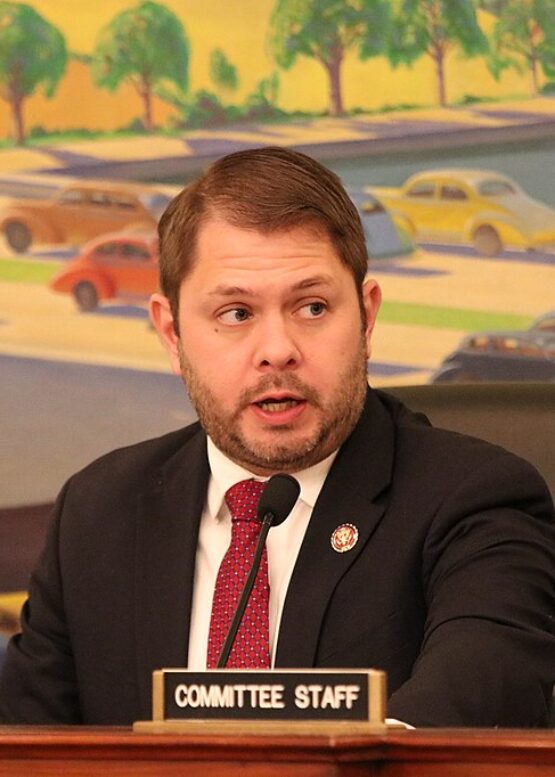
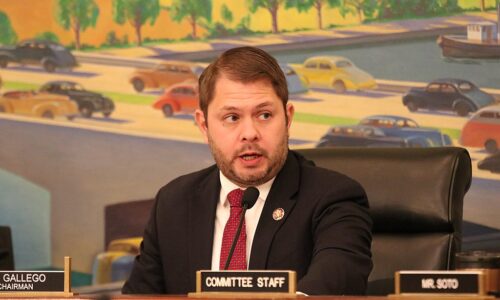
Meanwhile, the House Oversight Committee has quietly pulled back a high-profile subpoena amid revelations tied to one of the nation’s most prominent criminal scandals. The committee confirmed that it is dropping its subpoena of former FBI Director and special counsel Robert Mueller, citing health concerns. According to reports, Mueller has been living in a memory care facility for several years, a detail that raises new questions about his capacity during key moments of his 2019 congressional testimony.
Mueller’s name resurfaced as part of the committee’s renewed investigation into the FBI’s handling of Jeffrey Epstein. Documents obtained through a FOIA lawsuit reveal that Epstein served as an FBI informant as early as 2008—years before his widely criticized plea deal that allowed him to avoid federal prosecution. The files suggest that Epstein’s cooperation with federal authorities may have gone far deeper than previously known, potentially explaining why he received such lenient treatment despite overwhelming evidence of sex trafficking.
The Oversight Committee, led by Chairman James Comer, is pressing ahead with the investigation. Former Attorney General William Barr testified on Monday, followed by a long list of former officials including Bill and Hillary Clinton, James Comey, Loretta Lynch, Eric Holder, Jeff Sessions, and Merrick Garland. The committee is seeking testimony and records that could shed light on what federal agencies knew about Epstein—and why so little was done.
Though Mueller will no longer testify, the committee’s direction remains clear: unravel what many believe to be a web of complicity and institutional protection that allowed Epstein to operate for years with impunity. His mysterious death in 2019 and the sentencing of his associate Ghislaine Maxwell have only deepened public suspicion.
From global diplomacy to domestic upheaval, Trump’s presidency is again defining the conversation—on peace, on elections, and on power itself. Stay tuned.
READ NEXT: Oversight Committee Drops Mueller Subpoena Over Health Concerns