Echoes of 1918 as Washington Moves to Recognize Southern Border Deployments…
Just days after announcing its creation, the Pentagon has released the first images of the Mexican Border Defense Medal (MBDM), a new decoration for U.S. service members supporting Customs and Border Protection under Joint Task Force–Southern Border. The medal replaces the Armed Forces Service Medal (AFSM) for these missions and closely mirrors the design of the 1918 Mexican Border Service Medal — a decision immersed in historical and political symbolism.
A Medal with a Message: Border Security as a Standalone Mission
The MBDM is more than a swap of ribbons. It signals a shift in how border missions are perceived within the military and federal government. By giving the deployment its own medal, the Department of Defense is elevating the mission from a routine support role to one officially worthy of historical recognition — putting it in the same conceptual league as Vietnam, Iraq, or Afghanistan.
Troops awarded the MBDM receive a green-yellow-green ribbon and a bronze medallion featuring a Roman gladius on a keystone surrounded by laurel wreaths, along with the inscription: “For Service on the Mexican Border.” The symbolism is deliberate — martial, foundational, and tied to a century-old precedent.
Eligibility: Who Gets the Medal
To qualify, service members must have been assigned, attached, or detailed to a Department of Defense border operation for at least 30 days, consecutive or not.
The recognized area of service includes:
- Within 100 nautical miles of the U.S.–Mexico border across Texas, New Mexico, Arizona, and California
- San Antonio, as a strategic support hub
- U.S. territorial waters up to 24 nautical miles offshore
Those who already received the AFSM for the same period of border service may apply to have it replaced with the new MBDM. They cannot, however, receive both for the same tour.
Putting Border Duty on Par with Other Campaigns
Unlike most military awards tied to foreign combat zones, the MBDM reinforces the idea that defending the homeland — especially the southern border — is a campaign in its own right. This mirrors other medals that formalized missions outside traditional war zones:
• Mexican Border Service Medal (1918–1919)
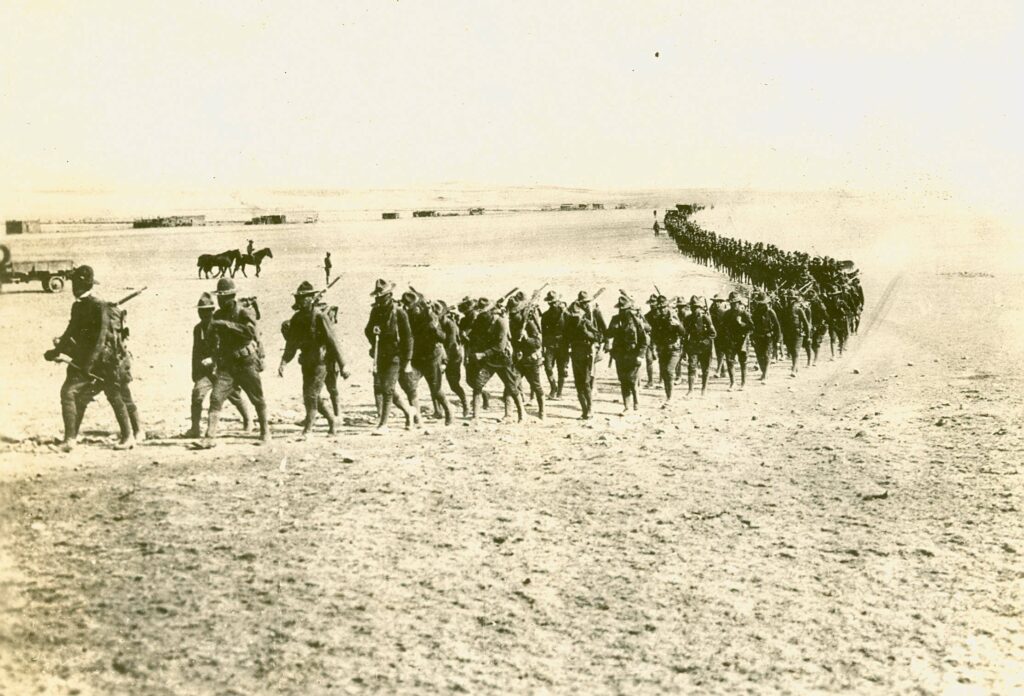
The direct predecessor to today’s award. It honored troops mobilized during clashes with Pancho Villa’s forces and broader instability in northern Mexico. It also remained domestic in scope — an unusual trait for U.S. campaign medals.
• Army of Occupation Medal
Granted to troops in postwar Germany and Japan, this medal showed the U.S. military’s willingness to institutionalize long-term, sensitive missions, even in the absence of combat.
• Humanitarian Service Medal
Since 1977, this decoration has recognized military support in relief and disaster efforts. Like the MBDM, it codifies nontraditional missions into the medal hierarchy, proving that valor isn’t limited to combat alone.
• Iraq Campaign vs. Inherent Resolve Medals
As the nature of operations in Iraq evolved, so did the Pentagon’s medals — even when the geography stayed the same. The MBDM follows this precedent, separating border security from the broader, less specific scope of the AFSM.
Where It Ranks — and Why That Matters
In the official order of precedence, the MBDM sits above the Armed Forces Service Medal and below the Korean Service Medal. That positioning underscores the Pentagon’s intent to treat the border mission as distinct and elevated in importance.
This move also aligns with prior legislative efforts. In 2023, Rep. Tim Moore (R-NC) introduced H.R. 3780, the Border Operations Service Medal Act, which proposed a nearly identical concept. Though the bill didn’t pass, the idea drew bipartisan interest and has now effectively been adopted through Pentagon channels.
A Tool for Morale and Messaging
At its core, the MBDM functions as both recognition and messaging. Troops deployed to the southern border now receive more than just a patch on a uniform — they get formal validation that their mission matters. It sends a clear signal: border security isn’t just policy — it’s a campaign with strategic and historical weight.
And in the eyes of many in uniform, that matters.
READ NEXT: Trump’s Business Move Puts America First