





Memphis is in crisis. The city leads the nation in violent crime, property crime, and overall crime rates. Its homicide rate is not only among the highest in the United States, it far exceeds that of global cities often associated with violence, such as Mexico City. In 2024, Memphis saw about 2,501 violent incidents per 100,000 residents, nearly six times the national average. Property crimes reached nearly 6,900 per 100,000 residents, almost triple the national average. In total, the city’s crime rate soared to 344% higher than the national norm. In 2025, the violence has continued. By midyear, Memphis had already recorded 149 murders, more than the annual homicide totals of entire nations. The statistics are not merely numbers. They are daily reminders that Memphis is enduring an emergency without parallel in the developed world.
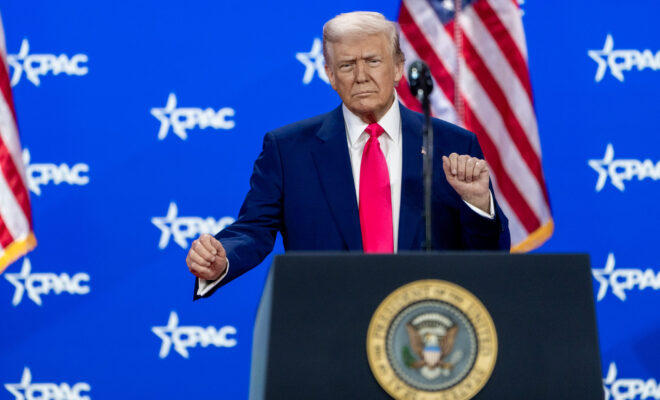
🚨 BREAKING: President Trump just announced he will be sending the National Guard into MEMPHIS
— Nick Sortor (@nicksortor) September 12, 2025
Both the Republican Governor AND the Democrat Mayor are happy with this
"We're bringing in the National Guard… and the military, if we need it." 🔥 pic.twitter.com/25fB6IopLu
Against this backdrop, President Trump’s plan to deploy National Guard troops to Memphis should be viewed as a reasonable and even overdue experiment. When ordinary measures fail, extraordinary action is justified. The logic is simple. If crime in Memphis is uniquely severe, then Memphis is an appropriate proving ground for bold interventions. If a temporary augmentation of the National Guard can disrupt the cycle of violence, it could point the way toward solutions for other struggling cities. If it cannot, the lesson will be clear, but at least an honest test will have been attempted.
Memphis resident: "We need [the National Guard] bad. They need to hurry up and come." pic.twitter.com/N0IIygMhab
— RNC Research (@RNCResearch) September 12, 2025
Critics will object that using the National Guard for domestic law enforcement risks militarizing city streets and alienating residents. That concern is understandable, but it overlooks the nature of Memphis’s current crisis. Law-abiding Memphians already live in a city that feels like a war zone. They are not afraid of uniformed soldiers. They are afraid of criminals released without bail, of gangs who wage gun battles in broad daylight, and of murder rates that dwarf those of cities often described as dangerous abroad. If Memphis has already been militarized by crime, then deploying the Guard may be less an intrusion than a restoration of order.
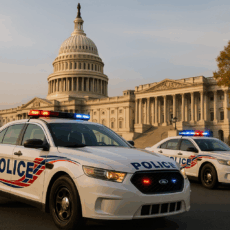
The experiment is further justified by precedent. In Washington DC, a city long plagued by high crime, the deployment of National Guard troops produced meaningful results. Coordination between Guard units and local law enforcement stabilized hotspots, suppressed surges in violent crime, and provided breathing room for community programs to take hold. The lesson from DC is not that the Guard alone can solve crime, but that a carefully coordinated federal presence can buy time and space for other reforms. Memphis, a city where crime continues to climb even as national trends improve, presents the most urgent opportunity to replicate and test that model.
Political alignment in Tennessee makes the plan feasible. Republican Governor Bill Lee has expressed his support and gratitude for President Trump’s commitment, saying he is ready to work out the details of how the Guard will operate alongside state and local law enforcement. His backing ensures that the deployment will not become mired in partisan obstruction at the state level. Even Mayor Paul Young, a Democrat who did not request the Guard and remains skeptical of the tactic, has signaled willingness to coordinate with federal forces to ensure that their engagement is strategic and disciplined. In a city where partisan divides often block cooperation, this convergence of reluctant but real support is a rare opening.
Underlying the crisis in Memphis are local policy failures that justify federal intervention. Shelby County’s experiment with bail reform, led by District Attorney Steve Mulroy, has produced tragic results. Violent offenders charged with serious crimes have been released on their own recognizance, only to commit new atrocities. The most glaring case came in April 2024, when Officer Joseph McKinney was gunned down by an 18-year-old suspect who had been released on multiple felony charges weeks earlier. This was no isolated incident. Armed standoffs, workplace shootings, and gang-related assaults have all involved suspects released without bond under the county’s lenient pretrial regime. These failures have not only endangered the public, they have eroded trust in the justice system itself.
In light of these realities, President Trump’s initiative is both experimental and necessary. Federal intervention is not a long-term substitute for local reform, but it can be a stopgap in moments of crisis. Memphis is one of those moments. The purpose of deploying the Guard is not to permanently patrol neighborhoods but to suppress violence long enough for local leaders to regain control. The experiment is whether short-term federal muscle can reverse momentum in a city where crime has spun beyond local capacity to manage.
If successful, the Memphis deployment will offer a model for other cities where lenient policies and weak enforcement have produced spirals of violence. If unsuccessful, it will at least provide clarity about what strategies cannot work. Either way, inaction is no longer defensible. Memphis’s murder rate is four times that of Mexico City and more than thirty times that of London. By refusing to act, leaders would effectively accept that American citizens must endure levels of violence that far exceed those tolerated in the rest of the developed world. That is not a position any serious government should take.
Ultimately, the Memphis experiment is about more than Memphis. It is about whether the federal government has the will and creativity to intervene in cities trapped by crime. It is about whether extraordinary action can break cycles of violence where ordinary measures have failed. And it is about whether the United States will allow its citizens to suffer under rates of murder and assault that would shock the conscience if they occurred abroad. President Trump’s decision to send the National Guard into Memphis is not a reckless gamble. It is a sober acknowledgment of crisis, a practical test of federal resolve, and a reasonable attempt to restore peace in a city that desperately needs it.
If you enjoy my work, please consider subscribing: https://x.com/amuse.
Sponsored by the John Milton Freedom Foundation, a nonprofit dedicated to helping independent journalists overcome formidable challenges in today’s media landscape and bring crucial stories to you.
READ NEXT: Could This Be True? Rumors Fly Around Charlie Kirk Suspect As Officials Keep Quiet





















Every blue state and city is insolvent with no possible prayer of getting even. THEFT, GROSS MISMANAGEMENT OF TAX PAYER FUNDS. PAYING INVADERS. FEDERALIZE ALL OF THEM. INDICT CURRENT ADMINISTRATION.
Arm the citizens too then maybe
OK CCW & Open Carry