











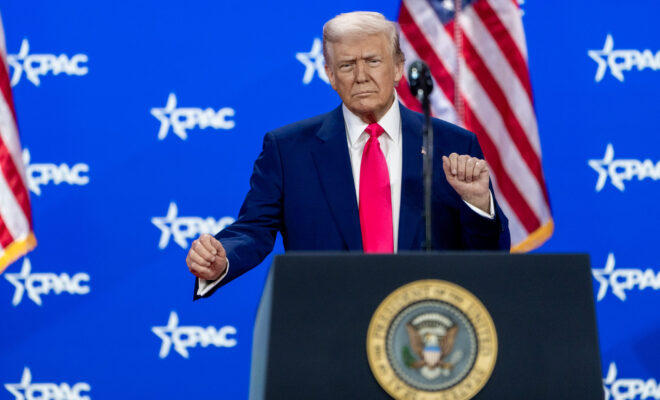
President Donald Trump signed a new proclamation Friday that imposes a $100,000 fee on all H-1B visa applicants, dramatically escalating his administration’s crackdown on the controversial skilled worker program.
The White House says the fee hike is designed to curb abuse of the H-1B system, which has faced mounting criticism for allowing companies to replace qualified American workers with cheaper foreign labor under the guise of a “skills shortage.”
“This will ensure that the people they’re bringing in are actually very highly skilled, and that they’re not replaceable by American workers,” a senior White House official said during Friday’s announcement.
“It’ll protect American workers, but ensure that companies have a pathway to hire truly extraordinary people and bring them to the United States.”
What the New Rule Does
The new proclamation, signed by Trump in the Roosevelt Room of the White House, raises the application fee for H-1B visas to $100,000 — a 2,000% increase from the current $1,500 range that employers typically pay.
The administration says this change will filter out frivolous applications and force companies to invest only in truly exceptional talent — not use the program as a cheap labor loophole.
What Is the H-1B Program?
Created by Congress in 1990, the H-1B program allows U.S. companies to temporarily employ foreign workers in “specialty occupations” — typically in STEM fields. Visa holders can later apply for green cards and permanent residency.
The number of new H-1Bs issued is capped at 85,000 per year, with a lottery system determining selection due to high demand.
Tech giants like Google, Microsoft, Amazon, and Meta have long been the program’s biggest beneficiaries, arguing that it fills critical labor shortages in engineering, software development, and data science.
The Numbers Tell a Different Story
Critics say there’s a major disconnect between the rhetoric of labor shortages and the reality of layoffs in Big Tech.
Between 2022 and the end of 2024, Amazon laid off at least 27,000 workers, Google laid off over 12,000, and Microsoft let go of 16,000 employees.
Yet in that same period, those three companies secured over 61,000 H-1B visas combined, according to data from U.S. Citizenship and Immigration Services (USCIS).
“At the same time large tech companies are laying people off, they are claiming they don’t have sufficient workers,” said Eric Ruark of NumbersUSA.
“The H-1B program is designed specifically to allow employers to replace and displace qualified American workers with cheaper, often less competent foreign guest workers.”
Trump Administration Draws a Line
The White House proclamation comes amid a broader effort by the Trump administration to reorient immigration policy toward American workers and away from global labor arbitrage.
“If you’re going to train somebody, train one of the recent graduates from one of the great universities across our land,” said Commerce Secretary Howard Lutnick at the announcement. “Stop bringing in people to take our jobs. That’s the policy here.”
The increased fee indicates a sharp contrast with past administrations, which embraced the H-1B system as a tool for global competitiveness and demographic growth.
Tech Industry Reacts
Industry analysts warn that the decision could have massive ripple effects on talent acquisition and outsourcing strategies.
Privately, some in Silicon Valley are reportedly fuming, arguing that the new fee will drive skilled talent elsewhere — to Canada, Europe, or Asia — at a time when the United States is competing for AI and high-tech leadership.
But supporters of the policy say that’s a false choice.
A Political Win for the Working Class
The fee hike is also seen as a major win for the “America First” labor movement, which has long argued that globalist policies have hollowed out the middle class and left young American STEM graduates underemployed.
With midterms approaching, Trump’s move could galvanize voters in swing states like Pennsylvania, Michigan, and Wisconsin, where resentment toward foreign labor outsourcing remains high.
Trump’s message is clear: If you want to work in America, you need to bring more than a résumé. You need to bring extraordinary value — and pay the price for it.
READ NEXT: The Case For Replacing H-1B With An America-First Merit Visa



















I totally agree having known really talented workers in Silicon Valley that were replaced by cheap foreigners.