

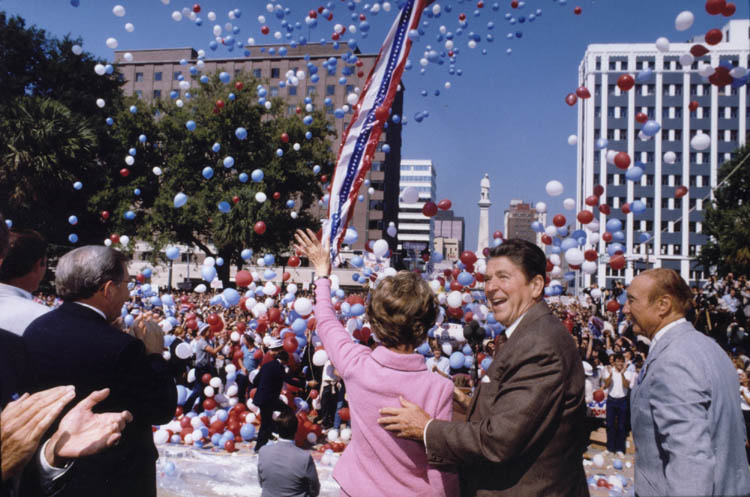
Canada’s excursion into American politics began with a choice that looks technical but is deeply political. Ontario Premier Doug Ford’s government funded a U.S.‑advertising campaign that excerpted Ronald Reagan in a way that softened his insistence on fair play and sharpened only his paeans to free trade. The cut, circulated to American viewers, left out the condition that anchored Reagan’s view, namely that free trade requires reciprocity and enforceable rules. When a foreign government edits a former U.S. president to shape the American debate during live negotiations, the line between trade advocacy and political participation is crossed. The correct response, from a conservative and America‑first perspective, is not to reward that tactic with more talks but to withdraw, to signal that the U.S. will not conduct strategic negotiations with a counterpart that is simultaneously working to alter the domestic policy environment that frames those talks. President Trump’s termination of trade negotiations with Canada is therefore justified, and not only justified but necessary to defend sovereignty, restore leverage, and protect American workers and institutions from external distortion.
OH CANADA: The Premiere of Ontario Doug Ford decided to launch an anti-Trump/Tariff propaganda campaign in the US targeting American voters. Trump responded to the election interference by terminating all trade negotiations with Canada. The selectively edited ad uses Ronald… pic.twitter.com/SwWgtdJolT
— @amuse (@amuse) October 24, 2025
Some will say that foreign governments advertise all the time. They do, but there is a difference between general country branding and intervention in a live dispute. The Ford government did not run a generic tourism spot. It placed an argument into the American conversation about tariffs and trade, and it did so by selectively quoting one of our most beloved and respected presidents. That is an attempt to set the priors of American voters and lawmakers while a negotiation with Canada is underway. The policy question is not whether Ontario has free speech. The question is whether the United States should proceed with high level trade talks while a Canadian provincial government tries to define the American terms of debate. The answer should be no.
To see why, recall what Reagan actually said and did. Reagan’s rhetoric was clear. He praised open markets, he embraced competition, he believed that trade, when fair, promotes jobs, innovation, and prosperity. He said that our trade policy rests on free and open markets, free trade. In the same breath he warned that if trade is not fair for all, then trade is free in name only. He pledged that he would not stand by and watch American businesses fail because of unfair practices abroad. He promised to take all action necessary to see that other nations live up to their obligations and their agreements with us. This is not the language of laissez faire at any price. It is the language of rules, reciprocity, and enforcement. The Ford government’s edit carved away that structure and left behind a slogan. Slogans are easy, policy is hard. Removing the conditions removes the policy.
Reagan’s practice matched his words. He supported liberalization when partners played fair. He launched multilateral talks to reduce barriers. He signed a bilateral free trade agreement with Canada that set the stage for broader North American integration. He also acted, often decisively, when faced with dumping, subsidies, closed markets, and import surges. In autos he pressed Japan into export restraint in 1981 that limited shipments to roughly 1.68 million units a year, later raised as Detroit regained its footing, and he kept in place the long standing 25% light truck tariff that shielded workers in an American segment where Japanese firms were attacking by way of mini trucks. In motorcycles he approved temporary relief for Harley‑Davidson in 1983 with tariffs that reached 45% on heavyweight bikes, then he ended the relief early once the company recovered, a demonstration that protection can be temporary when it is conditional on adjustment.
In steel he rejected a crude wall and chose calibrated restraint. He began with specialty steels under Section 201 in 1983, using Proclamation 5074 to set temporary tariffs and quantitative limits on stainless and alloy tool products, later extending the relief through 1989 because injury persisted. He then negotiated a comprehensive program of voluntary restraint agreements with the European Community and eighteen other suppliers beginning in 1984. Those agreements, backed by the Trade and Tariff Act of 1984, lowered import penetration toward an 18.5% share and covered the vast majority of steel inflows by 1985. The point was not autarky, the point was time for modernization while avoiding a congressional stampede toward stricter statutory quotas that would have harmed downstream users and invited retaliation. This is exactly the kind of prudential line drawing that Ontario’s ad erased.
In agriculture he reinstated sugar import quotas in 1982 to stabilize prices after a collapse, a reversal of a late 1970s experiment that had failed American growers. He maintained long standing barriers in dairy and peanuts that were integral to farm policy. In lumber he resolved a Canadian softwood dispute in 1986 by pressing Ottawa to impose a 15% export tax, a functional equivalent of a tariff, and he approved relief on cedar shakes and shingles when US producers showed injury. In high tech he reached a 1986 semiconductor accord with Japan that was supposed to end chip dumping and open Japan’s market, then when evidence of violations appeared he imposed 100% tariffs on selected Japanese electronics in 1987 to enforce the deal, not to nurse an uncompetitive sector. He acted on machine tools in 1986 using national security authority, negotiating multi year restraints with Japan, West Germany, Switzerland, and Taiwan to bring import penetration down from around 70% to about 50% while pairing the limits with steps to strengthen domestic capacity. In the so called pasta war with the European Community he retaliated in 1985 against discriminatory citrus treatment by raising duties on European pasta, secured a settlement on citrus, and then insisted on curbs to EC pasta subsidies in 1987, directing Customs to exclude shipments that lacked proof of reduced export rebates.
None of this looks like blind protectionism. Reagan vetoed sweeping textile quota bills in 1985 and 1988 and supported renewal of the global Multifiber Arrangement within a negotiated framework rather than a unilateral clampdown. He lifted Carter’s Soviet grain embargo early in his term. He launched the Uruguay Round in 1986 to discipline subsidies and improve rules. He believed in free trade the way a good referee believes in a clean game, not by ignoring fouls, but by calling them and deterring them. The policies were temporary where possible, targeted where necessary, and grounded in law. They were also explicit about conditionality. Relief was a bridge to competitiveness, not a permanent crutch.
With Reagan’s full record in view, the Ontario advertisement becomes more troubling, not less. It did not simply emphasize one side of Reagan’s thinking, it held out that side as if it were the whole. It also timed the message to influence American views while Canada sought concessions at the table. There is a term for this mixture of selective quotation and tactical timing. It is interference. The United States is entitled to run its own policy debates, to weigh free trade against enforcement, and to decide how to use tariffs as leverage without a Canadian provincial treasury paying to tilt the field. Americans, not foreign officials, should decide how we remember Reagan, and how we apply his lessons in the present.
What, then, is the proper remedy. First, the US must make clear that cross border information campaigns by foreign governments that target our political decision making during active negotiations carry consequences. Sanctions are one route, but the immediate and proportional step is to end the talks that the campaign was designed to influence. That is what President Trump has done. Second, the US should formalize a bright line rule in its trade diplomacy, namely that any foreign government that funds messaging targeted at the US electorate or at US lawmakers on a live negotiable term will be deemed to have prejudiced the negotiation. In such a case, talks will be suspended and trade privileges under discussion will be set aside until the offending government disavows the campaign, retracts or corrects the misleading content, and pledges not to engage in similar tactics. Third, the US should increase transparency around foreign spending on US media distribution, so that American viewers know when a foreign government is buying airtime to shape policy outcomes.
There is a predictable objection. Canada, some say, is a close ally with shared institutions, shared security commitments, and deep commercial ties. That is true. It is also precisely why the standard for political hygiene must be high, not low. Close friends do not try to put their thumb on the scale in each other’s domestic debates. The people of Ontario deserve accountable government and the people of the United States do too. If the Ford government wishes to argue for free trade on the merits, it can do so in Canadian venues or in diplomatic channels. It should not target American viewers to reframe Reagan in the middle of a negotiation with Washington.
Others will say that America itself often speaks publicly about values and policy abroad. There is a difference between public diplomacy and targeted intervention in a counterpart’s ongoing internal dispute. American presidents defend free enterprise and the rule of law as general propositions. They do not run paid advertisements in allied countries that cite a beloved national figure in a selective way during a live bargaining round. On questions of degree, prudence matters. The Ontario ad was a direct attempt to set bounds on American tariff policy by invoking Reagan in truncated form, and it was broadcast while US negotiators were in the field. That is not normal diplomacy. It is an attempt to discipline our domestic space from the outside.
The deeper point is constitutional. Trade policy is made inside a system of separated powers where public opinion, congressional action, and executive discretion all interact. When a foreign government aims to move that system by shaping the inputs that flow to voters and legislators, it is intervening in the process by which the United States sets its rules. Our duty is to keep that process American. Ending the talks is a way of saying that our debate about tariffs, quotas, and reciprocity will proceed without paid chaperones from Queens Park.
A skeptic may ask whether the response is proportional. Why not simply ignore the ad. The answer has two parts. First, ignoring it would normalize the tactic and invite escalation. If Ontario can do it, so can other provinces, so can Ottawa, so can foreign ministries in Europe and Asia. Second, a firm response increases the credibility of US enforcement in trade. Reagan’s record teaches that credible enforcement is what keeps markets open. The semiconductor penalties worked because they were imposed, and they were lifted when Japan complied. The steel restraints worked because they were negotiated and monitored, and because the administration was willing to say no when Congress attempted a more extreme route. The sugar quotas worked for growers because the administration was willing to use the tool. In each case the message was clear. Play fair and we liberalize. Cheat or manipulate and we respond. Applying that logic to political manipulation is consistent with Reagan’s philosophy and with the long run health of the trading system.
The Ontario ad also misfires on substance. It treats tariffs as a betrayal of Reagan rather than as part of his toolkit. The record is otherwise. Reagan used tariffs and quotas repeatedly to enforce fair play and to buy time for adjustment, then he rolled them back as circumstances allowed. He inherited long standing protections in textiles and agriculture and he kept them where they served legitimate policy ends. He left in place the chicken tax on light trucks. He championed liberalization where partners reciprocated. He did not confuse leniency with principle. Free trade, in Reagan’s hands, was conditional trade, and the condition was fairness. A government that edits that story to sway American views is not appealing to Reagan, it is counterfeiting him.
What is the path forward. The United States should restate Reagan’s conditional trade approach. We should advertise, to our own people and to our partners, that we pursue free trade when it is fair and that we will use the full suite of lawful remedies when it is not. We should not apologize for using trade tools to defend workers who face subsidized competition or predatory dumping. Nor should we apologize for using diplomatic tools to defend the integrity of our domestic debate. President Trump’s decision to terminate trade negotiations with Canada does both at once. It restores leverage, it defends sovereignty, and it protects the legitimacy of the political process that sets the rules by which trade will proceed. The stakes are not abstract. When foreign governments attempt to massage the American debate, they are not only bargaining at the table, they are bargaining over the table, and that cannot be allowed.
This is an unromantic view of trade, but it is closer to Reagan than the Ontario advertisement. Free trade, yes, when our partners live up to their word. Tariffs and quotas, yes, when they do not. Negotiations, yes, when the political space on both sides is clean. Talks, no, when a foreign government pays to shape our voters while asking our diplomats for concessions. The Ford government chose to test that boundary. The United States is right to answer clearly.
If you enjoy my work, please share my work and subscribe: https://x.com/amuse.
Sponsored by the John Milton Freedom Foundation, a nonprofit dedicated to helping independent journalists overcome formidable challenges in today’s media landscape and bring crucial stories to you.
READ NEXT: Trump Opens Vast New Region For Economic Growth















Beware Ontario Canada TV ad abusing Reagen speech then on trade see FBN, FNC, Newsmax
Lester Thurow said some very intelligent things about free trade and one of them was – don’t buy more than 20% than your trade partner buys from you unless you absolutely have to. His books can open up a lot of sound economic wisdom.