






This is part 2 of a 2-part piece.
In the movie, officials are seen considering launching massive preemptive attacks on all of America’s major adversaries, believing the incoming ICBM could be the start of a coordinated attack.
However, this too is highly unlikely. If the Chinese, Russia, and North Korea were to band together to destroy the U.S., it would be very unlikely to involve a single missile “bolt from the blue.” Unless it was an EMP. Nor would we launch everything we have against all of them without more information.

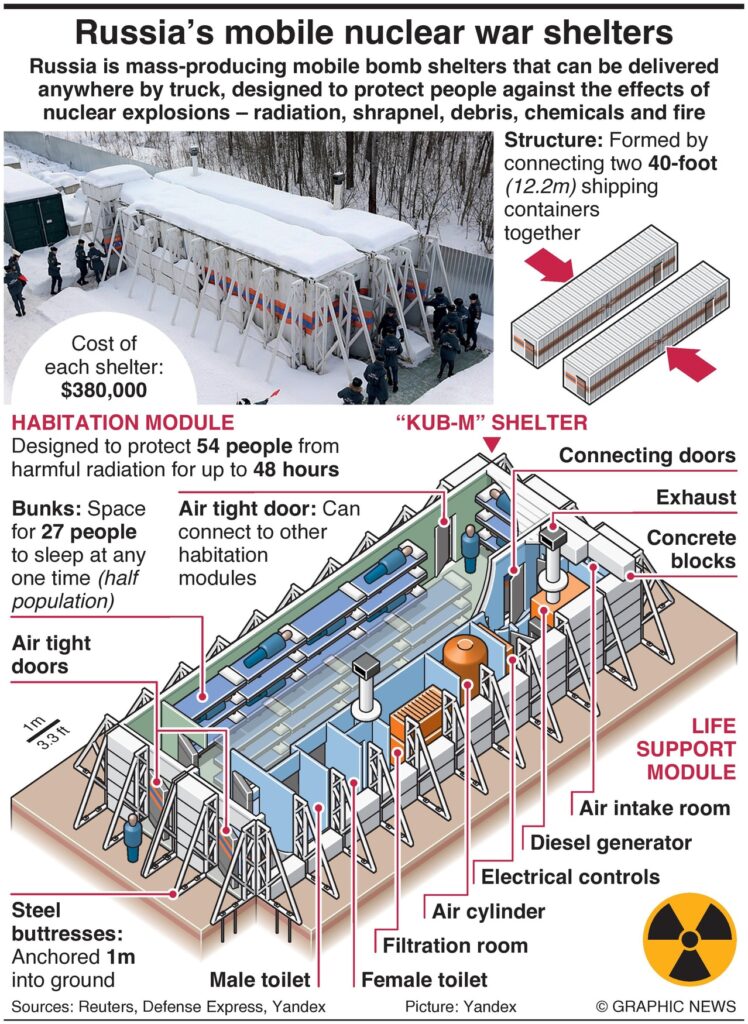
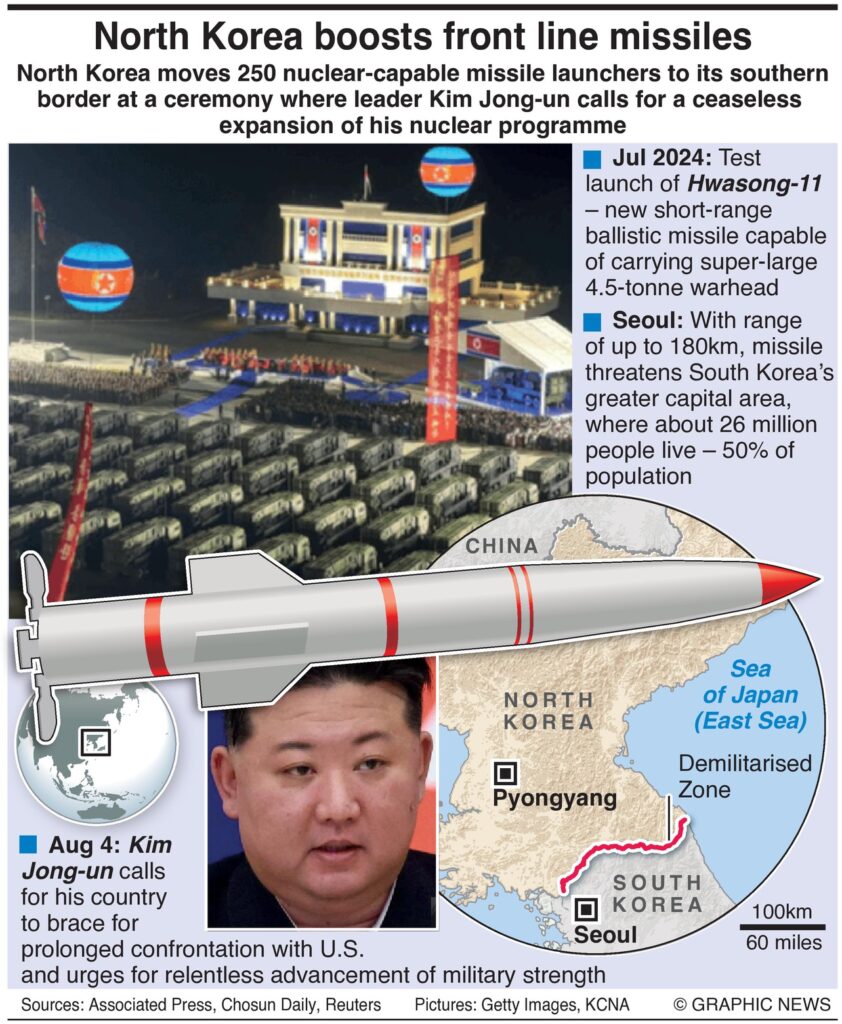
And I especially have trouble with the need to launch a response before the missile hits Chicago. Once the interceptors fail, the city is lost, and there is time, barring any launch from anywhere else, to respond appropriately. Unless it’s an EMP attack and degrades our ability to retaliate.
Still, as the deputy national security advisor notes, the warhead could also fail to detonate, “it happens.” And that would allow even more time.
The time crunch in the film is therefore partly manufactured for drama and effect.
Then, there is the unlikely idea that the president might launch a massive retaliation for a one missile attack, even if the culprit was identified. The Daily Mail notes that in a 2018 interview with CNN, General John E. Hyten, the former commander of STRATCOM, explained that retaliation would normally be done in tit-for-tat fashion.
“If someone launches a nuclear weapon against us we launch one back.”
“They launch another, we launch another. They launch two and we launch two. You are on this escalation ladder that ends up nowhere.”
“The key is to stop that behavior before it gets bad.”
At one point, an Air Force General speculates that the missile could be part of a more complex Russian operation, or a rogue nuke sub commander having a bad day. There could be all manner of possibilities, but all very unlikely. One scenario that some say is more likely — an attack where China coordinates with North Korea to launch a limited strike on the U.S. so it can invade Taiwan while America is sent reeling.
Still holding back on a response is likely the best option in this case in the movie. And the response might not have to be nuclear.
Especially, with no knowledge of the missile’s source. According to Time:
Karbler believes a president would likely exercise restraint and think about the larger picture. “If I respond back, it’s going to be much, much worse than just losing 10 million people,” he says. That being said, the president has to think about re-establishing deterrence options.
… “Maybe it’s cyber,” Karbler says. “Maybe it’s something else strategic that cripples an adversary without using a nuclear weapon.”
The movie does accurately depict how the president would have just minutes to decide once we are under mass attack, though not really in this scenario.
Former President Ronald Reagan famously lamented this in his memoirs, saying: “Six minutes to decide how to respond to a blip on a radar scope and decide whether to release Armageddon! How could anyone apply reason at a time like that?”
How a Joke (and Maybe Vodka?) Could’ve Caused a Nuclear War
No president since Reagan has rehearsed a nuclear war scenario, seeing it as highly unlikely, and most not wanting to have anything leak about how they would respond.
But, in Time, Karbler assures us that:
…between STRATCOM and the Pentagon, the government conducts around 400 kinds of rehearsals, exercises, and conferences to practice for crisis events like this, and that includes various cabinet members. “We step them through that so that they understand the process very well so that they can be a good advocate to the president when it comes up.” he says.
Still, most believe that the president should participate in those types of exercises, so he won’t be as clueless as POTUS in the film.
But, what about the arguably biggest issue in the movie — would our defense against ICBMs fail? In the movie, the U.S. launches only two Ground-Based Interceptors (GBIs) with exoatmospheric kill vehicles against the incoming missile in boost phase to preserve the limited number of about four dozen interceptors we currently have for any follow-on attacks.
Both fail.
Experts say that firing only two interceptors is also highly unlikely. More would be fired to neutralize a single nuke heading for a U.S. city. But this, to me, is the crux of the movie’s apparent lesson.
The critics of U.S. missile defenses have been arguing that missile defense is useless since Reagan proposed his “Star Wars” space-based defense system in the 1980s. More recently, those against defending America from nukes have been saying missile defense is like hitting a bullet with a bullet; almost impossible.
In the movie, 61% is claimed as the success rate from midcourse interceptors. When the horrified defense secretary exclaims, “A coin toss?! That’s what $50 billion buys us?!” — the deputy national security director predictably repeats the mantra, saying that intercepting an attack is akin to “hitting a bullet with a bullet.”
But, this 61% figure is reportedly based on the totality of tests since the 1940s.
And it is only for midcourse interceptors hitting targets in space, as shown in the movie. But, we also potentially have boost-phase interceptors located near potential nuke launch sites that would hit missiles as they are taking off, and are extremely vulnerable.
We also have terminal interceptors, like THAAD and PAC-3 Patriots, that could hit the warheads after reentry, though that is much harder.
Still, despite many earlier failures in recent decades by the Missile Defense Agency (MDA), the agency is now far more optimistic.
In a memo, first reported by Bloomberg, MDA says the real U.S. missile defense system, managed by Boeing, and with Raytheon-made interceptors, has had a 100% success rate in recent tests over the last ten years.
SEE VIDEO OF RECENT SUCCESSFUL MISSILE DEFENSE TEST.
The memo added: “The fictional interceptors in the movie miss their target and we understand this is intended to be a compelling part of the drama intended for the entertainment of the audience…”
But it adds that real-world testing results “tell a vastly different story.”
While it is difficult to say how accurate this optimistic assertion is, and there are critics galore, our interceptors have, in fact, improved dramatically in just the last 5-7 years. We are more often hitting a bullet with a bullet. However, a 100% success is very unlikely.
So, today, a real-world success rate may conservatively be somewhere between 61% and 100%. Say, 85%?
Regardless, the lesson to learn here is that this is why President Trump has gone all in to fix the missile defense failure depicted in the movie and develop what Reagan only dreamed of — a “Golden Dome” national missile defense shield to protect the entire country.
It will employ a comprehensive, layered approach from ground to space, using missiles, lasers, spaceborne interceptors, and more to ensure no enemy, real or fictional, ever attempts to attack the U.S. homeland with nukes.
There are other lessons from this movie. Such as how do we ensure we have redundant surveillance systems that will survive a cyberattack? Or maybe how POTUS should be better versed in nuke release protocols or the need for better crisis communications systems.
Or even rethinking our entire nuclear war decision-making process and structure. But, to me, the most important lesson to learn from “A House of Dynamite” is that we need the comprehensive Golden Dome missile defense system to ensure our nuke defenses are as robust as possible and will work.
The opinions expressed in this article are those of the author and do not necessarily reflect the positions of American Liberty News.
READ NEXT: What Hollywood’s New Blockbuster Teaches Us About Nuclear War





















The Democrats greatest unforced error.
What did Truman do to Tibet and 1 billion Nationalist Chinese allies in 1949?
…
He cut and ran.
The USSR had 4 nukes and Mao had none!
The current world situation evolved from that decision.
Hollywierd get something wrong? Oh, however could that be?