

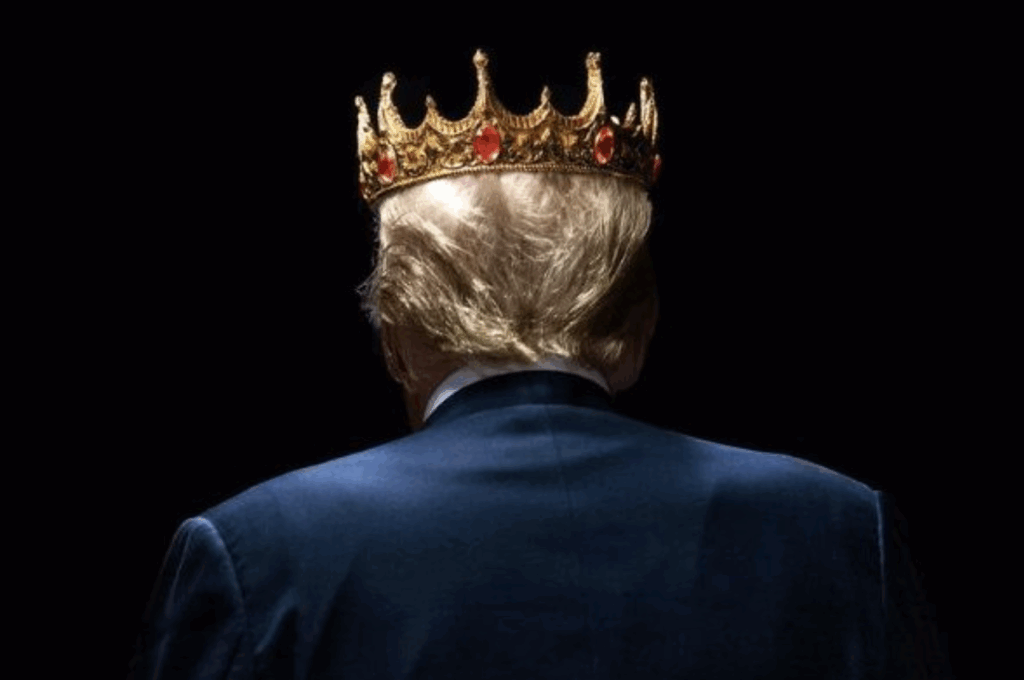
The separation of powers is meant to act as both a safeguard and a restraint. Congress legislates, the executive enforces, and the judiciary interprets. Yet a recent ruling by Judge John J. McConnell of Rhode Island has blurred those boundaries. His decision ordering President Trump to continue disbursing Supplemental Nutrition Assistance Program (SNAP) benefits during a shutdown, even without congressional appropriation, has rewritten the limits of executive power. What was meant as a judicial rebuke of Trump may instead become his most powerful tool.
SNAPPED: Just two weeks ago Democrats protests worrying that Trump would become a king. Now an Obama judge is ordering Trump to ignore Congress and fund SNAP despite a lack of appropriation. If Judge McConnell can make Trump fund SNAP why can't he make Congressional Democrats… pic.twitter.com/T8yQohzsVH
— @amuse (@amuse) November 1, 2025
Judge McConnell’s order compels the executive branch to do what the Antideficiency Act expressly forbids: spend money not appropriated by Congress. That act, one of the bedrock statutes of fiscal restraint, ensures no officer of the federal government can commit the US Treasury to obligations without legislative approval. McConnell’s decision, however, instructs the administration to do exactly that under the guise of the “public interest.” His ruling effectively creates a “public good” exception to a law that has stood for nearly 150 years.
— @amuse (@amuse) November 1, 2025
The immediate effect was to keep SNAP payments flowing to millions of recipients during a funding lapse. But the deeper consequence is far more significant. By complying without appeal, the Trump administration has effectively accepted that it can now engage in executive spending when Congress has not authorized it, provided such spending serves the public good. This interpretation, though born of judicial activism, gives Trump a lawful pathway to act in the nation’s interest even during congressional paralysis.
That shift carries immense potential. Trump can now resume or maintain funding for essential operations like paying military personnel, air traffic controllers, or TSA workers under the same rationale that sustained SNAP. If spending in the public interest is permissible to avert harm, then national defense, aviation safety, and border security are equally justified. The ruling, intended as a constraint, becomes a key to continuity.
The irony is that Trump may have seen this opportunity from the start. He obeyed the ruling, did not appeal, and in doing so, allowed a judicially sanctioned pathway for executive spending to exist. In law, precedent is power. By letting McConnell’s order stand, Trump effectively established that the executive can lawfully spend unappropriated funds when doing so protects the public welfare. In future disputes, his administration can point to this ruling as judicial approval for maintaining operations even without congressional appropriations.
The potential uses are vast. Trump could direct federal agencies to maintain essential operations such as air traffic control, Coast Guard patrols, or TSA screening during a shutdown, invoking the same “continuity of government” rationale used in the SNAP decision. He could extend that logic to defense readiness, border security, or infrastructure maintenance, claiming judicial precedent for “temporary funding continuity” outside the appropriations process. Even broader still, he could reallocate or advance-fund select programs until Congress acts, arguing necessity under the same judicially blessed framework.
This development reflects the peculiar way power shifts in Washington. A liberal judge, seeking to restrain an administration he likely mistrusted, may have inadvertently empowered it. The decision undermines Congress’s exclusive power of the purse and grants the executive a form of emergency latitude that could transform future shutdowns. In constitutional terms, the left’s judicial activism may have strengthened the presidency more than any conservative legal theory ever did.
The Antideficiency Act, codified in 31 U.S.C. §§ 1341–1342, was written to prevent exactly this scenario. Passed after a period of fiscal chaos in the 19th century, it was designed to ensure that no agency could obligate funds without clear congressional approval. It reflects the Founders’ understanding that the legislature, not the courts or the president, controls spending. Yet McConnell’s ruling pierced this principle. His justification rested on humanitarian grounds, claiming the executive must act to prevent “irreparable harm” to citizens dependent on SNAP benefits. But this reasoning, if accepted, applies equally to air travel safety, coastal defense, and countless other areas of public welfare.
That is the Pandora’s box. Once the judiciary determines that spending without appropriation is permissible to avert harm, the boundary between legislative control and executive action collapses. Trump, bound to obey but free to interpret, can now invoke the same rationale for any critical operation. The precedent need not even be extended by another court; it exists as a legal and political shield. Trump can say, truthfully, that a federal judge established that he may spend unappropriated funds in the public interest, and he complied. The left cannot have it both ways.
There is also an important legal asymmetry here. Courts can compel action but cannot enforce appropriations. When Judge McConnell issued his order, he did not create new money; he commanded the executive to act as if funds existed. This forced the administration to find resources within existing balances or reallocate internally, an implicit permission that undermines congressional exclusivity. Future administrations, faced with similar constraints, can cite this as precedent for internal transfers or stopgap funding, claiming judicial necessity as their defense.
The broader constitutional irony is profound. The judiciary, by asserting moral urgency, has done what Congress cannot: authorize spending without law. The executive, by obeying, now possesses both the permission and the precedent to repeat the act. Trump has every reason to use it. He can order the military to maintain full readiness during a funding gap, keep the FAA and TSA running, or ensure that veterans receive uninterrupted benefits. He can justify each step as acting in the public good under judicially recognized necessity.
Critics will call this dangerous, but they will be hard-pressed to explain why a court’s humanitarian rationale applies to food benefits but not to defense or transportation safety. The logic of McConnell’s decision does not distinguish between hunger and national security, between SNAP and air traffic control. If “irreparable harm” to the public justifies spending, then virtually any lapse in essential government function qualifies. Trump, guided by this logic, could govern through continuity rather than crisis.
In the end, McConnell’s order may come to be seen not as an act of judicial compassion but as a constitutional turning point. The left, in its zeal to restrain Trump, has handed him a doctrine of necessity. What began as a mandate to feed the poor during a shutdown could evolve into a framework for executive governance independent of congressional appropriations. The precedent empowers not just this president but any future one who claims to act in the public interest. It will not matter whether that interest concerns food aid, air safety, or national defense. The door is open.
Trump should walk through it. He should direct his agencies to maintain critical services during shutdowns, citing McConnell’s own reasoning. He should declare that no American will suffer “irreparable harm” because of congressional gridlock. In doing so, he would not only ensure continuity of government but also expose the intellectual inconsistency of those who cheered McConnell’s order yet oppose its consequences. The same liberals who demanded executive spending for SNAP cannot now object when Trump applies the precedent to the military, transportation, or homeland security.
There is a lesson here about power and unintended consequences. When institutions abandon restraint for expedience, they often sow the seeds of their own undoing. McConnell’s order, issued in the name of compassion, may become the cornerstone of a new executive assertiveness. It confirms an old truth: those who seek to bind Trump often strengthen him instead. The separation of powers was designed to prevent precisely this kind of judicial overreach, but once breached, the consequences are irreversible. Trump, ever the tactician, seems to have recognized that the best way to win a constitutional fight is not to wage it at all.
If the courts can compel spending, then presidents can cite that compulsion as license. McConnell’s decision has made that possible. The left gave Trump a loophole, and he now holds the keys to drive through it. The irony is that the more the judiciary seeks to limit him, the more latitude he acquires. That is not lawlessness; it is the logical conclusion of a court-imposed exception to a congressional rule. The precedent stands, and Trump would be wise to use it.
If you enjoy my work, please subscribe: https://x.com/amuse.
Sponsored by the John Milton Freedom Foundation, a nonprofit dedicated to helping independent journalists overcome formidable challenges in today’s media landscape and bring crucial stories to you.
READ NEXT: Whoopi Goldberg Rips Producer’s Legal Note Over Trump Remark: Watch



















Love it.
Give it hell President Trump!!!!!!!!!!
Get at it!!! In the meantime he can fire the whole Congress, and then hold LEGAL elections after Mr. Trump outlines next years budget and funds it.