

A centenarian’s wake-up call…
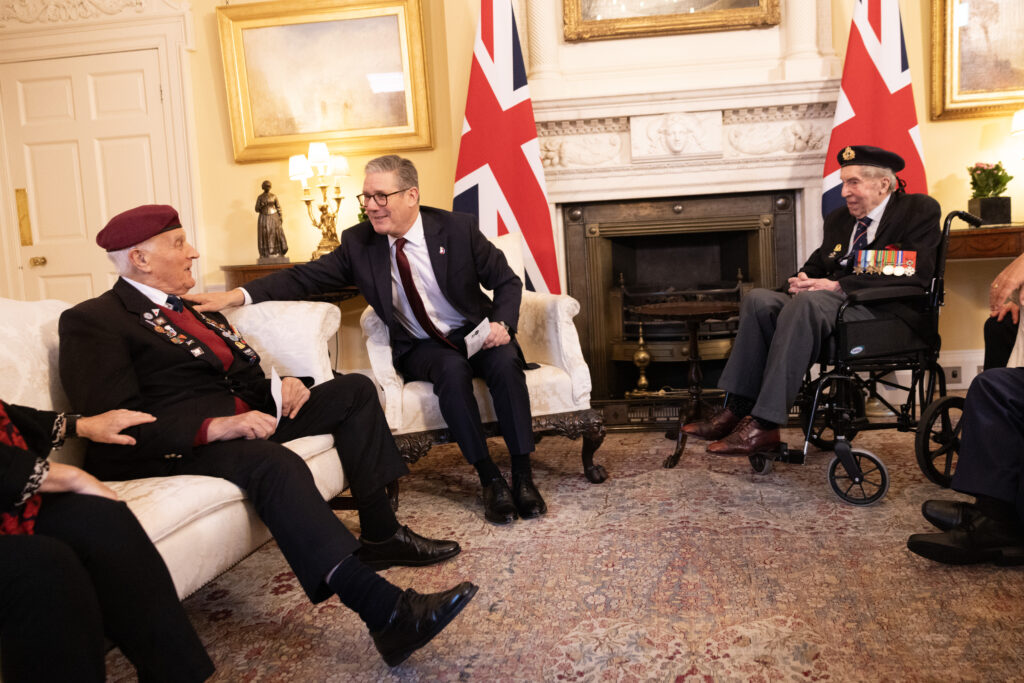
LONDON — In a moment that caught viewers and broadcasters off guard, 100-year-old Royal Navy veteran Alec Penstone delivered a blistering reflection on modern Britain during an interview on Good Morning Britain ahead of Remembrance Sunday.
The centenarian veteran’s voice trembled with the weight of memory. His eyes seemed to drift far beyond the present as he spoke. “I can see in my mind’s eye, rows and rows of white stones of all the hundreds of my friends… for what? A country of today? No, I’m sorry. The sacrifice wasn’t worth the result.”
🚨BREAKING: British veteran breaks down live on TV over state of the country:
— Inevitable West (@Inevitablewest) November 7, 2025
"Rows and rows of white tombs for what? A country of today? No, I'm sorry. The sacrifice wasn't worth the result.
I fought for freedom, and it's darn-sight worse now than when I fought." pic.twitter.com/4guu3xojFY
An Unfiltered Moment
Hosts Kate Garraway and Adil Ray offered words of comfort and presented him with a signed album from the D-Day Darlings — a gesture meant to honor his service and remind him that younger generations remain grateful.
Yet Penstone’s comments resonated far beyond the studio, sparking an online firestorm. Prominent Conservative MPs, including Suella Braverman and Robert Jenrick, praised the veteran’s candor and joined calls for a national renewal amid growing debate over Britain’s identity, freedoms, and sense of decline.
Postwar Britain: Victory with a Price Tag
Penstone’s concerns, though visceral, are rooted in history. After 1945, Britain undoubtedly emerged victorious against the forces of tyranny and oppression, but the price was steep.
The country was economically shattered. The war had left Britain deeply indebted, especially to the United States, thanks to the Lend-Lease program and the 1946 Anglo-American Loan — money that came with long repayment schedules and tighter economic constraints.
Britain’s industrial base — already aging before the war — was in tatters from relentless bombing. Rationing continued well into the 1950s, underlining the fragility of the postwar economy.
A Slower Recovery Than Former Enemies
While Britain was digging out from the rubble, other war-torn nations rebounded with speed. West Germany, France, and Japan all received significant U.S. economic assistance — through the Marshall Plan in Europe and sweeping postwar reforms in Japan. These nations rebuilt quickly, pivoting to export-driven models and modernized industrial systems.
By contrast, Britain — weighed down by imperial commitments and an inability or unwillingness to modernize — struggled to keep pace. Its dependence on colonial trade networks left it slower to adapt to the emerging global economy.
From Superpower to Middle Power
Though Britain never reclaimed its prewar status as a dominant superpower, it gradually transitioned into a globally connected, service-oriented economy — influential, yes, but far from its former hegemony.
Penstone’s remarks weren’t just a lament — they were a warning. As Britain faces cultural division, political volatility, and a sense of drift, his words echo a sentiment more citizens are beginning to voice: that the nation needs a course correction.
And when that message comes from someone who risked everything on the beaches of Normandy, perhaps it’s time to listen.
🇬🇧 Timeline of the United Kingdom’s Postwar Decline and Reinvention
1940s – Victory at a Crushing Cost
- 1945: Britain emerges victorious from World War II — but exhausted and bankrupt.
- The U.K. suffered around 450,000 total military and civilian deaths, compared to the United States’ roughly 420,000 — a slightly higher number in absolute terms, but far more significant relative to population size (nearly 1% of Britons died, versus 0.3% of Americans).
- The Blitz and V-weapon bombings devastated Britain’s cities: London, Coventry, Liverpool, and others saw massive destruction of homes, factories, rail lines, and ports, crippling industrial output.
- By war’s end, over two million homes were destroyed or damaged, and major urban centers required complete reconstruction.
- Britain’s military infrastructure — its navy, merchant fleet, and overseas bases — was severely depleted. Maintaining global commitments became financially impossible.
- To stay solvent, Britain relied on the $4.3 billion Anglo-American Loan of 1946, while also demobilizing its imperial forces.
- India’s independence in 1947 symbolized both the moral and practical limits of continued imperial control.
- By 1950, the U.K. accounted for about 10% of global manufacturing, down from roughly 25% in 1870 — an early sign of industrial decline.
1950s – The Suez Shock
- 1956: The Suez Crisis laid bare Britain’s reduced global power. The U.S. refused to support the Anglo-French-Israeli invasion of Egypt, forcing a humiliating withdrawal.
- The episode demonstrated that Britain could no longer act unilaterally on the world stage.
- At home, postwar austerity persisted, and economic growth lagged behind Western Europe, averaging only 2–2.5% annually.
1960s – Deindustrialization and Imperial Withdrawal
- Chronic balance of payments crises and sluggish productivity plagued the economy.
- The 1967 devaluation of the pound marked another symbolic loss of confidence in Britain’s economic stability.
- By the decade’s end, Britain formally withdrew from its major military bases “east of Suez,” accepting its new role as a regional — not global — power.
1970s – Crisis and Integration
- 1973: Britain joined the European Economic Community (EEC) in a bid to stabilize trade and spur growth.
- The decade brought high inflation, labor unrest, and oil shocks, eroding industrial competitiveness.
- The country’s self-image as a world power dimmed amid repeated crises — setting the stage for economic restructuring in the next decade.
1980s – Thatcher’s Reforms and the Financial Turn
- Margaret Thatcher’s government liberalized markets, broke union power, and privatized national industries.
- The “Big Bang” financial deregulation of 1986 transformed London into a global finance hub, partially offsetting manufacturing decline.
- Despite deindustrialization, the U.K. emerged as a service-driven economy, leveraging banking, insurance, and international trade.
1990s – A Smaller but Stable Power
- Britain projected selective military power (e.g., the Gulf War in 1991) while embracing globalization.
- 1997: The handover of Hong Kong to China marked the final end of the British Empire.
- Economic performance was solid but unremarkable; global influence was increasingly exercised through diplomacy, finance, and culture.
2000s – Prosperity and Globalization
- The U.K. benefited from the global economic boom, but the 2008 financial crisis exposed overreliance on the financial sector.
- Britain’s influence remained strong through the U.S.-U.K. “special relationship,” exemplified by participation in the Iraq War.
2010s – Brexit and Renewed Uncertainty
- 2016: The Brexit referendum fractured Britain’s political consensus and revived questions about its global direction.
- 2019: Britain formally left the EU, seeking sovereignty at the cost of friction with its largest trading partner.
- Economic growth slowed to ~1.4%, and productivity lagged behind every other G7 country.
2020s – Searching for Purpose
- The U.K.’s share of global GDP has fallen from nearly 9% in 1950 to about 2.2% in 2025.
- The COVID-19 pandemic, inflation, and post-Brexit trade adjustments strained the economy further.
- Nonetheless, Britain remains a top-tier diplomatic and financial power, its soft power — culture, universities, and global media — unmatched among nations of its size.
| Year | UK Share of Global GDP | Empire/Colonies | War Damage Level | Influence Type |
|---|---|---|---|---|
| 1913 | ~10% | 25% of world population | N/A | Hard + Imperial |
| 1945 | ~9% | Large but war-weakened | Severe civilian & industrial destruction | Transitional |
| 1975 | ~4% | Commonwealth only | Rebuilt | NATO + Diplomatic |
| 2000 | ~3% | None | N/A | Financial + Diplomatic |
| 2025 | ~2.2% | None | N/A | Financial + Cultural |
READ NEXT: Supreme Court Rules Decisively On Emergency Trump Appeal














And left unsaid is the ‘takeover’ by i slam ists as that would be deemed “Islamophobic” and likely have resulted in whoever dared to say it being arrested and charged with a ‘hate crime’ – at least most countries haven’t sunk THAT low – yet.
OMG, I know they are in disbelief of what is happening. Breaks my heart,