



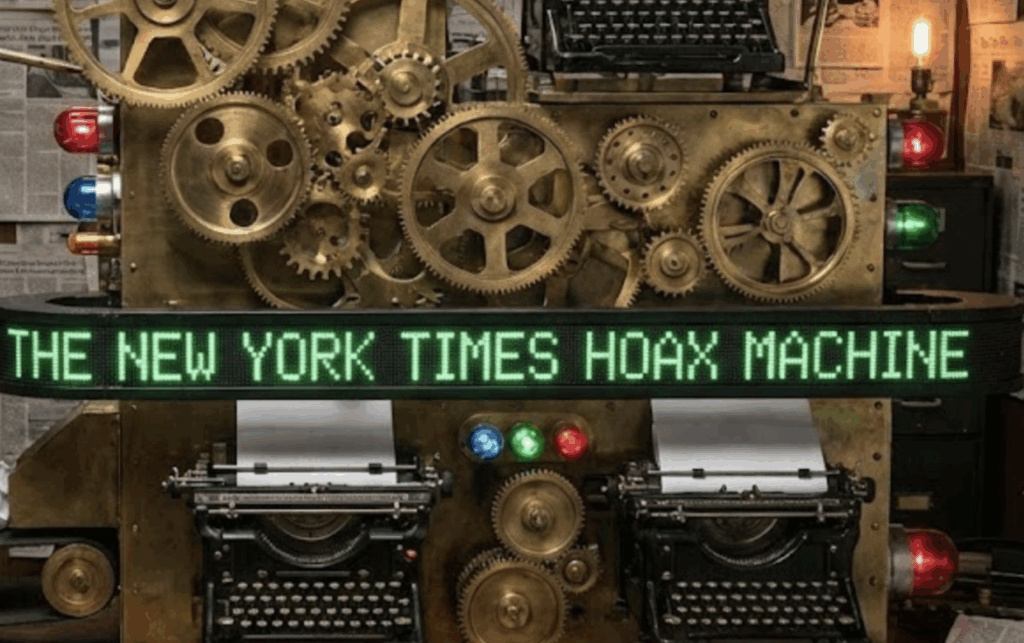
The idea that a newspaper can create a story out of thin air seems far-fetched until one watches The New York Times attempt exactly that. The paper spent five months trying to construct a conflict-of-interest case against David Sacks, the White House AI and Crypto Czar, and ended up proving only that its own reporting process had become untethered from facts. The structure of the hoax is simple once laid out. A team of reporters began with a conclusion, treated it as a premise, and spent months searching for evidence that would support it. They did not find any. Instead, they produced shifting allegations, each of which collapsed once confronted with documents, ethics letters, or basic chronology. The debunked claims never caused the reporters to revisit the premise. They pivoted to new claims, then to still more claims, but the underlying narrative stayed fixed. A reader who examines the full record, including the detailed response from Sacks and the letter from his attorneys at Clare Locke, will see that the Times clung to a storyline long after its factual supports had been stripped away. The puzzle is not why the effort failed, but how it lasted five months.
INSIDE NYT’S HOAX FACTORY
— David Sacks (@DavidSacks) November 30, 2025
Five months ago, five New York Times reporters were dispatched to create a story about my supposed conflicts of interest working as the White House AI & Crypto Czar.
Through a series of “fact checks” they revealed their accusations, which we debunked… pic.twitter.com/o67ls3RmC6
Begin with Sacks’ role. A Special Government Employee is a temporary expert brought into the US government precisely because he has deep private sector experience. Congress created this category in 1962 to ensure that policymakers could tap knowledge that does not exist inside the bureaucracy. The legal framework anticipates that such a person will have prior business holdings. That is why the system uses ethics letters rather than blanket prohibitions. Those letters lay out what must be divested, what can be held, and what recusal obligations attach to certain activities. Sacks followed this process scrupulously. He submitted full disclosures to the Office of Government Ethics, received two ethics letters governing AI and cryptocurrency policy, and divested substantial positions at personal cost. Nothing in this framework is unusual. It is how the law expects the system to function. The Times’ reporters nonetheless treated the basic SGE structure as suspicious, perhaps because it did not fit the narrative they needed. They asserted that Sacks shaped AI policy without having ethics letters, then abandoned that theory after learning the letters were issued in March. They then suggested that his financial disclosures had been incomplete, a claim that collapsed once the reporters understood the regulatory text, which measures holdings by value relative to total assets rather than by ownership percentages. The reporters had misread the rules they were purporting to enforce.
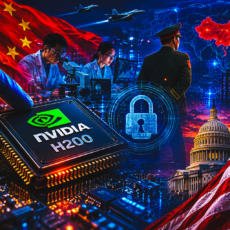
Once the ethics letter line of attack failed, the Times moved to a different claim. It alleged that Sacks held a private dinner with Nvidia CEO Jensen Huang, at which Huang supposedly convinced him to support loosening chip export restrictions to China. The details were specific. The meeting was described as springtime. Foreign export controls were said to be discussed. The implication was unmistakable: a secret meeting, a quid pro quo, a pipeline from a private CEO directly into the Oval Office. The problem was that the dinner never took place. It did not occur in the spring or in any other season. Sacks did not meet Huang until after he joined the Trump Administration, and Craft Ventures has never held a position in Nvidia. When confronted with the evidence, the Times quietly dropped the dinner allegation but kept the broader insinuation, as if a relationship it had already misdescribed must still be unusually close. A reader might reasonably ask how one fabricates a dinner with a major CEO. The answer lies in the narrative template. The reporters began with a conclusion that Sacks must have been influenced by private sector ties. A dinner with Huang fit the template, so the dinner was asserted. The fact that it never occurred did not cause a reconsideration of the template. The reporters simply removed one brick and reached for another.
DRIVE-BY MEDIA: David Sacks just blew up NYT’s 5 month smear job. Every allegation collapsed, NYT moved the goalposts, and the final story is a nothing burger. He released the receipts.
— @amuse (@amuse) December 1, 2025
David Sacks says five NYT reporters spent months manufacturing accusations about his work as… pic.twitter.com/hT3f87cd4u
The next brick involved Groq. The Times suggested that Sacks advocated chip policies during a Middle East trip that would benefit the company. This would be troubling if true: a White House official using diplomatic negotiations to help a portfolio company. But the ethics letter required divestment of Groq, and Craft did in fact divest before Sacks engaged in Middle East matters. The timeline ruled out the allegation. A reporter could have discovered this at the outset by requesting transaction documents. Instead, the allegation was floated as if no ethics framework existed. When the documents surfaced, the allegation dissolved, and the Times pivoted again.
The reporters then turned to Amazon, xAI, and Meta. The new insinuation was that a chip deal with the UAE might produce future benefits for Sacks because he supposedly held positions in those companies. Yet the ethics letters required divestment of these firms as well. The divestments occurred within the timeframes mandated by the Office of Government Ethics. Again, the timeline foreclosed the theory. The reporters already had this information. They chose not to integrate it into the narrative.
The remaining allegations involved defense contracts. The Times asserted that Sacks had used his influence to channel Pentagon work toward Firestorm and Anduril. At first glance, the claim seems dramatic: a senior White House official steering lucrative contracts to allies. But nothing in the record supported it. Firestorm’s contract began in 2024, before Trump took office and before Sacks held any government role. As for Anduril, the Times treated the announcement of a $159M Army contract, released a month after the AI Action Plan, as if it must have come from Sacks’ influence. This made little sense. The Pentagon had been working with Anduril long before the Action Plan, and Sacks had no involvement in procurement. Nothing about the contract aligned with the duties of a Special Government Employee in the White House. The reporters eventually abandoned this angle as well.
At this point, the pattern was unmistakable. The reporters moved through a sequence of allegations, dinner meetings, foreign export schemes, portfolio schemes, defense contracts, each one presented as if it were the missing link, each one falling apart as soon as the underlying facts were laid on the table. A reader may wonder why so many distinct theories were floated. The explanation is simple. The initial premise that Sacks must be compromised acted as an anchoring belief. As each theory failed, the belief remained fixed. The reporters treated debunkings not as reasons to revisit the premise but as reasons to invent the next theory. The approach resembles the old bureaucratic line, “Show me the man, and I will find you the crime.” Here, the reporters were shown the man and kept trying to find the conflict.
The All In Podcast line of attack illustrates the shape of the problem. The Times insinuated that Sacks profited from his government role because of the podcast. The facts run the opposite direction. Sacks entered into a written agreement forfeiting his share of any revenue linked to AI or cryptocurrency companies. He gave up money; he did not gain it. The Times then attacked an AI Summit co-hosted by the podcast. It suggested that access to President Trump was offered in exchange for sponsorships. In reality, the summit lost money. Tickets were given away for free. Sponsors received nothing beyond logo placement. No VIP reception took place. No access to the President was ever offered. The summit was a not-for-profit educational event. Yet the Times presented it as an access for sale scheme, as if the mere fact that the President attended a public policy event created a presumption of misconduct. When the facts did not match the insinuation, the insinuation remained. Only the details shifted.
A reader unfamiliar with media processes might assume that repeated factual collapses would cause a responsible editor to halt a story. That is not how this story unfolded. The reporters pressed forward, revising details while preserving the conclusion. As evidence of this dynamic accumulated, Sacks retained Clare Locke, a firm well known for its specialization in defamation law. The firm’s letter to the Times laid out the full chronology of interactions, including the ethics framework, the divestments, the nonexistent dinner, the timeline errors, and the discarded allegations. The level of detail is striking. It shows that the Times repeatedly received documentary evidence that contradicted the reporters’ assumptions. It shows that the Times failed to integrate this evidence into the narrative. It shows that the Times waited until late in the reporting process to provide a complete fact-check document, a departure from its own editorial standards. The letter is not an adversarial flourish. It is a record of what actually occurred during five months of engagement.
The final Times story was a nothing burger because it had to be. Once every claim of misconduct had been disproved, the reporters had nothing left except a set of anecdotes. Those anecdotes do not support the headline. They do not show a conflict of interest. They do not show improper influence. They do not show anything beyond the ordinary interactions of a senior official working on AI and crypto policy in a fast-moving sector. A fair-minded reader can see that the narrative was predetermined and that the reporting process was an effort to retrofit facts to a conclusion that never had evidentiary support.
Why does this matter? It matters because the Times is still treated as an authoritative source by many institutions. It matters because narratives built on faulty premises can shape policy debates and public understanding. It matters because a republic depends on media that corrects narratives when facts fail to support them. In this case, the facts failed repeatedly. The narrative did not budge. That is the definition of a hoax.
Sacks’ exposure of this process tells us something important about the future of media scrutiny in the AI era. The ability of public figures to publish full factual records on platforms like 𝕏 creates a new kind of transparency. It allows readers to compare the media narrative with primary documents. It reduces the power of selective quotation. It forces institutions to defend their reasoning rather than rely on their prestige. This shift will not solve every problem, but it will help readers separate evidence from narrative.
The Times could have followed the evidence where it led. If it had done so, the story would have been simple. A senior official complied fully with ethics rules, divested required holdings, consulted experts across the sector, and advocated policies he believed would strengthen U.S. leadership in AI and cryptocurrency. No conflict of interest existed. No misconduct occurred. That was the story five months ago. It is still the story today.
If you enjoy my work, please subscribe: https://x.com/amuse.
Sponsored by the John Milton Freedom Foundation, a nonprofit dedicated to helping independent journalists overcome formidable challenges in today’s media landscape and bring crucial stories to you.
READ NEXT: Venezuela Special Ops Chief Formally Responds To Congress















Been a Hoax since first term
“The idea that a newspaper can create a story out of thin air seems far-fetched until one watches The New York Times attempt exactly that…The structure of the hoax is simple once laid out. A team of reporters began with a conclusion, treated it as a premise, and spent months searching for evidence that would support it.”
Good article, but it’s important to point out that the New York Times does this every single day in the articles it publishes. This isn’t an aberration. This is standard operating procedure at the NYT.
Nothing new for the times.
They are an unethical crap show and a government mouthpiece.
Why would anyone pay to be lied to? Are people that hard up for scandal since the death of the National Inquirer that they are willing to pay the New York Times to lie to them and print totally made up “scandals”.