



In Congress, a small but notable faction of Senate Republicans is joining Democrats in efforts to unwind one of Trump’s own policies: his March executive order restricting collective bargaining rights for federal workers across key agencies.
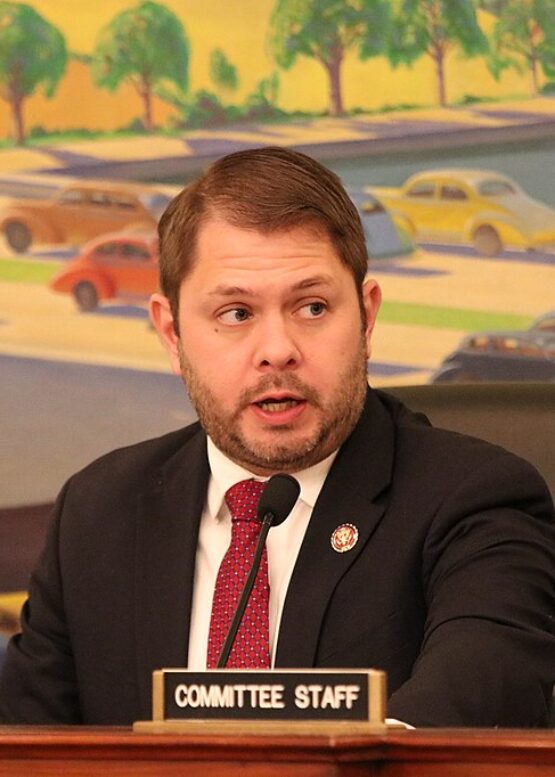
The House passed its version of the American Workers Protection Act with 231 votes — thanks to nearly two dozen GOP defections and a procedural jailbreak by Rep. Jared Golden (D-Maine), who forced a floor vote using a discharge petition. But the Senate remains a much tougher climb.
So far, only Lisa Murkowski and Susan Collins have signed on to the Senate companion bill, authored by Mark Warner (D-Va.), who argues that “you can’t run a functioning government by attacking the very workforce that keeps Americans safe.”
Collins says federal workers deserve the collective bargaining protections granted under the 1978 Civil Service Reform Act. Murkowski calls those protections essential to shielding employees from “unsafe working conditions and political retribution.”
But the bill sits in a committee chaired by Sen. Rand Paul, a longtime opponent of public-sector unions. Even Sen. Josh Hawley — often open to populist labor appeals — is lukewarm, calling public-sector unions “a different thing” from private-sector ones.
Golden and Rep. Brian Fitzpatrick (R-Pa.) are now lobbying senators directly in hopes of forcing a vote, but there is no Senate equivalent to the discharge petition. The bipartisan crack is real — whether it becomes a break is another matter entirely.
Inside the White House: A Bombshell Profile, an Unraveling, and a Rapid Walk-Back
Meanwhile, inside the West Wing, a very different storm is brewing.
White House Chief of Staff Susie Wiles is under intense scrutiny after Vanity Fair published an extraordinarily candid profile based on 11 on-the-record interviews. In a town where senior aides typically speak in platitudes, Wiles — intentionally or not — spoke with startling bluntness about the president, his vice president, his attorney general, Elon Musk, and even the internal handling of the Epstein documents.
Among the most arresting revelations:
- Wiles said she personally reviewed Epstein files and confirmed Trump’s name appears in them, while underscoring there is no “secret client list.”
- She criticized Attorney General Pam Bondi, saying Bondi “completely whiffed” the Epstein rollout.
- She described Trump as having “an alcoholic’s personality,” focused obsessively on retribution and resistant to advice — likening her management style to lessons learned from growing up with sportscaster Pat Summerall, her alcoholic father.
- She said Vice President JD Vance has “been a conspiracy theorist for a decade.”
- She referred to Elon Musk as “an avowed ketamine user” and “an odd, odd duck.”
The political world reacted with shock — including former Trump aide Anthony Scaramucci, who said such candor from a top adviser signals that “something’s up.”
Within hours, Wiles issued a blistering statement distancing herself from the profile, calling it a “disingenuously framed hit piece” that stripped away critical context. She defended the administration’s record and vowed that none of this would slow “our relentless pursuit of Making America Great Again.”
But the damage was done. Washington is now parsing whether this was a momentary rupture — or a sign of deeper fractures emerging within Trump’s inner circle at a pivotal moment.
What to Watch Today
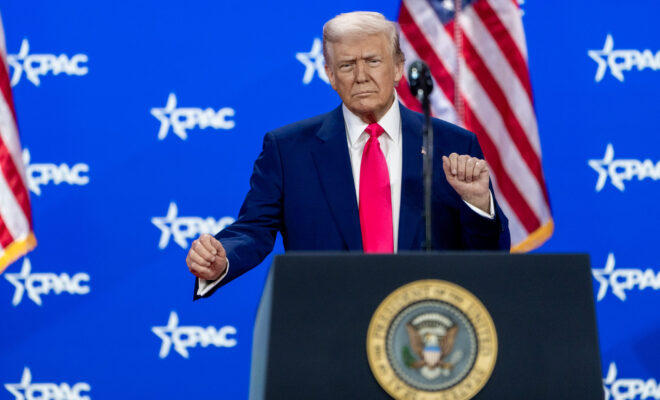
- 9 p.m. ET: Trump’s address from the White House. Expect the political world — and more than a few anxious lawmakers — to be glued to their screens.
- Hill watchers will be gauging whether momentum continues to build behind the federal unions bill, or whether GOP resistance hardens further.
- And inside the administration, all eyes are on whether Wiles’ walk-back quiets the uproar — or invites fresh scrutiny.
READ NEXT: Minnesota Rep. Ilhan Omar Has A Plan To Register And Confiscate Your Guns