


Washington opened with a trio of developments that underscore just how turbulent the political and legal landscape remains as the 2026 cycle begins to take shape.
Jack Smith Breaks His Silence — And Drops a Bombshell
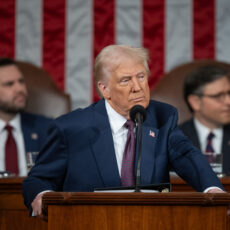
In rare closed-door testimony on Capitol Hill, former Special Counsel Jack Smith told House Judiciary Committee members that investigators had evidence “beyond a reasonable doubt” that former President Donald Trump criminally conspired to overturn the 2020 election.
According to Smith’s prepared remarks—obtained in advance by the Associated Press—his team operated “without regard to President Trump’s political association, activities, beliefs, or candidacy.” He also reiterated that the probe uncovered “powerful evidence” that Trump willfully retained highly classified documents at Mar-a-Lago, storing them in unsecured spaces ranging from a ballroom to a bathroom.
Smith’s dual investigations produced charges in both the election-interference and documents cases, but the DOJ ultimately dropped the indictments under its longstanding policy barring prosecution of a sitting president. Trump, for now, has remained publicly silent on Smith’s assertions.
Inside the FBI: Dan Bongino Signals the Exit Ramp
While Smith’s testimony dominated legal headlines, a parallel story is unfolding inside the FBI. Deputy Director Dan Bongino—the outspoken former conservative media personality tapped by Trump earlier this year—is reportedly preparing to leave the bureau after a short and closely scrutinized tenure.
The New York Times reports that Bongino has begun clearing out his office, shipping personal effects back to Florida, and telling associates he could depart as soon as this week. The timing suggests a deliberate runway for a return to conservative broadcasting ahead of the 2026 midterms.
But Fox News Digital pushed back, citing sources who say Bongino hasn’t made a final decision and that talk of an emptied office is exaggerated. Even so, few expect him to stay long, and speculation is already swirling about his next chapter—and what his exit would signal for an agency long at the center of partisan crossfire.
Courts Keep the National Guard in D.C.—For Now
Meanwhile, a major separation-of-powers clash over public safety in Washington took another turn. A federal appeals court on Wednesday allowed President Trump’s National Guard deployment in the District of Columbia to remain in place while litigation continues, temporarily blocking a lower-court order that would have required the Guard’s withdrawal.
Judge Jia Cobb had ruled that the deployment unlawfully encroached on local authority, but delayed enforcement to give the administration time to appeal. The D.C. Circuit went further, granting an administrative stay and signaling that the federal government is likely to prevail on its core argument: that the president wields greater control over the D.C. National Guard than over Guards in sovereign states.
More than 2,000 Guard members remain deployed, originally activated when Trump declared a “crime emergency” in the capital last August. City leaders and civil liberties groups have argued the deployment amounts to unauthorized law-enforcement activity; the appeals court sidestepped that question for now, focusing solely on maintaining the status quo.
Without further intervention, the Guard presence could well extend into 2026 as the case winds through the courts—leaving Washington in a prolonged state of federal-led security oversight.
READ NEXT: Report: Elon Musk Begins Funding Republicans For 2026 Elections