
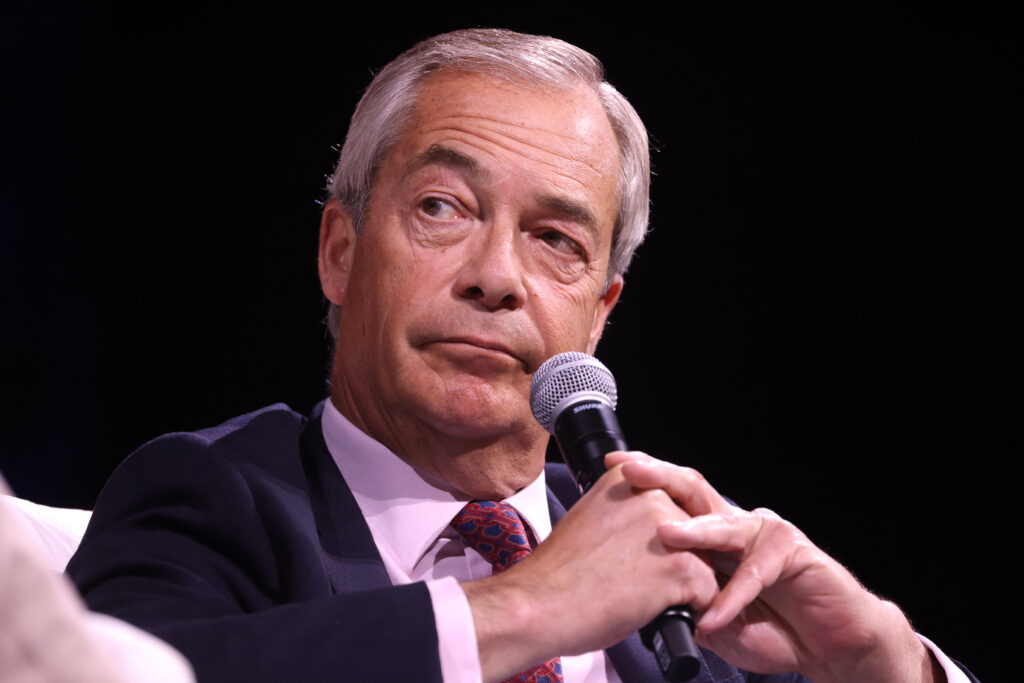
The BBC has been forced to issue yet another apology to Reform UK leader Nigel Farage after repeatedly attributing words to him that he never said during coverage of the Henry Nowak case.
The latest controversy follows mounting public anger over the murder of 18-year-old Henry Nowak, who was fatally stabbed in Southampton in December 2025 and then handcuffed by responding police officers after they accepted allegations of racism made by his attacker while initially dismissing Nowak’s repeated statements that he had been stabbed.
The case has ignited national debates over policing, institutional priorities, and diversity, equity and inclusion (DEI) policies within public institutions.
Against that backdrop, critics have argued that accurate reporting is more important than ever. Yet the BBC found itself under fire after Newsnight presenter Matt Chorley repeatedly misquoted comments made by Farage during a discussion of the case.
Chorley claimed three separate times that Farage had described public anger over the incident as “white, cold rage.”
In reality, Farage had referred to “pure, cold rage” among members of the public reacting to the circumstances surrounding Nowak’s death.
The distinction quickly became a source of controversy, with critics arguing that the BBC’s version inserted an explicitly racial dimension into Farage’s comments that was not present in the original statement.
After complaints, Chorley issued an apology, explaining that he had misremembered the quote. However, he also argued that the error did not materially alter the substance of the discussion, a claim that critics disputed.
BBC Newsnight presenter Victoria Derbyshire later issued a separate on-air apology and confirmed that the episode containing the incorrect quotations had been removed from the broadcaster’s streaming platforms.
The incident marks the third formal apology Farage has received from the BBC since 2023.
That year, BBC presenter Geeta Guru-Murthy was forced to apologize after accusing Farage of using his “customary inflammatory language” during coverage of a speech in Dover.
The broadcaster also faced criticism for its reporting on Farage’s debanking. Initial reports asserted that Coutts Bank had closed his accounts for financial reasons. Internal documents later revealed that concerns about Farage’s political views had played a significant role in the decision.
The BBC also retreated from descriptions of Reform UK as a “far-right” party after receiving complaints about the characterization.
Earlier this week, 23-year-old Vickrum Digwa was sentenced to life imprisonment with a minimum term of 21 years for the murder of Nowak. During sentencing, the judge rejected Digwa’s claims that the teenager had “racially abused” him and concluded that the allegations were false.
The release of police body-camera footage from the scene has intensified scrutiny of the authorities’ response. The footage showed Nowak repeatedly telling officers that he had been stabbed and struggling to breathe while officers treated him as a suspect following claims made by Digwa and members of his family.
One officer can be heard responding to Nowak’s insistence that he had been stabbed by saying, “I don’t think you have, mate.”
Prime Minister Sir Keir Starmer has accused Farage of inflaming tensions surrounding the case after protests and clashes broke out in Southampton following the sentencing and release of the footage.
Starmer argued that political figures have a responsibility to avoid escalating public anger.
Farage has rejected those accusations, insisting that he is highlighting legitimate concerns about equal treatment under the law and the role that DEI policies play within public institutions.
He has argued that police officers should focus exclusively on evidence and immediate threats rather than assumptions tied to race or identity.
Supporters of Farage contend that the BBC’s repeated misquotation is particularly serious because it occurred during a national debate already marked by accusations of racial bias, policing failures and political polarization.
Critics of the broadcaster argue that transforming “pure, cold rage” into “white, cold rage” fundamentally altered the meaning of the statement by suggesting Farage was framing public outrage in racial terms.
For the BBC, the latest apology is likely to further fuel criticism from those who already view the publicly funded broadcaster as politically biased. For Farage and Reform UK, it provides another example of why public trust in major media institutions continues to erode.
READ NEXT: Nigel Farage And The British Question: Reform, Rhetoric And Restraint










Misquoting? You mean “lying about”…..
There, I fixed it.
Starmer says,”Starmer argued that political figures have a responsibility to avoid escalating public anger.” Yet he is a hypocrite. He inflames public anger every time he opens his mouth.