


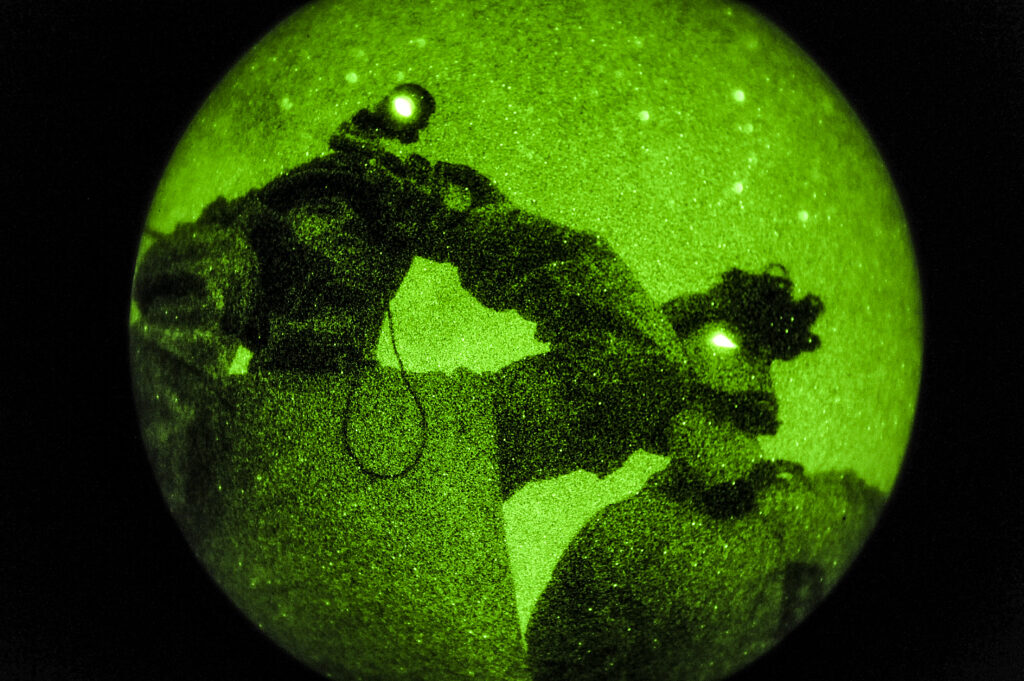
The United States carried out a large-scale military strike against Venezuela early Saturday and captured Venezuelan President Nicolás Maduro and his wife, Cilia Flores, and flew them out of the country, according to U.S. officials and President Donald Trump.
BREAKING:
— Visegrád 24 (@visegrad24) January 3, 2026
U.S. helicopters are POUNDING the Venezuelan military complex Fuerte Tiuna in Caracas pic.twitter.com/l9jblj2O5a
As The New York Times noted, the Trump administration had steadily intensified pressure on Maduro over several months.
Venezuelan officials said in statements that while a death and injury toll was still being assessed, Venezuelans had been killed in the strikes. A U.S. official said there had been no American casualties in the operation but would not comment on Venezuelan casualties.
In a brief phone interview with The New York Times after the announcement, Mr. Trump celebrated the success of the mission to capture the Venezuelan president. “A lot of good planning and lot of great, great troops and great people,” he said. “It was a brilliant operation, actually.”
When asked if he had sought congressional authority for the operation or what is next for Venezuela, Mr. Trump said he would address those matters during a news conference at 11 a.m. at Mar-a-Lago, his private club and residence in Palm Beach, Fla.
Venezuela said it rejected military aggression by the US after multiple explosions rocked Caracas and other areas early on Saturday https://t.co/KYhg2rZh9M pic.twitter.com/HOOlrQBke3
— Reuters (@Reuters) January 3, 2026
Maduro’s capture was reportedly carried out by elite U.S. forces, including Delta Force, in coordination with other special operations units.
The Venezuelan strongman was later flown to the United States, where prosecutors in the Southern District of New York — who had pursued him for years — took custody of the case. The investigation was overseen by Emil Bove III, a former criminal defense attorney for Trump. Among the prosecutors in the 2020 case against Maduro was Amanda Houle, who now heads the office’s criminal division.
Maduro will be held at the Metropolitan Detention Center in Brooklyn until his trial.
Levanta la mano si el ver está imagen de Nicolás Maduro preso te produce felicidad. ✋ pic.twitter.com/QBN3vlG33p
— El Abraham chilletaX. (@ecuernavaco2) January 3, 2026
Survivors of the Maduro regime condemned the U.S. action as “military aggression” and a violation of Venezuelan sovereignty, declaring a state of emergency and calling for national mobilization.
Reactions have been mixed internationally, with some leaders condemning the operation as a breach of international law and others emphasizing the implications for regional security.
BREAKING: Irony just died. https://t.co/sx1K6RAlqd
— Piers Morgan (@piersmorgan) January 3, 2026
BREAKING 🚨 Argentina’s President Javier Milei celebrates President Trump capturing Venezuela’s President
— MAGA Voice (@MAGAVoice) January 3, 2026
“LIBERTY ADVANCES LONG LIVE LIBERTY, DAMN IT” pic.twitter.com/Sr8GdxJJq0
"The UK was not involved in any way in this operation."
— Sky News (@SkyNews) January 3, 2026
Sir Keir Starmer reacts to the news that Venezuelan President Nicolas Maduro has been 'captured' after United States strikes on country.
Latest updates: https://t.co/QiYZWZ6Hlk pic.twitter.com/rfwPvKkpfi
Historical polling (prior to the Jan. 3 operation) showed that while a large majority of Venezuelans wanted Maduro to leave office, only about one-third supported foreign military intervention to remove him, with most preferring a negotiated or domestic political solution.
Across Venezuela, posters of Maduro are being torn down to the cheers of local residents following his arrest by the U.S. Delta Force. pic.twitter.com/SXVCxyv3lB
— Visegrád 24 (@visegrad24) January 3, 2026
Venezuelans living abroad — particularly in South America and in communities like Miami’s Doral — show much stronger support for U.S. action to remove Maduro, viewing it as a path to freedom, democracy, and the possibility of returning home.
A recent poll of Venezuelans in exile found that about 64% supported U.S. military intervention to restore democratic order, compared with only about 34% among Venezuelans inside the country before the current escalation.
Venezuelans gather in Chilean capital to celebrate news of US operation https://t.co/hIXyyDsf5d
— Reuters (@Reuters) January 3, 2026
Overall, sentiment varies significantly by location, personal experience with the Maduro regime, and perceived risk of foreign military intervention.
This is a breaking news story. Please check back for updates.
READ NEXT: Why Demographic Change Has Become A Policy Question – Not A Conspiracy




He’s a cartel boss, not a leader of a country. Try him and put him in prison for drug running and endangering American lives.