


Senior leaders of the U.S. Secret Service say they plan to hire roughly 4,000 new employees by 2028, a dramatic expansion that law enforcement experts say has little modern precedent and reflects mounting strain on the agency’s workforce.
The hiring surge is intended to offset an aging workforce, rising burnout, and a relentless operational tempo as the protective mission continues to grow. If successful, the plan would increase the agency’s total workforce by about 20 percent, pushing it past 10,000 employees for the first time in its history.
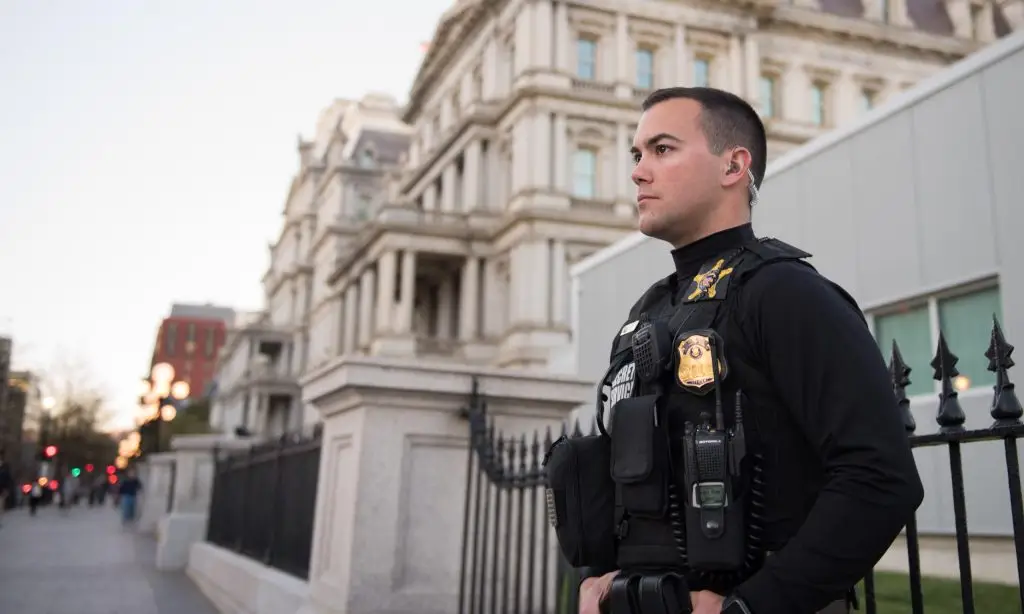
Under a plan led by Deputy Director Matthew Quinn, the Secret Service aims to expand its special agent ranks from roughly 3,500 to about 5,000. Officials also want to add hundreds of officers to the Uniformed Division, bringing that force to around 2,000, while hiring additional analysts, technicians, and support staff. The full scope of the hiring plan has not been previously reported.
Despite strong backing from agency leadership and senior administration officials, the effort faces serious obstacles. Former Secret Service officials point to a nationwide shortage of qualified law enforcement candidates, fierce competition from other federal agencies—particularly in immigration enforcement—and long-standing bottlenecks in hiring and training.

The agency has struggled before. A previous effort to grow to 10,000 employees over roughly a decade ending in 2025 fell short, undermined by leadership turnover, bureaucratic inertia, and disruptions caused by the coronavirus pandemic. That failure came despite the agency offering some of the most generous financial incentives in federal law enforcement.
“Our mindset is, we aren’t going to pay our way out of this,” said Quinn, a veteran Secret Service official who returned to the agency in May after several years in the private sector. “We can’t create enough incentives to negate the fact that we’re working our people very, very hard.”
Quinn said he and Secret Service Director Sean Curran—formerly the head of President Donald Trump’s protective detail—have made hiring the agency’s top institutional priority, second only to protection itself.
“The protective mission has expanded,” Quinn said. “Our numbers are low to meet those needs. We have to achieve what we said we were going to do 10 years ago. We’ve got to achieve it now.”
Agency leaders argue that a larger workforce is essential not just for protection, but for sustainability. Many agents and officers spend months each year on the road, rotating through high-intensity protective assignments that strain families and morale. Officials say increased staffing would allow for shorter hours, fewer extended deployments, and better retention of experienced personnel.
More robust staffing could also reduce the agency’s reliance on outside law enforcement partners to secure major events, giving the Secret Service greater control over security planning and execution. Poor coordination with partner agencies played a major role in the service’s most serious failure in recent years: the attempted assassination of Donald Trump at a 2024 campaign rally in Butler, Pennsylvania.
Some former officials, however, remain skeptical that the agency can meet its ambitious goals on such a compressed timeline.
“They are going to have to eliminate all the management and red-tape barriers,” said Janet Napolitano, a former secretary of the Department of Homeland Security, which oversees the Secret Service. “They have to be able to swiftly recruit, maintain quality and train that number of new agents. They’re going to have to turn headquarters into a hiring machine.”
Napolitano helped lead a bipartisan investigation into the failures that preceded the Butler attack—the first time a president or former president had been fired upon since 1981.

Other former officials say even scaled-back targets would be difficult. The Secret Service hiring process is among the most demanding in the federal government, requiring multiple interviews, exhaustive background investigations, and a notoriously rigorous polygraph exam that officials say disqualifies many otherwise strong candidates.
Those steps place additional strain on already understaffed field offices, according to a former Secret Service executive familiar with the process, who spoke on the condition of anonymity out of concern for retaliation.
“I hope they have success in getting those numbers as much as anybody, but it’s not realistic,” said another recently retired senior official. “There’s no part of law enforcement that’s not struggling to hire.”
Agency leaders insist standards will not be lowered to meet quotas.
Some internal discussions explored whether agent training could focus exclusively on protection rather than investigations, according to people familiar with the talks. Quinn rejected the idea outright.
“Investigations are the lifeblood of this organization,” he said.
Instead, officials say they are streamlining the process without compromising rigor. In November, the Secret Service held its first accelerated hiring event, allowing candidates to complete multiple assessments—including physical fitness tests, security interviews, and a full polygraph—over several days.
Historically, those steps could take months. Of nearly 800 candidates who attended the first event, about 350 advanced to the next phase, according to Delisa Hall, the agency’s chief human capital officer.
“It’s becoming evident that this may be our new normal to push applicants through,” Hall said.
Officials say they have already shortened the time from application to job offer to less than a year, down from 18 months or more, and hope to cut another four months from the process. In the past, long delays caused many candidates to walk away or accept offers from faster-moving agencies.
READ NEXT: Walz Calls Citizen Journalist ‘Delusional Conspiracy Theorist’


















Sounds like a plan. Sounds like the plan of every Red State Police Department that just dumped it’s DEI hires and now requires qualified candidates.
Search out recently retired military members and law enforcement officers. These men and women are trained and experienced and many of them would fit your hiring criteria. Especially ex-military who retire at a fairly young age.
Hire more ICE agents too; not enough illegals are being deported.