






The recent disclosures about the Domestic Security Alliance Council, uncovered through the investigative work of Patrick Webb, illustrate how easily constitutional limits can be sidestepped when the federal government is willing to enlist corporate intermediaries. The core problem is simple. The Constitution blocks the government from monitoring political dissent without probable cause, yet it places no such limits on private companies. DSAC exploits this gap. The result is a system that treats citizens as potential threats based on their views about firearms, border security, public health mandates, or lockdowns. Many readers will assume this claim must be exaggerated. It is not. DSAC’s own materials, along with corroborating testimony from participating companies, reveal an information-sharing partnership designed to monitor workers for signs of dissent and then pass those observations to federal agencies. The structure is elegant in its simplicity. Employers have broad authority to read emails, inspect browsing histories, analyze access logs, and review internal messages. Government agencies cannot do these things without a warrant. DSAC solves that problem by encouraging employers to do the collecting and send the results through a secure portal. This is why the program raises profound constitutional questions. A government that outsources surveillance is still a government conducting surveillance.
Before describing the mechanism in detail, it helps to consider an analogy. Suppose a city bans police from entering homes without a warrant. The city then encourages landlords to record tenants, collect the footage, and hand it over to the police. The police never step inside the home, but the effect is the same. The city has not respected the warrant requirement; it has merely evaded it. The DSAC system functions in a structurally identical way. The partner companies gain access to proprietary federal intelligence briefings, threat ratings, and behavioral indicators. In return, the FBI and DHS encourage those companies to monitor their workers for political signals that match their preferred categories. These categories often reduce to opposition to government policy. In effect, the federal government relies on employers to generate dossiers on ordinary Americans engaged in lawful political expression.
One might ask why major corporations would join such a program. The answer lies in incentives. DSAC promises privileged access to federal threat information, priority contact channels with security officials, and reputational benefits for demonstrating a supposed commitment to national security. For many large firms, this is enough to motivate cooperation. The result is a broad roster of industry leaders spanning energy, banking, pharmaceuticals, entertainment, transportation, technology, and retail. While DSAC membership lists are usually hidden, public disclosures and archived website materials reveal that companies such as Disney, Accenture, Boeing, Dominion Energy, MGM Resorts, Regeneron, Walmart, Bank of America, Barclays, American Express, MasterCard, United Airlines, General Electric, Big Lots, BASF, FedEx, Coca-Cola, and News Corp have been involved in DSAC activities. These names matter not because they are uniquely culpable but because they illustrate how deeply embedded DSAC has become in American corporate life.
Understanding how this surveillance structure operates requires examining its informational logic. DSAC instructs employers to flag employees who display certain political positions. The list includes opposition to firearm restrictions, objections to vaccine mandates, resistance to COVID lockdowns, support for strict border enforcement, and skepticism toward certain federal policies. These positions are not fringe views. They represent substantial parts of the electorate. Treating them as indicators of extremism transforms ordinary democratic disagreement into a security threat. The portal offered to DSAC partners then allows employers to upload profiles of employees whose views fit these criteria. Each profile can include behavioral notes, communication records, and internal data that a government agency could not legally collect without judicial approval. DSAC then integrates this material with federal databases and distributes synthesized reports back to government and corporate partners. A cycle is created. Employers monitor, government aggregates, both sides act.
The constitutional difficulty emerges once we consider public-private equivalence. If a private entity performs a function at the direction of the government, the law treats it as a government actor. In that case, constitutional constraints should apply. DSAC attempts to avoid this by claiming that participation is voluntary and that the government does not explicitly direct specific surveillance tasks. Yet the program’s structure shows a pattern of nudging employers toward precisely the monitoring the government desires. When federal officials tell corporations that certain political positions correlate with extremism, and then invite those corporations to report employees holding those positions, the voluntariness is more formal than real. The government does not need to mandate surveillance if it can obtain the same information through suggestion.
Skeptical readers might ask whether any harm results from this arrangement. The answer is yes. Once an employee is flagged, the consequences can cascade. Internal security teams may treat that employee as a risk. Opportunities for promotion can evaporate. Employment can be terminated. This happens before any interaction with the government. On the federal side, the risks are more troubling. An employee’s file may be integrated into intelligence assessments, used as a justification for further monitoring, or shared across agencies. None of this requires probable cause. All of it occurs without the employee’s knowledge. People are punished for lawful political views under the guise of security management.
Consider an illustrative scenario. An engineer at a major energy company expresses concerns on 𝕏 about relaxed border enforcement. Under DSAC guidance, this can be flagged as a sign of potential extremism. The company’s security office reviews the engineer’s internal communications, email metadata, and browsing patterns. It produces a summary suggesting heightened political agitation. That summary is uploaded to the DSAC portal. Federal analysts merge it with social media scraping performed under separate authorities. The combined dossier indicates that the engineer follows firearm rights organizations and has family in a region associated with political unrest. A risk score is generated. It is shared with participating companies through DSAC bulletins. The engineer never learns that the score exists. When promotion season arrives, the engineer is quietly passed over due to an internal assessment about potential insider threat concerns. This is not hypothetical speculation. It reflects procedures described in DSAC training materials and reported by whistleblowers.
The structure becomes even clearer once one considers the managerial logic driving federal agencies. Agencies like the FBI and DHS have strong incentives to demonstrate vigilance against domestic extremism. These incentives grow after political controversies or public criticism. Expanding monitoring programs allows agencies to show Congress they are taking threats seriously. Yet the Constitution limits direct surveillance of Americans engaged in protected speech. DSAC offers a workaround. It expands the agency’s vision while obscuring the source of the information. The government gains access to employee data it could never collect directly, and it gains it under the veneer of private sector cooperation.
What about the participating companies, some of which are pillars of American commerce? Do they not recognize the dangers of this arrangement? Many likely do, but participate anyway because the perceived benefits outweigh the risks. Corporations often see themselves as partners in national security. They also fear the consequences of being viewed as uncooperative by federal agencies. In industries like banking, aviation, and energy, the federal government can exert enormous regulatory pressure. Cooperation with DSAC may be framed as voluntary, but the surrounding environment makes refusal costly.
Some readers may wonder whether DSAC has any legitimate function. It does. Sharing high-level threat information with critical infrastructure operators is valuable. Protecting the country from foreign terrorism or cyber attacks requires coordination. The problem is that DSAC does not confine itself to legitimate objectives. It expands into the monitoring of domestic political expression. This is where the program becomes unacceptable. A federal system that relies on corporate surveillance to track internal dissent abandons the constitutional principles the nation is built on.
A reader might ask what should be done. The solution begins with transparency. DSAC membership lists should be public. Participating companies should disclose the scope of their monitoring activities. Congress should clarify that when private entities gather information at the request or suggestion of federal agencies, they should be treated as government actors subject to constitutional limits. Companies should adopt internal rules barring the creation of political profiles on employees. Federal agencies should remove political categories from insider threat indicators. These reforms do not weaken national security. They strengthen the rule of law.
We live in a country where disagreement with official policy is a constitutional right. Programs like DSAC invert that logic by treating disagreement as a risk factor. The danger is not theoretical. When political dissent becomes grounds for surveillance, free citizens become monitored subjects. The line dividing legitimate security from ideological policing must be defended before it disappears entirely.
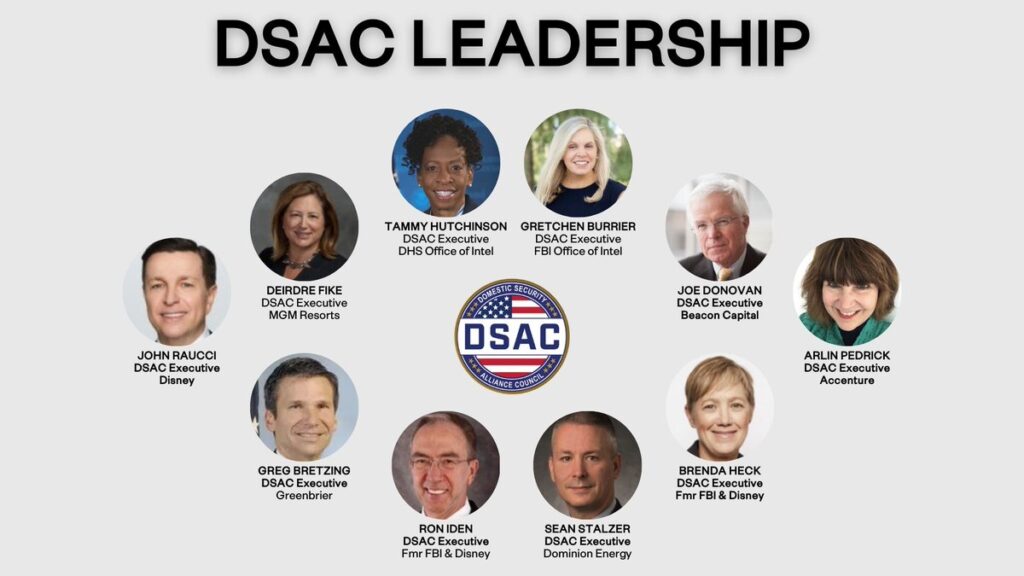
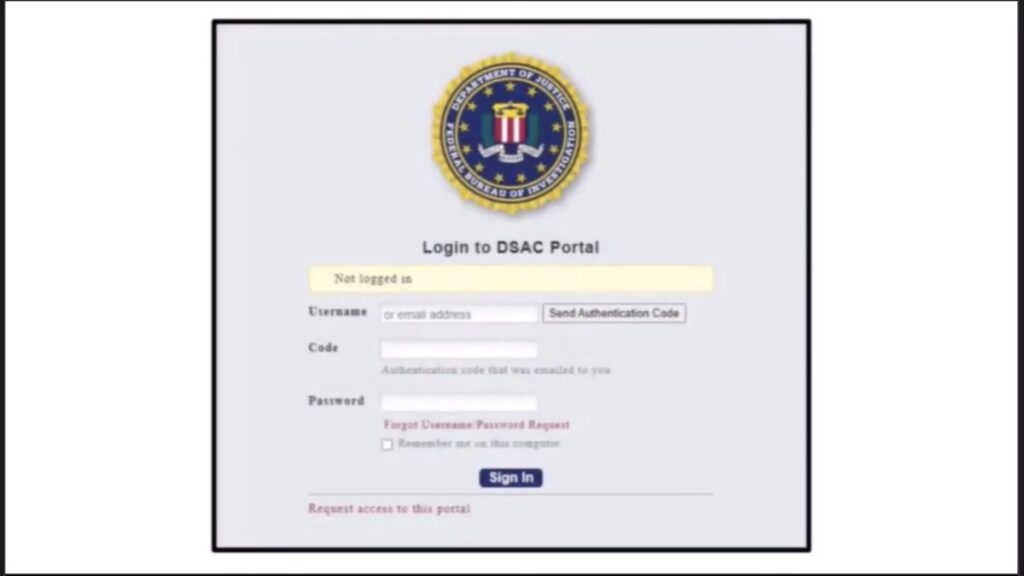
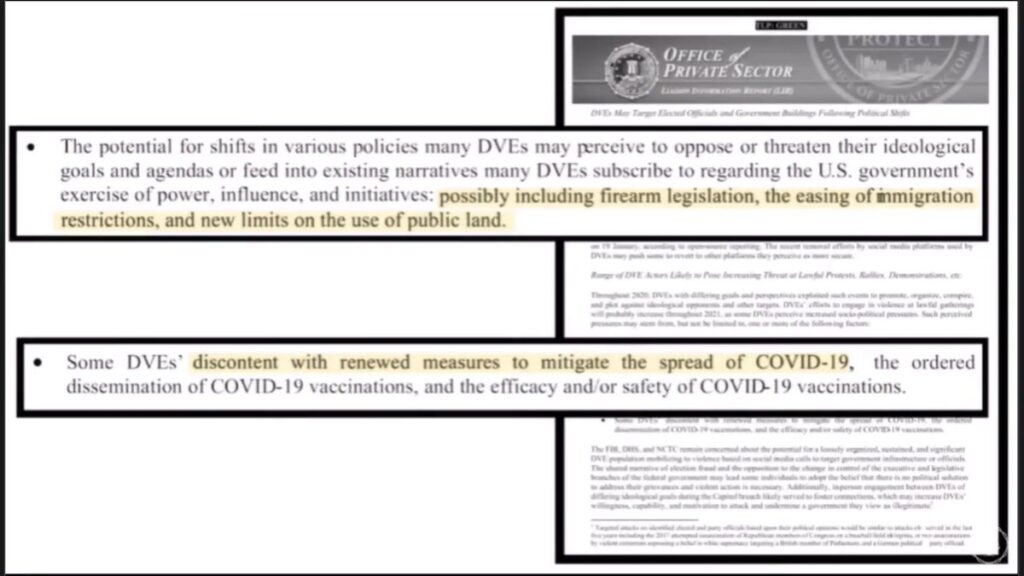
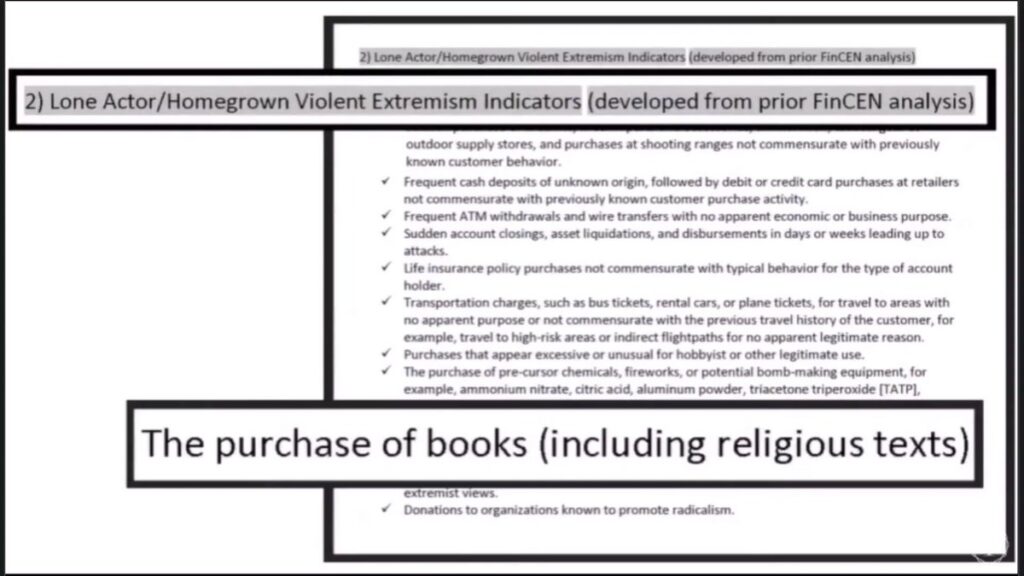
Are you on the list?
If you enjoy my work, please subscribe: https://x.com/amuse.
Sponsored by the John Milton Freedom Foundation, a nonprofit dedicated to helping independent journalists overcome formidable challenges in today’s media landscape and bring crucial stories to you.
READ NEXT: Jack Smith’s Speedy Trial Theory Collides With The Constitution
Sponsored
























Frightening!
Are there any recommendations to get this organization under control?
America is slowly becoming like Russia , China, and all the other communist countries.