







Women’s History Month invites reflection on the accomplishments of women across time, yet it also reveals a striking and uncomfortable trend. A growing share of the most prestigious awards for women, from athletics to public service to cultural recognition, are increasingly bestowed on individuals who spent most of their lives as men. The pattern is clear, and the logic is simple. Experience matters. Decades spent developing the physical, social, and professional advantages associated with male development provide a significant edge in fields that reward strength, authority, or accumulated status. Any honest assessment of the data shows that this advantage persists even after a male transition. The resulting disparities are not incidental outcomes of a changing culture. They reflect a systematic shift in how society now defines womanhood, achievement, and fairness.
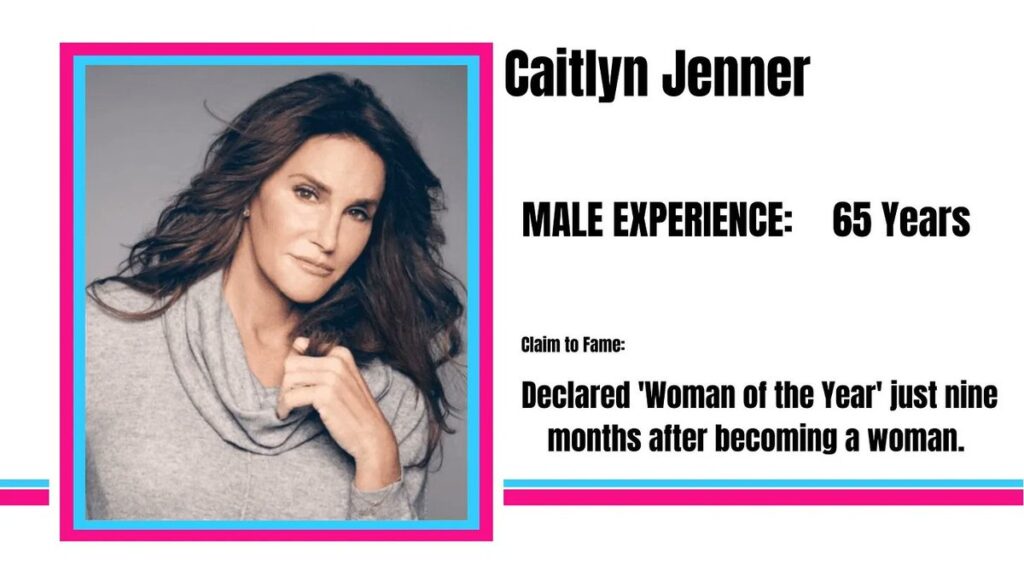
Consider Caitlyn Jenner. With 65 years of experience living as a man, Jenner was named Woman of the Year after only nine months of identifying as a woman. No other woman in the U.S., among more than 167 million, had ever achieved such recognition so quickly. Jenner’s success was explained as a cultural milestone. In reality, it illustrated an enduring truth. Experience shapes opportunity. A lifetime of male physical development, male socialization, and male professional networks generates advantages that cannot be undone by a change in gender identity. Even advocates of gender ideology struggle to deny this, which is why they often retreat to rhetoric about lived experience rather than evidence about competitive equity.
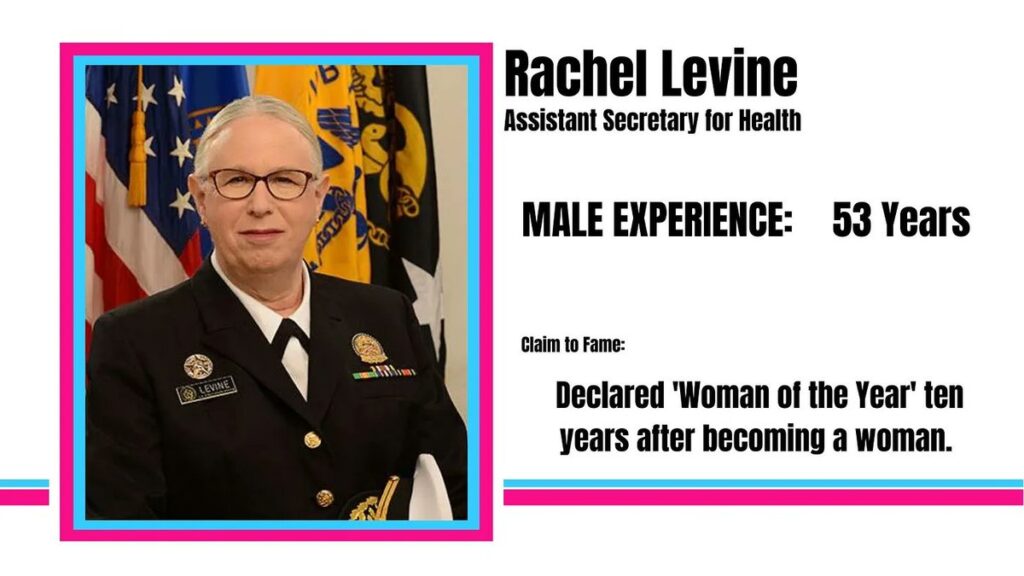
Rachel Levine provides a second example. After 53 years of life as a man, Levine was named Woman of the Year and was later appointed Assistant Secretary for Health, eventually becoming an admiral in the U.S. Public Health Service Commissioned Corps. These historic firsts were celebrated as victories for women. Yet the accomplishments depended on credentials, authority, and credibility developed over five decades of male experience. The biological women passed over for such opportunities are seldom mentioned, though the implications for fairness are obvious.
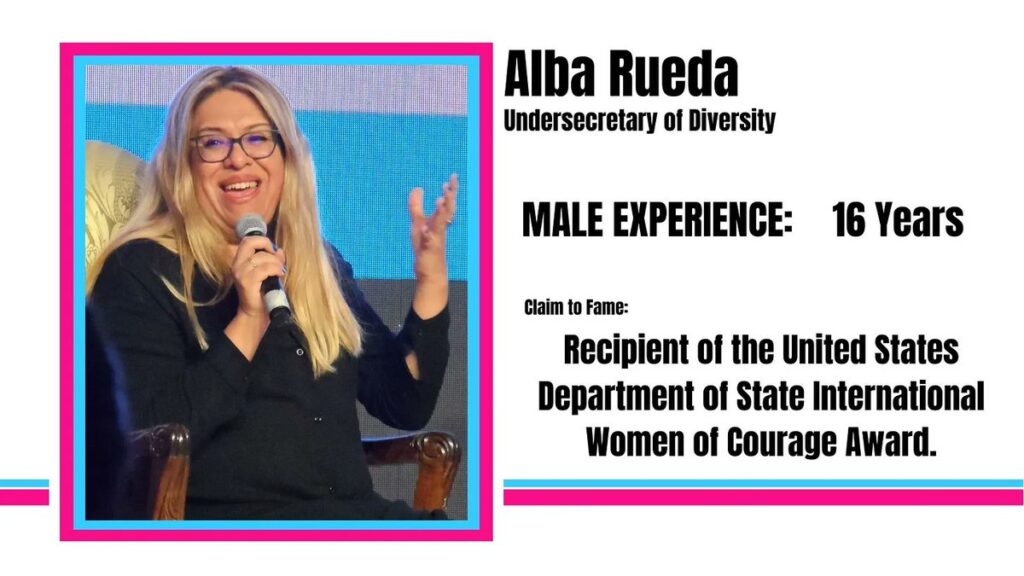
The trend is not confined to the U.S. Alba Rueda, Argentina’s then-Undersecretary of Diversity, received the State Department’s International Women of Courage Award after only 16 years living as a man. The award normally reflects decades of struggle or service. Rueda’s recognition demonstrated instead the political value assigned to gender ideology within the Biden administration. The message was unmistakable. A short period of gender identification can outweigh a lifetime of female experience, so long as that identification aligns with the ideological priorities of the moment.
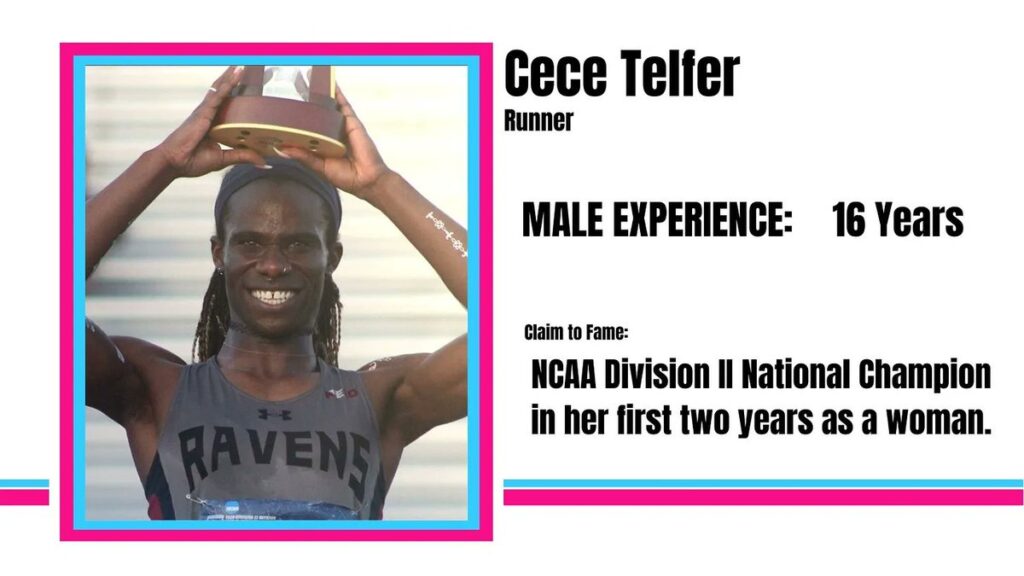
Sports provide the clearest test of the impact of male experience. Athletic performance depends on strength, lung capacity, bone density, fast-twitch muscle fibers, and height. These traits are shaped by years of testosterone-driven development. Claims that hormone therapy equalizes competition have been repeatedly disproven. Even the most generous estimates in sports physiology show that male athletic advantages persist even after years on hormone suppression. The real world confirms the same pattern. In 2019, Cece Telfer became the first biological male identifying as a woman to win an NCAA title after only two years of gender transition. Lia Thomas followed in 2022 by winning an NCAA Division I National Championship after three years of transition. Biological women who had trained for decades found themselves displaced by competitors with only a few years of female identification, yet nearly two decades of male physical advantage.
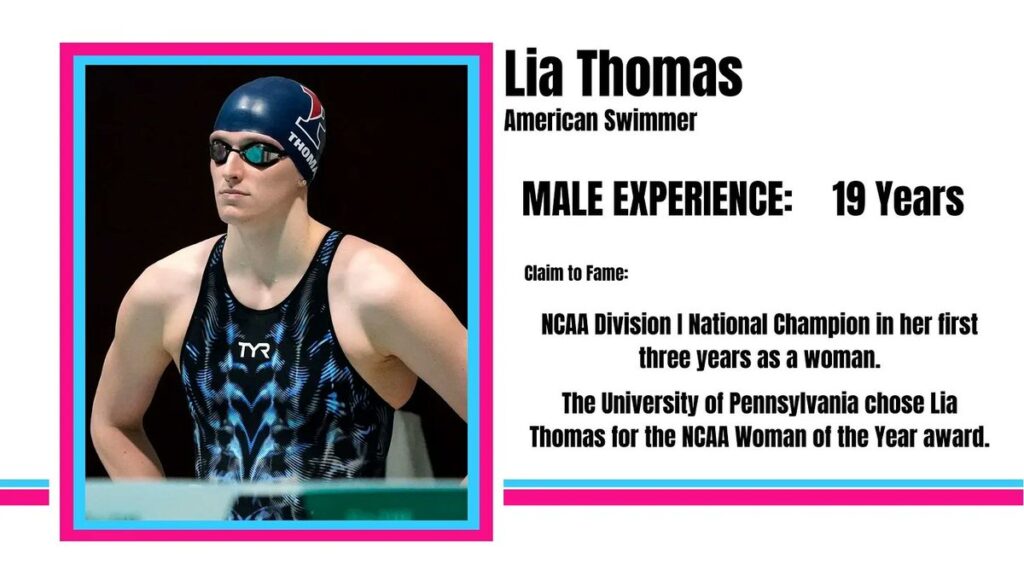
The core question is obvious. How should a society committed to fairness understand this new dynamic? Advocates of gender self-identification often claim that inclusion is costless. They argue that recognition and awards can be extended without consequence. But this is not true. Awards are zero-sum. Only one person can be Woman of the Year, only one athlete can stand atop a podium, only one official can be declared the first female admiral. When such honors go disproportionately to individuals with extensive male experience, biological women lose opportunities they spent their lives pursuing. This outcome is not a matter of prejudice. It is a matter of arithmetic.
At this point, a puzzled reader may ask whether experience as a man is really the decisive factor. The answer is yes, and the evidence is overwhelming. Male physiology confers advantages in speed, strength, and endurance that cannot be erased retroactively. Social expectations placed on boys and men, from leadership roles to risk-taking, create accumulated competencies that shape professional trajectories. Even in fields unrelated to physical strength, male socialization provides confidence and assertiveness that many women report having to develop over time and often against cultural resistance. When a biological male transitions later in life, those advantages do not evaporate. They accumulate.
Critics sometimes respond that awards for women should celebrate identity rather than achievement. Yet this redefinition undermines the very purpose of Women’s History Month. The month exists to honor the contributions of women, not to expand the category of womanhood so broadly that the historical meaning of the term collapses. The insistence that gender identity supersedes biological sex represents a philosophical claim that contradicts basic empirical facts about human development. It also undermines the political achievements of women who fought for equal representation in law, education, and employment.
Some may ask whether emphasizing biological differences risks offending those who identify as women despite being born male. But clarity is not cruelty. A society that cannot speak candidly about reality cannot defend fairness. The recognition that male experience matters in competitive or elite environments is not a rejection of anyone’s dignity. It is a commitment to truth. A just society must be able to acknowledge that distinctions rooted in biology have real consequences.
Others might wonder whether highlighting male advantage in women’s fields implies that women cannot compete against men. This concern misunderstands the argument. Women have excelled in countless domains. What they seek is a fair field of competition based on shared constraints. Women’s sports were created because biological differences made a single competitive field unjust. Women’s awards were created to spotlight female achievement, not to provide additional platforms for individuals who bring decades of male advantage into competitions defined by sex based categories.
The political implications are equally significant. As gender ideology becomes embedded in federal policy, the executive branch has begun redefining legal terms that once had clear boundaries. The Biden administration’s redefinition of sex in administrative law expands the concept in ways Congress never authorized. The effect is to erase distinctions that protect opportunity for women. The extension of female recognition to biological males is not a neutral gesture. It is a redistribution of status, resources, and opportunities away from women toward individuals who retain the advantages of their male development.
The logic of this system has no limiting principle. If gender identity alone defines eligibility for women’s awards, any man can claim those awards after any amount of time identifying as a woman. The examples of Jenner, Levine, Rueda, Telfer, and Thomas are not anomalies. They are case studies in the emerging norms of gender politics. As these norms spread, biological women will find the terrain of competition increasingly uneven. They will be asked to celebrate losses as victories for inclusion. They will be asked to applaud the erosion of categories that once protected their rights. They will be told, in effect, that fairness is subordinate to ideology.
A natural question arises. What happens if society continues down this path? The answer is predictable. Women’s sports will lose their integrity. Women’s professional honors will lose their meaning. Women’s political representation will become less coherent as the category itself loses definition. Awards that once highlighted the achievements of women will serve instead as instruments of political signaling. This transformation will not occur overnight. It will occur incrementally as each precedent normalizes the next.
Supporters of these changes often claim that opposition stems from intolerance. This is false. Reasonable people can distinguish between respecting individuals and endorsing policies that produce unequal outcomes. The core of the argument is fairness. If male experience produces advantages, and if awards for women reward those advantages, then the system privileges those with the least genuine female experience. This inversion of fairness would be a problem in any domain. It becomes especially troubling when justified by appeals to compassion or inclusion that ignore the costs borne by women.
A final question remains. What would a fair system look like? It would begin with accurate definitions. Womanhood is rooted in biological sex, not subjective identification. This definition is not an act of exclusion. It is an act of recognition. It preserves the integrity of the category, the rights attached to it, and the traditions built around it. A fair system would also preserve sex based competition in sports, sex based recognition in awards, and sex based opportunities in leadership. None of these principles are radical. They are the norms that governed women’s progress for decades.
Experience matters. It shapes skills, networks, bodies, and opportunities. The rise of biological males in women’s elite spaces proves the point more clearly than any abstract analysis could. Women deserve a fair field of competition. They deserve recognition unburdened by the advantages of male development. They deserve a system that respects reality. And they deserve leaders willing to state what has become obvious. A definition of womanhood that includes decades of male experience is not a definition that serves women.
If you enjoy my work, please subscribe: https://x.com/amuse.
Sponsored by the John Milton Freedom Foundation, a nonprofit dedicated to helping independent journalists overcome formidable challenges in today’s media landscape and bring crucial stories to you.
READ NEXT: Babylon Bee Touts Legal Win Over Hawaii Government’s ‘War Against Satire’























The Babylon Bee put the best spin on this tragedy with their headline from about 2 years ago “Lia Thomas found in possession of performance-enhancing testicles.” Most of these awards have now become just participation trophies, like the Nobel Peace Prize awarded to President Obama for doing nothing.
Well said! I’m going to save this as a document for future reference!