











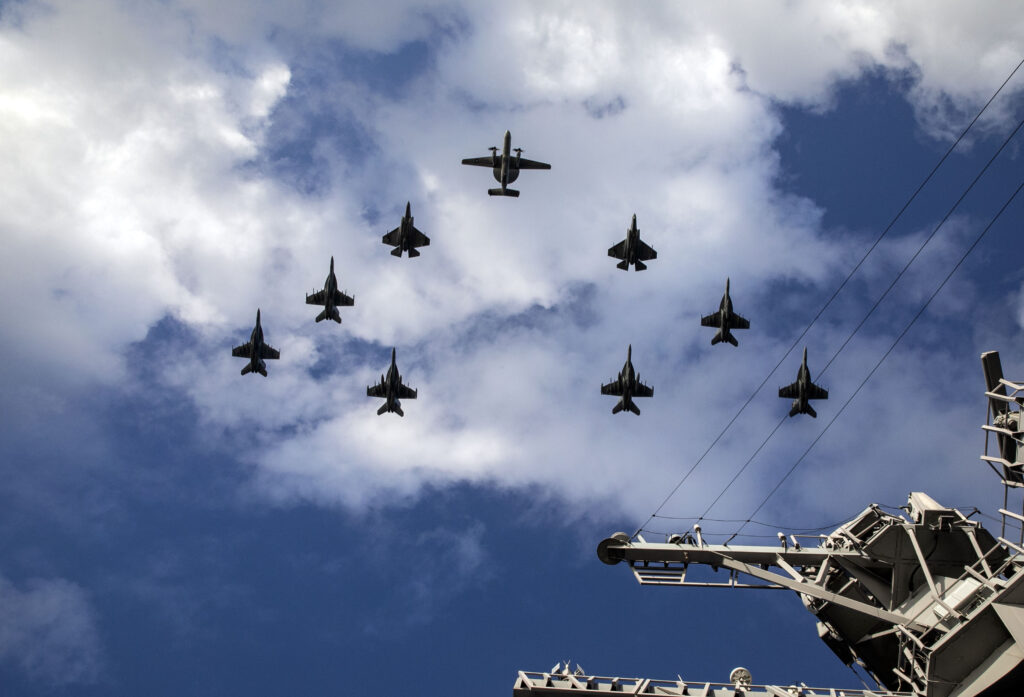
The U.S. Navy will have a big veto over any attempt by Iran to try, but even partial success by Iran could create problems. The Strait of Hormuz in the Persian/Arabian Gulf is once again in focus as a possible U.S. intervention in Iran raises the risk of Tehran disrupting one of the world’s most critical energy chokepoints.
The Trump administration has continued to build up the U.S. military presence in the region as talks with Tehran have ended for now. Iran says the talks should only cover its nuclear program. The U.S. says Tehran’s missile program, support for proxies like Hamas and Hezbollah, and repression of its people ought to be topics of conversation as well.
Iranian officials have played down expectations of a breakthrough, suggesting negotiations are unlikely to quickly ease strains between the two sides.
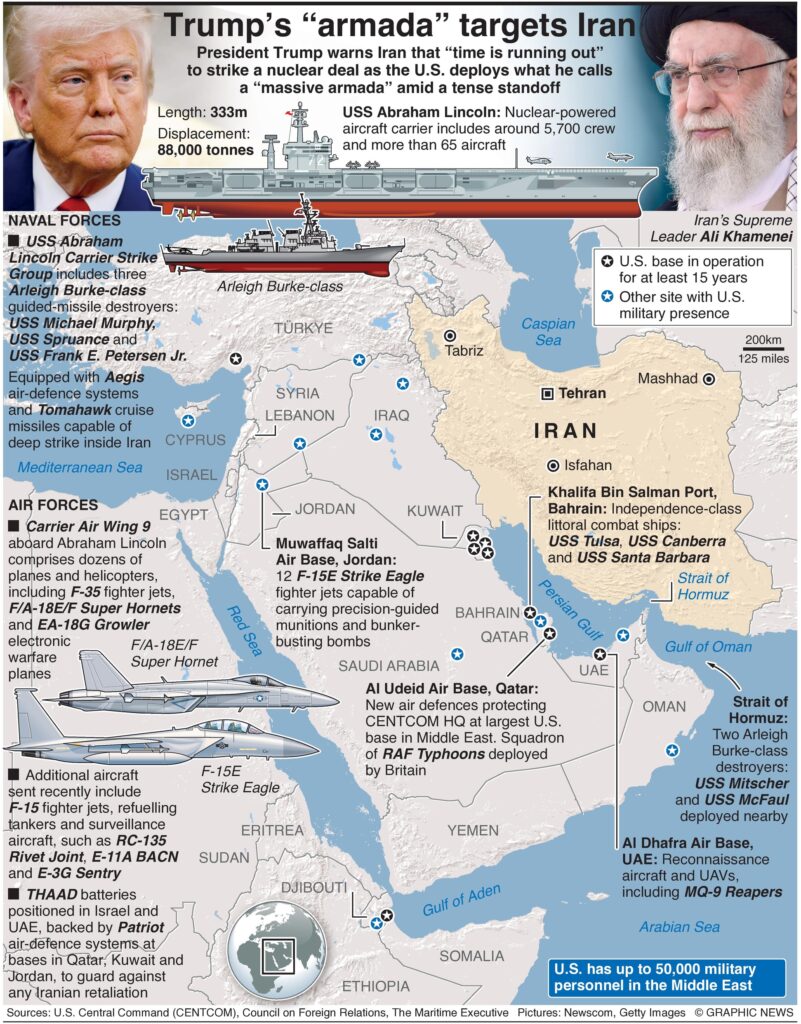
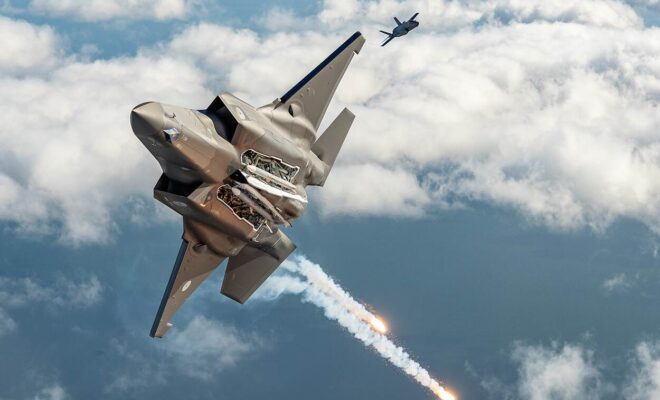
This is especially true as an F-35C stealth fighter from the aircraft carrier USS Abraham Lincoln shot down an Iranian drone that “aggressively approached” the ship on Tuesday, which was in international waters about 500 miles from Iran’s southern coast.
A few hours later, Iranian gunboats operated by the Islamic Revolutionary Guard Corps (IRGC) tried and failed to board and seize a U.S.-flagged tanker, which was quickly escorted away by a U.S. Navy warship.
Industry experts warn that any bigger military confrontation could prompt Iran to disrupt traffic through the Strait of Hormuz, a narrow strategic waterway linking the Persian Gulf with the Arabian Sea.
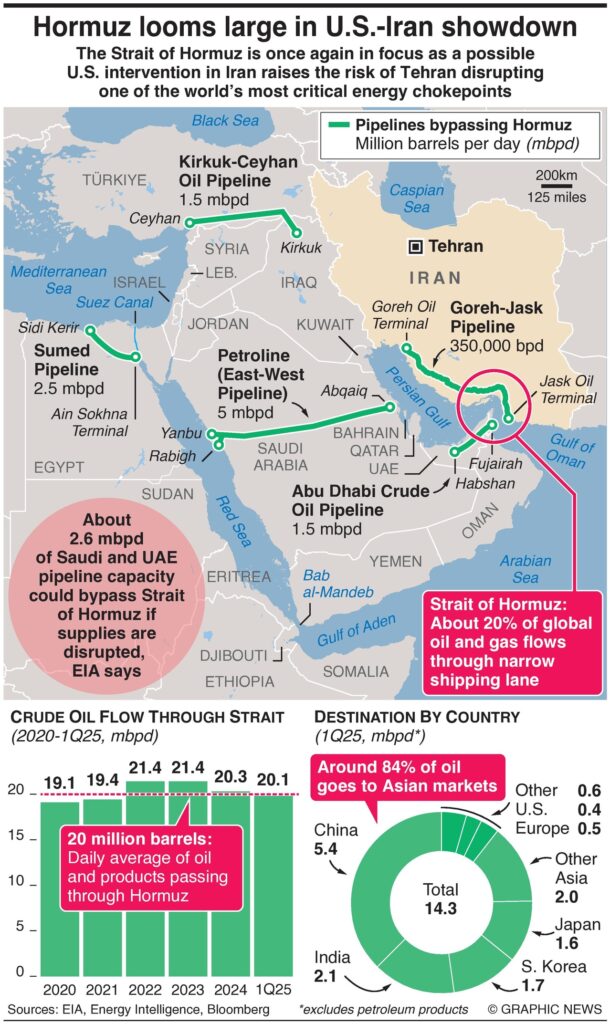
The strait is vital to global energy markets, carrying about a fifth of the world’s total oil consumption, nearly a third of the world’s seaborne crude. More than 20 million barrels a day of crude, condensate, and refined fuels transited the passage on average last year.
But what if Iran does try, or even succeeds in blocking the strait? A full closure of the strait could raise oil prices by $10 to $20 per barrel, a significant rise that would affect energy prices and the price of a wide range of goods worldwide, including in the U.S.
However, there’s a low probability of a full closure thanks to the massive U.S. naval presence – Trump’s “Beautiful Armada” – and Iran’s diminished capabilities after the 12-day war with Israel and the U.S. last June.
Still, any major disruption could cause damage.
As reported by CNBC, Saul Kavonic, head of energy research at MST Marquee, said:
A disruption through the Strait of Hormuz could cause a global oil and gas crisis” especially when considering the “desperate and ill-advised lengths the current Iranian regime may go to” should they find themselves increasingly backed into a corner with their power and lives at stake.
All things considered though, adds CNBC, “Most analysts stress that any catastrophic outcomes still remain low-probability events.”
CNBC further explained:
Even in a scenario where Iran attempts a temporary disruption, such as harassing tankers or briefly blocking transit, the physical impact on supply would be limited.
Kpler estimates the oil market is currently tilting toward oversupply, with roughly 2.5 million barrels per day of excess supply in January and over 3 million barrels per day in February and March.
Additionally, any closure will likely be met with a show of force by the U.S. and allies to restore flows again, Kavonic said.
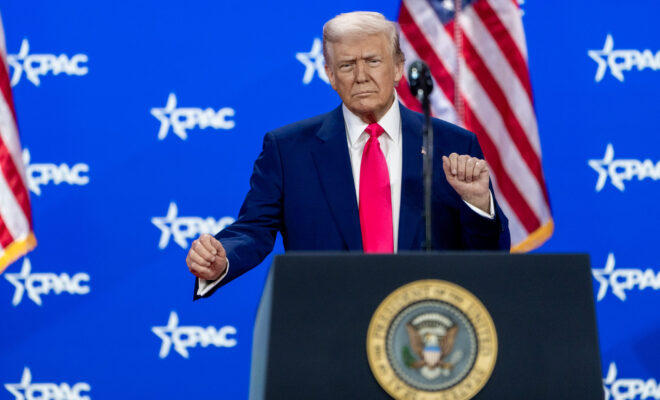
Meanwhile, in an interview with NBC on Wednesday, the president said Iranian Supreme Leader Ayatollah Ali Khamenei “should be very worried.” And Trump has seemed unimpressed with Khamenei’s warning that an attack on Iran would trigger a “regional war.”
“We have the biggest, most powerful ships in the world over there, very close…, and hopefully we’ll make a deal,” Trump also said Sunday. “We don’t make a deal, then we’ll find out whether or not he was right.”
As U.S. News reported:
Iran has rarely been weaker. U.S. and Israeli strikes last year are thought to have set back its nuclear program. And its traditional proxies – like Hamas in Gaza or Hezbollah in Lebanon – have been badly debilitated by Israeli operations over the past two years.
However, the outlet added that while Iran’s “capacity to create regional mayhem is much less impressive than it was… that doesn’t mean an attack on a tanker would not be potentially destabilizing for markets, something Trump has shown he is sensitive to.”
The opinions expressed in this article are those of the author and do not necessarily reflect the positions of American Liberty News.
READ NEXT: Concealed Carry At Protests: State-By-State Rules And What To Know



















If Iran is that stupid, they will have to suffer the consequences !
It will cease to exist.