




From a fiery Capitol Hill clash over the Epstein files to a generational primary challenge in Los Angeles and an expanding midterm battlefield map, accountability, age, and electoral strategy are all in play as Washington looks ahead to 2026.
Bondi Clashes With Democrats Over Epstein File Redactions
Attorney General Pam Bondi faced intense questioning Wednesday as House Democrats pressed her over the Justice Department’s handling of the Epstein files — particularly allegations that redaction failures exposed sensitive information about survivors.
During a tense hearing, Rep. Pramila Jayapal (D-Wash.) asked Bondi directly whether she would apologize to victims whose identities and personal details were allegedly revealed in document releases under the Epstein Files Transparency Act. Several survivors were seated in the room during the exchange.
Bondi expressed sympathy for the victims’ suffering at Epstein’s hands but declined to issue a direct apology for how the Department of Justice managed the file releases. When Jayapal repeated her question, Bondi responded sharply, accusing the congresswoman of engaging in “theatrics” and saying she would not “get in the gutter” with her. The exchange escalated into raised voices, with Chairman Jim Jordan (R-Ohio) struggling to restore order.
The confrontation underscores growing bipartisan frustration with how millions of pages of Epstein-related documents have been handled. Lawmakers have criticized what they describe as inconsistent redactions — noting that some victims’ details were exposed while information about certain high-profile individuals remained shielded.
The controversy adds to mounting political pressure surrounding the Epstein files, which continue to ripple through Washington.
A Generational Challenge to Maxine Waters
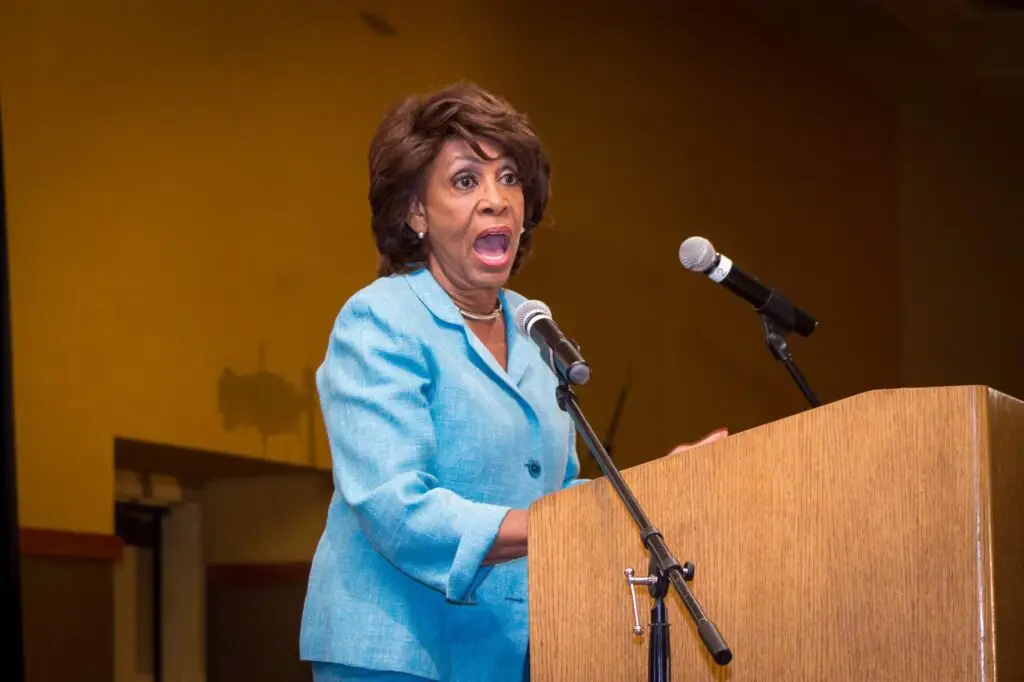
In California, longtime Democratic Rep. Maxine Waters is facing a rare primary challenge — and a generational one.
Myla Rahman, a nonprofit executive and Los Angeles native, has launched a campaign against the 87-year-old congresswoman, arguing that voters are ready for new leadership after more than three decades of Waters representing the 43rd Congressional District.
“People are sick and tired of the same old thing,” Rahman said as she kicked off her campaign.
Waters, first elected in 1991, remains one of the most prominent and polarizing figures in Congress. As ranking Democrat on the House Financial Services Committee, she continues to wield influence and remains a vocal critic of President Donald Trump.
Rahman’s challenge comes at a time broader Democratic debates over age and longevity in party leadership — conversations that intensified during the 2024 presidential cycle. While Republicans have little chance of flipping the heavily Democratic district in a general election, the primary could serve as a test of whether calls for generational change resonate in safe blue seats.
Rahman has said affordable healthcare will be central to her campaign, drawing on her experience surviving two bouts of breast cancer.
For now, Waters retains institutional strength and name recognition. But the challenge reflects a broader undercurrent within the Democratic Party: how long is too long in Washington?
Democrats Expand 2026 Target Map
Meanwhile, House Democrats are signaling early that they intend to aggressively contest the 2026 midterms.
The Democratic Congressional Campaign Committee (DCCC) announced it is expanding its list of Republican-held districts it hopes to flip, adding five seats won by President Trump in 2024 by margins of 13 percentage points or less.
The updated “Districts in Play” list now includes 44 seats. Among the newly targeted districts: Colorado’s 5th, Minnesota’s 1st, Montana’s 1st, Virginia’s 5th, and South Carolina’s 1st — the latter expected to be open as Rep. Nancy Mace runs for governor.
DCCC Chair Rep. Suzan DelBene said recent Democratic performances in special elections suggest a favorable political environment. Republicans counter that special elections are unreliable predictors of midterm outcomes and argue that many of the targeted districts lean Republican at the presidential level.
Historically, the president’s party faces headwinds in midterm elections. But both sides are already maneuvering for advantage, particularly in competitive and open seats.
Democrats have launched “nominee funds” to support eventual challengers, though they typically avoid direct involvement in primaries. Republicans, for their part, point to concerns over inflation, border security, crime, and foreign policy as issues they believe will energize their base.
With nearly two years to go, the battlefield is already expanding — and both parties appear prepared for a long, expensive fight.
READ NEXT: Trump Warns That Midterm Loss Will Lead To Impeachment