

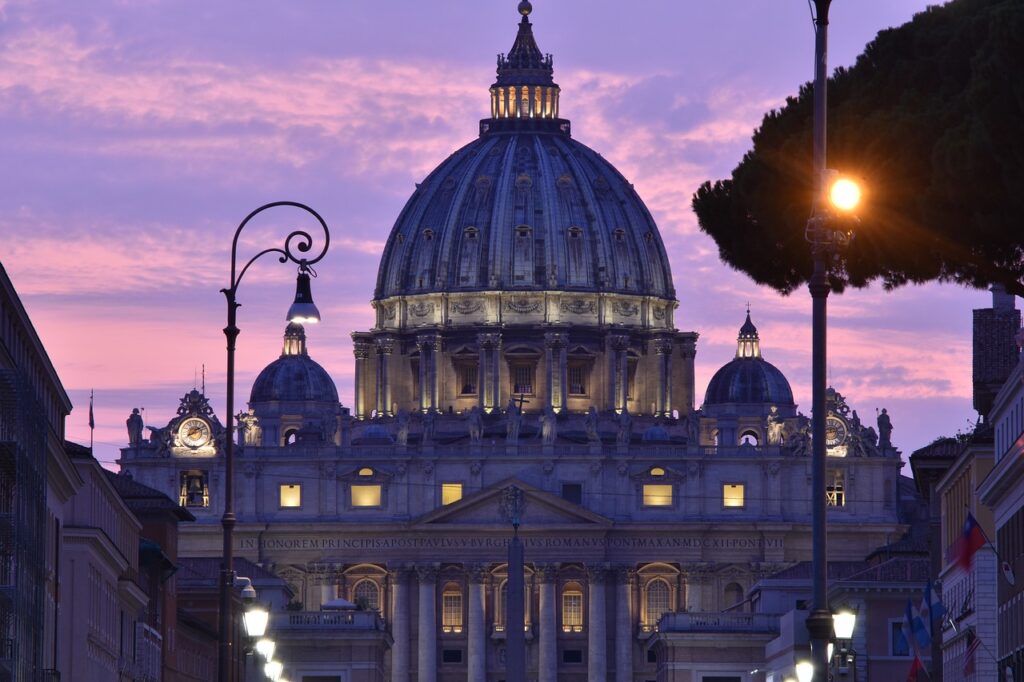
Recently declassified Justice Department documents show for the first time that in 2019, former White House chief strategist Steve Bannon and Jeffrey Epstein exchanged messages discussing opposition to Pope Francis and efforts to expand conservative Catholic influence within the Vatican.
In one message, Bannon wrote “Will take down Francis” and referenced a broader list of political figures he opposed, including former President Bill Clinton, Hillary Clinton, Chinese President Xi Jinping, and the European Union.
The records indicate Bannon discussed directing financial support to conservative Catholic groups and shared materials related to a documentary project critical of the Vatican.
Although the records do not indicate a formal plan to remove Pope Francis, they reveal detailed discussions about countering his influence and shaping narratives within Catholic institutions.
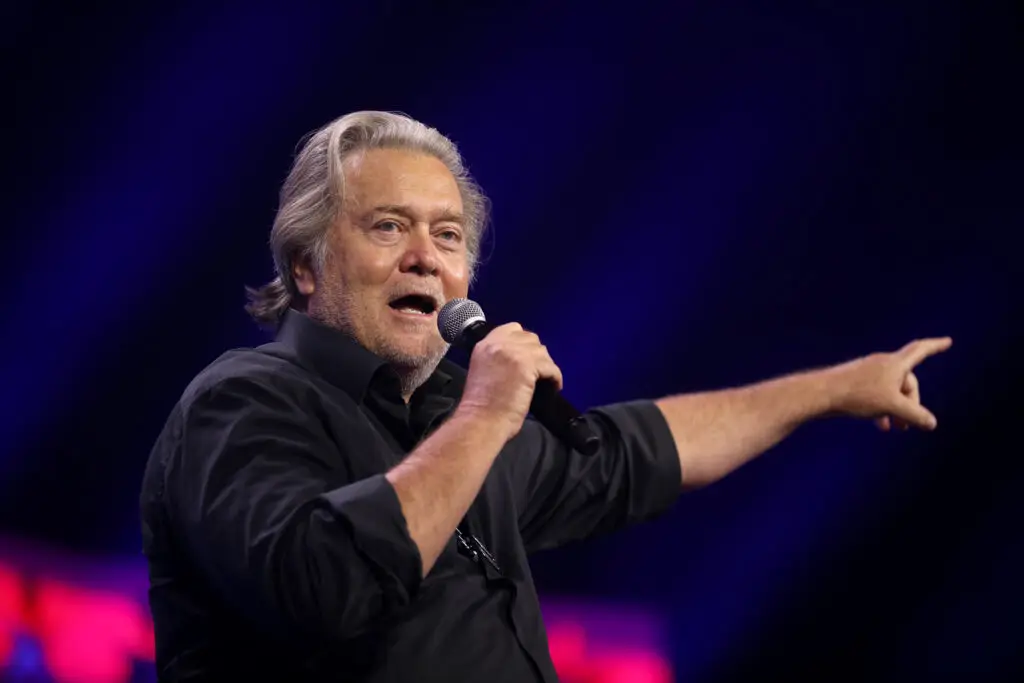
Pope Francis’s papacy emphasized migration, environmental issues, and governance reforms — priorities that drew criticism from some nationalist political figures, including Bannon.
National Catholic Reporter continues:
Emails between Bannon and Epstein dating to 2018 lament the Vatican’s push against xenophobia, racism and populism, as well as the Holy See’s relationship with China.
Epstein is often dismissive toward the papacy and Francis in the released correspondence. When Francis visited the U.S. in 2015, Epstein noted that the pope was staying near Epstein’s residence in New York. “I thought id invite him for a massage,” Epstein wrote in an email to his brother, Mark Epstein, followed by lewd remarks.
Jeffrey Epstein also seems to have had an interest in the Vatican’s finances. He was familiar with the book “Who Killed God’s Banker?: A 30 Year Investigation” by Edward Jay Epstein, detailing the financial structure of the Institute for Works of Religion, commonly referred to as the Vatican bank. In particular, the book comments on the 1982 collapse of Banco Ambrosiano, after which its president, Roberto Calvi, was found hanging from a noose under London’s Blackfriars Bridge.
In an email to Epstein in August 2014 about blockchain and digital currency, the Italian cybersecurity researcher Vincenzo Iozzo pointed to “the Vatican and Monaco” as small sovereign states that could be “viable” grounds for experimentation. “You said you like great hacks — selling companies and/or big western countries a currency that doesn’t actually exist is probably the ultimate hack in the world,” Iozzo wrote.
The communications are part of a broader DOJ release detailing Epstein’s contact with numerous influential public figures prior to his 2019 arrest.
READ NEXT: Why Did A Congresswoman Use An Alias To Email Epstein?

















The key phrase in this is “shaping narratives”. The whole world is shaped by narratives from human, flawed, power-seeking individuals who are not really interested in the people’s best interest, whether conservative or liberal.