European leaders privately viewed the United States as a security risk under President Donald Trump after repeated threats to acquire Greenland, with French and Danish forces reportedly prepared for a possible armed confrontation if Washington tried to seize the autonomous Danish territory.
According to a Wall Street Journal report cited by Mediaite, the concern prompted a closed-door meeting of European leaders at European Council headquarters in Brussels. Cameras and phones were barred, and each head of government was told to attend alone.
Macron Draws A Line
French President Emmanuel Macron reportedly delivered the bluntest warning during the meeting.
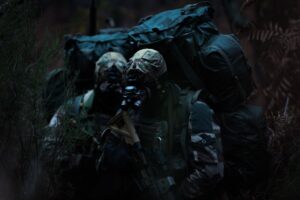
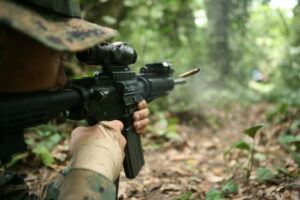
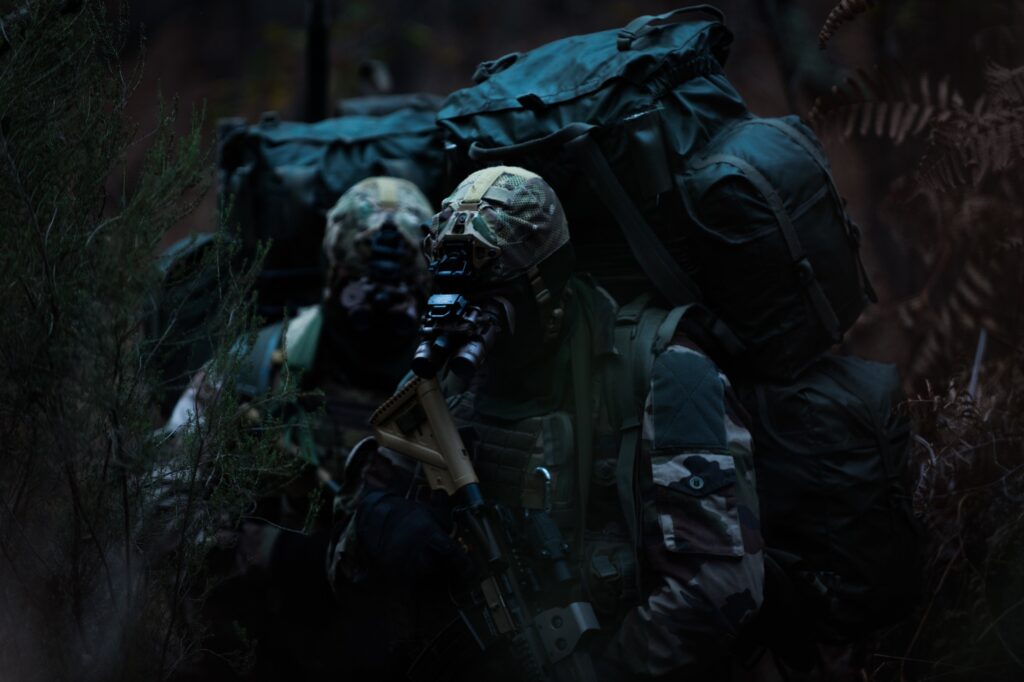
Macron had deployed French soldiers to Greenland as part of Denmark’s Operation Arctic Endurance, a multinational effort that also included Canada, Germany, the Netherlands and Sweden. According to the report, Danish special forces and French troops were prepared for what the Journal described as a possible “shooting war” with the United States if Trump moved militarily on Greenland.
“We are drawing a line here,” Macron told the other leaders, according to the report.
He argued that Europe’s dependence on the United States had become a strategic vulnerability, particularly under a president willing to pressure a NATO ally over sovereign territory.
Trump Repeatedly Pushed For Greenland
Trump has long argued that Greenland is essential to U.S. national security because of its location in the North Atlantic and Arctic Circle.
The United States already maintains a military base on the island and has authority under existing agreements to expand its presence there. But Trump has gone further, repeatedly saying Greenland should become a U.S. territory.
His position alarmed Denmark, which has made clear that Greenland is not for sale and that its future can only be decided by Greenlanders.
Venezuela Raid Heightened Alarm
European concerns intensified after the U.S. military raided Venezuela on Jan. 3 and seized then-President Nicolás Maduro, bringing him to the United States to face drug-trafficking charges.
Shortly after that operation, Trump again raised the idea of acquiring Greenland.
For European governments, the combination of military action in Venezuela and renewed pressure on Denmark suggested Trump’s threats could not be dismissed as mere rhetoric.
Allies Reassess Dependence On U.S.
The Journal report also described a broader European effort to reduce reliance on American technology and security infrastructure.
Authorities in countries including France and the Netherlands are reportedly removing U.S. software from government systems, shifting toward European open-source alternatives and discouraging civil servants from using Microsoft Teams and Office.
European governments are also pouring hundreds of billions of dollars into domestic space firms, artificial intelligence companies, and data centers in an effort to reduce dependence on American tech giants.
Intelligence Agencies Warn Of Volatility
European intelligence assessments reportedly described Trump’s second administration as unusually unpredictable.
One Southern European assessment said governments were no longer dealing with a normal U.S. administration with regular processes, but with “a single volatile individual.”
Britain’s MI6 reportedly warned Prime Minister Keir Starmer that Trump’s second White House resembled “‘The Crucible’ meets ‘Wolf Hall,'” and instructed staff not to discuss Trump with CIA counterparts.
Flattery Strategy Reaches Limits
For much of Trump’s second term, European governments attempted to manage the relationship through public praise, concessions on defense spending, and efforts to avoid direct confrontation.
The Greenland crisis appears to have pushed that strategy to its limits.
European leaders reportedly concluded that flattering Trump had produced diminishing returns and that the continent needed to prepare for a more independent security posture.
NATO Strain Enters New Phase
The episode underscores an extraordinary strain inside the NATO alliance.
While the United States and Europe remain formally bound by mutual defense commitments, the Greenland standoff forced America’s closest allies to consider the possibility of a military confrontation with Washington itself.
No such confrontation occurred. But the report shows how dramatically Trump’s pursuit of Greenland changed European assumptions about American reliability, alliance unity, and the future of Western security.
READ NEXT: Trump Targets NATO Ally Over New Dispute