

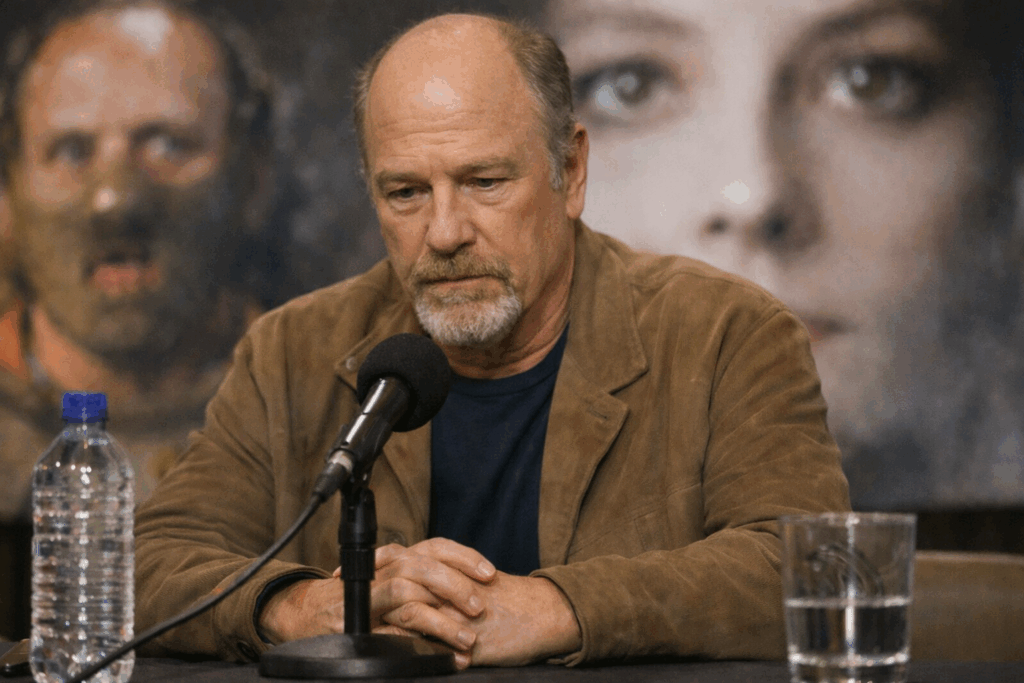
Ted Levine, best known for portraying the serial killer Buffalo Bill in the 1991 Oscar-winning film “The Silence of the Lambs,” is addressing long-standing criticism from the transgender community, now saying that aspects of the film “don’t hold up” decades later.
Levine’s comments come as the film marks its 35th anniversary and amid renewed discussion about its cultural legacy. “The Silence of the Lambs” won five major Academy Awards — Best Picture, Best Director, Best Actor, Best Actress, and Best Adapted Screenplay — and remains the only horror film to win Best Picture.
In an interview with The Hollywood Reporter, Levine said certain “aspects of the movie… don’t hold up too well” and acknowledged that the portrayal of Buffalo Bill, also known as Jame Gumb, may have contributed to harmful stereotypes about transgender people. He described parts of the depiction as “f**king wrong.”
Levine said he originally approached the role as portraying a “disturbed heterosexual man,” not a gay or transgender character, and added that his understanding of gender identity has evolved since the film’s release.
Buffalo Bill, the antagonist in both the 1991 film and Thomas Harris’ 1988 novel, murders women in an attempt to create a “woman suit.” The character has long drawn criticism from LGBTQ+ advocates, who argue that the portrayal blurred the lines in public perception between violent pathology and transgender identity.
In the film, however, Hannibal Lecter — played by Anthony Hopkins — tells FBI agent Clarice Starling — portrayed by Jodie Foster — that he believes multiple institutions likely rejected Bill for gender-affirming surgery because he did not meet psychological criteria and was not considered transgender. The book is even more explicit, describing the character as having applied for what was then called sex reassignment surgery at several institutions (including Johns Hopkins) but being denied.
Producer Edward Saxon also reflected on the controversy, telling The Hollywood Reporter that the filmmakers were “loyal to the book” and did not intend harm, but acknowledged they may have overlooked how the portrayal could reinforce stereotypes.
“There’s regret, but it didn’t come from any place of malice,” Saxon added. “It came from trying to understand this character. We all had close friends and family members who were gay. We believed it would be clear that Buffalo Bill was drawing from different elements of society as part of an extremely disturbed pathology.”
Despite the debate, “The Silence of the Lambs” remains universally regarded as one of the most influential thrillers in cinematic history.
READ NEXT: The Most Meaningless Holiday On The Calendar

















Yikes – apparently almost everyone is forgetting that the book and movie were reflections of society at the time – attitudes and knowledge about human psyche have changed since then, much like we have moved way beyond Freud.
An earlier example comes from “Dog Day Afternoon”.
Not sure why he’s apologizing, he was an actor portraying an individual that had obviously psychological problems. That was simply his job as an actor. A good actor may portray an individual who thoughts and feelings are 100% die metrically opposed to their actual belief.
I greatly miss my father, but I am glad he is not alive to see the leftist insanity that has taken hold in this country he loved.