









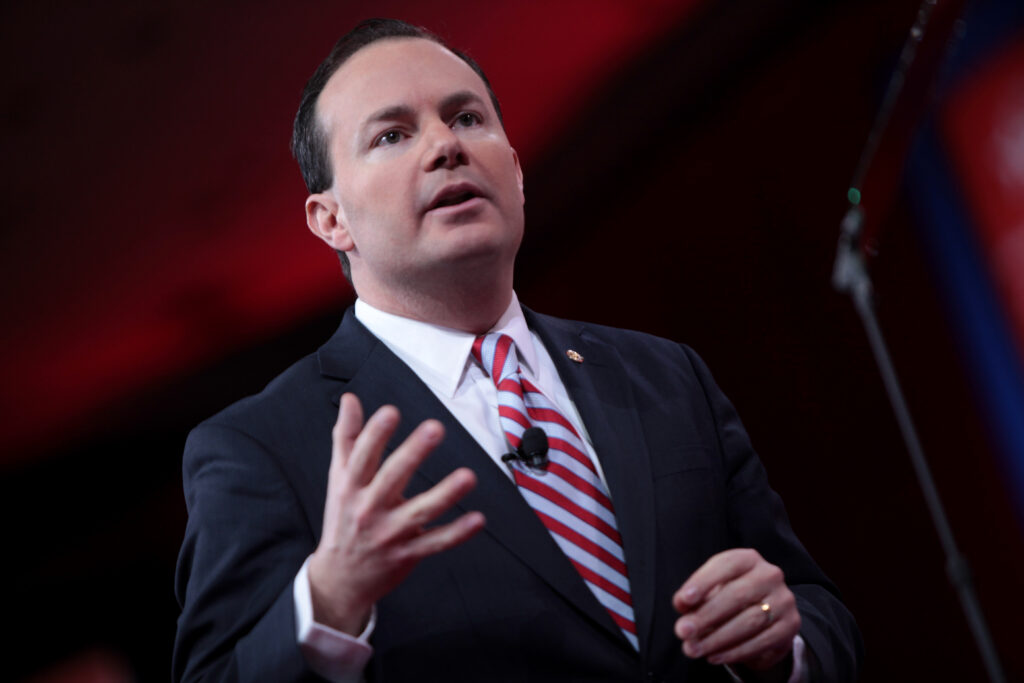
Sens. Mike Lee and Dick Durbin on Monday introduced bipartisan legislation to curb warrantless government surveillance of Americans while reauthorizing a key national security authority set to expire.
The proposal, known as the Security and Freedom Enhancement (SAFE) Act, would renew Section 702 of the Foreign Intelligence Surveillance Act for two years and impose new safeguards designed to protect Americans’ Fourth Amendment rights.
“The many documented abuses under FISA should provoke outrage from anyone who values the Fourth Amendment,” Lee said in a written statement. He cited instances of warrantless searches involving journalists, political commentators, campaign donors and even sitting members of Congress, calling the reforms “common sense and imperative to restoring trust in our government’s commitment to the Constitution.”
Section 702 allows American intelligence agencies to collect communications of foreign targets located abroad without a warrant. While the authority is intended for foreign intelligence purposes, Americans’ communications are often incidentally swept up in the process. Critics have long argued that subsequent searches of those communications amount to warrantless surveillance.
“Section 702 is a valuable tool to help keep our nation safe. However, it’s being used to conduct thousands of warrantless searches of Americans’ private communications. That’s unacceptable,” Durbin said. “Our bipartisan SAFE Act is a commonsense solution to continue protecting our country from foreign threats—while safeguarding Americans’ civil liberties and privacy.”
Under the SAFE Act, government agencies would be required to obtain a traditional FISA Title I order or a warrant before accessing the contents of Americans’ communications collected under Section 702. Exceptions would apply in exigent circumstances. The warrant requirement would not extend to searches of foreigners’ communications or efforts to identify connections between foreign targets and Americans.
The legislation also seeks to strengthen the role of amici curiae — independent legal advisers who assist the FISA Court — and to close what lawmakers describe as a “data broker loophole,” in which agencies purchase commercially available data, such as location information, that might otherwise require a warrant.
In addition, the bill would narrow the definition of Electronic Communications Service Provider (ECSP), which was expanded during the last reauthorization debate and critics say now sweeps in a broad range of businesses and organizations. It would also close a Section 215-related loophole that lawmakers say has allowed certain surveillance practices to continue despite the expiration of that authority in 2020.
Advocacy groups across the political spectrum have expressed support for the proposal. James Czerniawski of the Consumer Choice Center said the SAFE Act would rein in government overreach while maintaining national security capabilities.
“For too long, Section 702 has been treated as a blank check for government overreach, turning a foreign intelligence tool into a domestic surveillance dragnet,” Czerniawski said in a statement. “The SAFE Act finally draws a line in the sand.”
Progressive groups have also endorsed the effort. Demand Progress senior policy adviser Hajar Hammado said in a statement that the current system allows the government to search Americans’ private emails and texts collected under Section 702 and that reforms are necessary regardless of which party controls the White House.
The legislation comes amid debate over how to handle the looming reauthorization deadline. A report from Politico said some White House officials favor a “clean” extension of Section 702 without additional reforms. Such a move could create tension in the House, where Speaker Mike Johnson previously cast a deciding vote against adding a warrant requirement during an earlier reauthorization fight.
House Intelligence Committee Chairman Rick Crawford and House Judiciary Committee Chairman Jim Jordan are continuing discussions about a potential compromise that would add guardrails while preserving the authority.
“We know 702 is important,” Jordan said. “We know it needs to get reauthorized. We’re committed to getting that done. We just want to do it in the best way possible so that you can get the bad guys, know what the bad guys are doing overseas, but also protect Americans.”
During a February hearing, Attorney General Pam Bondi told Rep. Andy Biggs that the Trump administration is committed to working with Congress to end warrantless searches of Americans’ communications, signaling potential executive branch support for reforms.
As lawmakers weigh competing proposals, the SAFE Act represents one of the most prominent bipartisan attempts to balance national security priorities with privacy protections ahead of Section 702’s expiration.
READ NEXT: Rep. Mike Lee Introduces SHUSH Act