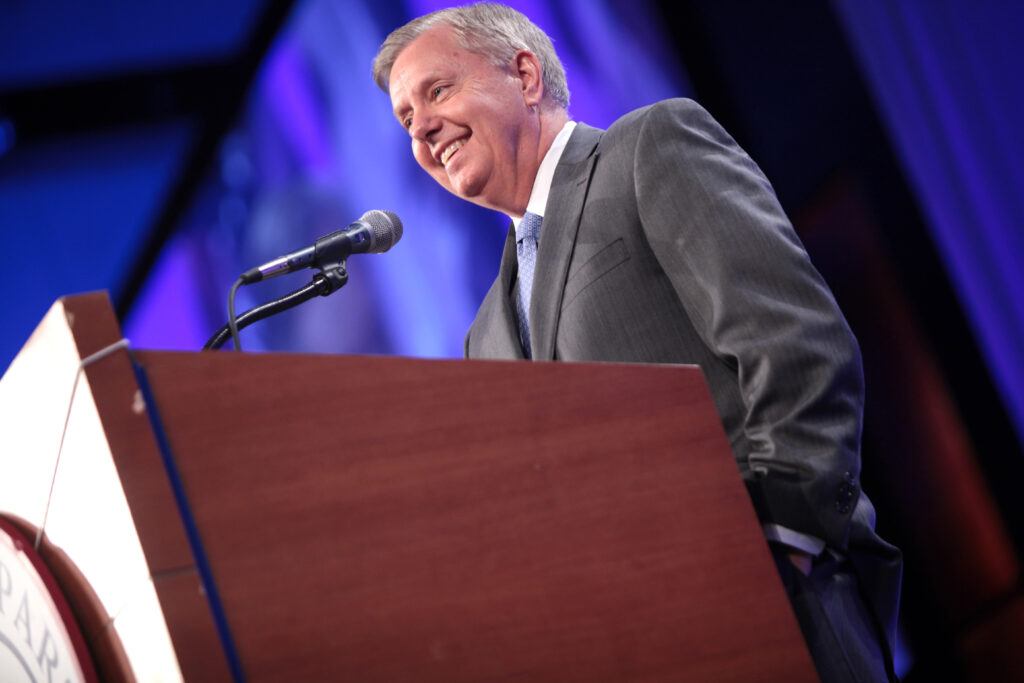
In the weeks leading up to American military action against Iran, Lindsey Graham, the Republican senator from South Carolina, undertook multiple trips to Israel, where he met with government and intelligence officials while advocating for a harsher American posture toward Tehran.
According to reporting from The Wall Street Journal, Graham’s visits included meetings with members of Israel’s intelligence community. The senator indicated that these discussions provided him with insights he believed were not being shared by American agencies.
“They’ll tell me things our own government won’t tell me,” Graham told the Journal.
The report also described Graham advising Israeli Prime Minister Benjamin Netanyahu on how to present intelligence to Donald Trump in a way that might persuade him to authorize military action. Netanyahu later presented intelligence to Trump that the Journal said helped convince the president to approve the operation.
Israeli media echoed the portrayal of a close working relationship between Graham and Netanyahu. The Israeli newspaper Israel Hayom described the senator as one of four central figures involved in pushing for the conflict. According to the outlet, Graham returned to Trump’s Florida residence at Mar-a-Lago following a tour of the Middle East with messages from Gulf states indicating they wanted the United States to act—an account that differed from public reporting at the time.
Graham’s advocacy for a tougher line against Iran reportedly began even earlier. According to The Journal, he first raised the issue with Trump during a round of golf shortly after the 2024 election. Over the following months, Graham worked alongside retired U.S. Army Gen. Jack Keane and former speechwriter Marc Thiessen, who served under President George W. Bush. The three reportedly coordinated outreach to the White House, rotating calls to maintain pressure for military action.
Graham also met with Mohammed bin Salman, the crown prince of Saudi Arabia, before the strikes. According to Middle East Eye, the meeting was intended to secure Saudi approval for the operation while diplomatic negotiations between the United States and Iran were still ongoing.
Graham’s efforts weren’t unanimously condoned in Trump’s political orbit. Rand Paul, the Republican senator from Kentucky, criticized the senator’s frequent contact with the president. Paul joked that there should be a law limiting how often Graham visits the White House or plays golf with Trump.
Public opinion also appeared divided. A survey conducted by Reuters and Ipsos found that only 27 percent of Americans supported the strikes.
Graham, however, dismissed the criticism. The senator told the Journal that he had previously urged Trump to consider bombing Iranian and Hezbollah targets in Lebanon.
“What are they going to do to me?” Graham said.
READ NEXT: FBI Takes Lindsey Graham’s Phone After Potential Hack
Sponsored