

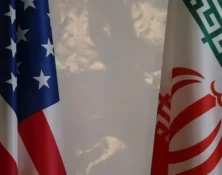


President Donald Trump has privately indicated he is open to ending the war with Iran even if the Strait of Hormuz — which carries roughly 20% of the world’s oil — is not fully reopened, according to a Wall Street Journal report.
The reported shift marks a notable departure from traditional U.S. military objectives, where securing global trade routes would typically be a central priority.
A Strategic Pivot
According to the report, Trump has told aides he is focused on achieving a swift resolution to the conflict, prioritizing the degradation of Iran’s military capabilities over prolonged engagement aimed at restoring maritime access.
Key objectives reportedly include:
- Crippling Iran’s naval forces
- Disabling missile systems
- Weakening defense infrastructure
- Preventing further nuclear development
Notably absent from that list: a firm requirement to reopen the Strait of Hormuz before declaring success.
The change suggests a recalibration of U.S. strategy, emphasizing targeted operations over long-term geopolitical involvement.
Mediaite’s David Gilmour adds:
Administration officials told the newspaper that the president concluded that forcing the strategic waterway back open would extend the conflict beyond his preferred four-to-six-week timeline. Instead, the White House is reportedly prioritizing degrading Iran’s naval capacity and missile stockpiles before scaling back operations and shifting to diplomatic pressure.
The decision would leave Tehran in effective control of the chokepoint, The Journal noted, through which roughly a fifth of the world’s oil supply normally passes.
Senior officials indicated that if diplomacy fails, the U.S. would push European and Gulf allies to take the lead in restoring passage through the strait.
The position underscores a pattern of mixed messaging from the president, who has alternated between threatening to strike Iranian energy infrastructure if Hormuz is not reopened and downplaying the strait’s importance to the U.S. economy, framing its closure as a problem for other nations.
Global Stakes Remain High
The Strait of Hormuz remains a critical artery for global energy markets. Any prolonged disruption threatens:
- Rising oil prices
- Supply chain instability
- Economic ripple effects across Europe and Asia
While the U.S. has historically played a leading role in securing such routes, Trump’s reported stance suggests a potential shift toward burden-sharing with allies, particularly those more dependent on Middle Eastern oil.
Debate Over “Victory”
The approach is already drawing scrutiny.
Critics argue that ending the conflict without restoring full access to the strait risks:
- Leaving a major global vulnerability unresolved
- Undermining long-term stability in the region
- Creating uncertainty in global energy markets
Supporters, however, see a different calculation.
They argue the strategy reflects:
- A desire to avoid another prolonged Middle East conflict
- A focus on core U.S. national security interests
- A recognition that global policing of trade routes should not fall solely on American shoulders
In this view, degrading Iran’s military capabilities — without becoming entangled in prolonged combat operations — is seen as a pragmatic strategic win.
What Comes Next
It remains unclear how Iran will respond or whether international partners are prepared to step into a larger security role in the region.
What is clear is that Trump’s reported position reflects a broader foreign policy doctrine: limit exposure, achieve core objectives quickly, and shift ongoing responsibilities where possible.
As global markets watch closely, the question now becomes whether this approach will stabilize the region — or leave a critical fault line unresolved.
READ NEXT: DHS Blasts City After Another Preventable Tragedy Strikes


















The Saudis have a large army and they should lead in securing the straight. The U.S. should contribute air support, along with the Saudi’s own air force. The Saudis have a huge interest in an opened straight, and should step up if they care. Hopefully Trump is trying to make them think about doing what is in their own self-interest, plus he avoids the unpopularity of boots on the ground, and the resulting casualties.