



Civilians are forming human chains around potential targets…
Iran has halted direct diplomatic communications with the United States, a move that signals a sharper turn in an already tense standoff tied to a war that has killed thousands.
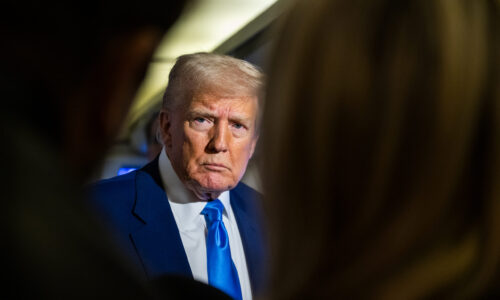
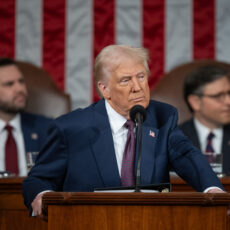
The decision came early Tuesday, according to regional officials, after a series of warnings from President Donald Trump. Those warnings included threats of large-scale strikes on Iranian infrastructure and stark language about the consequences if no agreement is reached by an 8 p.m. deadline.
The Wall Street Journal, citing three Iranian officials, has said that Iran has cut off communications with the U.S. as U.S. President Donald J. Trump’s strike deadline at 8 p.m. EST looms.
— OSINTdefender (@sentdefender) April 7, 2026
Iran’s response stops short of a full diplomatic break. Officials say talks will continue, but only through intermediaries such as Pakistan, Egypt, and Turkey.
That keeps negotiations alive, at least on paper.
Talks continue, but at arm’s length
Iran has long argued that negotiations cannot happen under direct threats. The shift to indirect talks reflects that position.
Messages between Washington and Tehran are now being conveyed through third-party countries, a shift that analysts say can slow communication and increase the risk of miscalculation.
Critics argue that indirect exchanges add time, complicate efforts to clarify positions, and make real-time de-escalation more difficult.
Even so, both sides are still working toward some form of agreement.
Mediators have floated temporary ceasefire frameworks. Iran has put forward counterproposals that include sanctions relief and reconstruction support. The United States continues to press for security guarantees and stable access to energy routes, especially through the Strait of Hormuz.
An Iranian source warned Reuters that U.S. strikes on the country’s power infrastructure could prompt retaliatory attacks across the region, potentially disrupting energy networks and causing widespread blackouts.
The warning also included the possibility that Iran’s allies could attempt to close the Bab el-Mandeb Strait, a key global shipping route linking the Red Sea and the Gulf of Aden that accounts for roughly 10-12% of global seaborne trade.
A senior Iranian source told Reuters that if the United States targets Iran’s power plants, “the entire region will fall into darkness,” warning of retaliatory strikes on energy infrastructure across the Middle East.
— Visegrád 24 (@visegrad24) April 7, 2026
The source also warned that if the situation escalates… pic.twitter.com/EEESH6ya4R
At the same time, Iranian officials have encouraged civilians — including children — to gather around power plants and bridges in what they describe as symbolic acts of protection following U.S. threats to target infrastructure tied to the Strait of Hormuz.
State media reported crowds assembling at facilities, including the Kazerun power plant.
🚨 BREAKING: Iran is now forming HUMAN CHAINS in front of a power plant in Kazerun in a bid to dissuade President Trump’s strikes come 8PM
— Eric Daugherty (@EricLDaugh) April 7, 2026
They even invited children to attend.
This is evil and disgusting. Iran views their people as meat shields! pic.twitter.com/44N4tMhOQZ
A fragile moment for diplomacy
Analysts say the situation has entered a high-risk phase, as indirect talks between Washington and Tehran continue.
While such backchannel communications can be effective, they often move slowly. With deadlines approaching and military activity increasing, delays could carry significant consequences.
Recent reports indicate continued strikes on Iranian infrastructure alongside ongoing threats of escalation. U.S. officials have signaled that, under these conditions, the likelihood of reaching an agreement before the deadline remains low.
The combination of mounting pressure and limited direct communication has created a narrow path forward for diplomacy.
Risks grow as communication narrows
The breakdown in direct contact underscores how quickly diplomatic channels can erode during an active conflict.
For now, negotiations are continuing indirectly, with both sides relying on intermediaries rather than direct engagement. Whether that distance helps ease tensions or further complicates efforts to reach an agreement will become clearer in the coming hours.
This is a breaking news story. Please check back for updates.
READ NEXT: Unhinged Celebrity Who Vowed To Stay Abroad Returns To America


















Civilians?
Anyone who helps a terrorist nation ( their terrorist government, not necessarily the average person in that country ) to try to get international condemnation of the U.S. for striking their assets, is not a true civilian.
They are ( while probably being forced to do so, yet they still are helping the Iranian military ), then, part of Iran’s military action against the United State’s objective of stopping Iran from being able to attack the U.S. with nuclear weapons.
Remember what we had to do in Germany and Japan, etc., during the 2nd WW!
I would unleash on those places. Those fools forming chains will run at.the sound of the jets.