

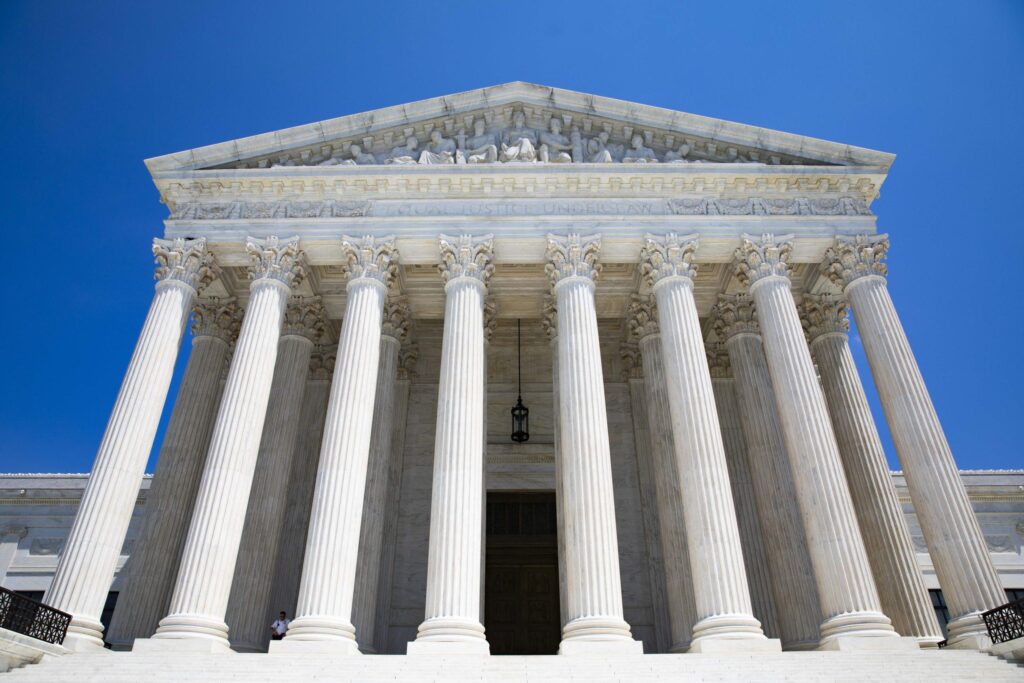
WASHINGTON — Newly leaked internal Supreme Court memos between justices offer a rare glimpse into the court’s highly secretive decision-making process — revealing that deep divisions over emergency rulings date back years.
The documents, first reported by The New York Times, center on the court’s 2016 decision to halt the Obama administration’s Clean Power Plan — a move widely seen as the starting point of the modern “shadow docket.”
Early Fractures Inside the Court
The memos show that even at that early stage, the justices were sharply split over whether to use emergency powers to intervene in major policy disputes.
At the time, the court voted 5-4 to issue an unprecedented stay blocking the climate rule before full legal arguments were heard — a move that broke with long-standing norms.
According to reporting on the leak, liberal justices raised concerns about the risks of acting too quickly without full briefing, while conservative justices defended the need for immediate intervention in cases they viewed as legally urgent.
What the ‘Shadow Docket’ Means
The emergency docket — often called the “shadow docket” — allows the Supreme Court to issue rapid decisions without oral arguments or detailed written opinions.
Historically, it was used sparingly for time-sensitive matters. But in recent years, it has become a more prominent tool for resolving high-stakes disputes, including immigration, regulatory policy, and executive authority.
Critics argue this shift has reduced transparency and limited public understanding of how and why major decisions are made. Supporters counter that the court must retain flexibility to act quickly when lower court rulings could cause immediate harm.
The Hill reported additional details on the fallout from the leaked documents, offering rare insight into an institution that closely guards its internal deliberations:
But even the law professor credited with coining the “shadow docket” term says the biggest scandal is the leak itself.
“Supreme Court leaks like these — including copies of confidential work product — are becoming more common. In my view, this is a bad thing. It will damage the institutional culture of the Court and do little good,” wrote University of Chicago professor William Baude.
It’s not an isolated incident. The memos surfaced as the four-year mark approaches of the seismic leak of the Supreme Court’s draft opinion overturning abortion protections.
Together, the leaks are shaking confidence in the court’s historic privacy and prompting calls for a reckoning.
Leak Raises New Questions About Court Confidentiality
Supreme Court deliberations are traditionally kept strictly confidential, with leaks considered a serious breach of institutional trust.
The disclosure is already drawing attention not just for what it reveals about past decisions, but for what it suggests about the court’s internal cohesion — and its ability to keep deliberations private.
Why This Matters Now
The leak comes at a time when the Supreme Court’s emergency docket is playing an outsized role in shaping national policy amid a surge of legal challenges tied to the Trump administration.
What the memos make clear is that the current debate is not new.
Instead, it reflects a long-running divide over how aggressively the court should use its emergency powers — and whether speed and flexibility should outweigh transparency and deliberation.
Bottom Line
The newly revealed memos don’t just shed light on a past decision — they underscore a fundamental disagreement that continues to shape the Supreme Court today.
With the court continuing to issue fast-track decisions in high-profile cases, the divide shows little sign of easing.
READ NEXT: Violence Strikes Famous Landmark; Authorities Work To Restore Safety
















When you cannot trust a participant to maintain confidentiality, the violator needs to go. Investigate and even if is a Justice rather than a staff member, the violator must be expelled.
Who would do this…..
Now that’s funny right there!