Good morning. Today’s headlines move between the deeply personal and the overtly political—private disputes spilling into public view, past actions colliding with present accountability, and policy debates that could reshape the country.
A Family Rift Around Tucker Carlson Draws Public Attention
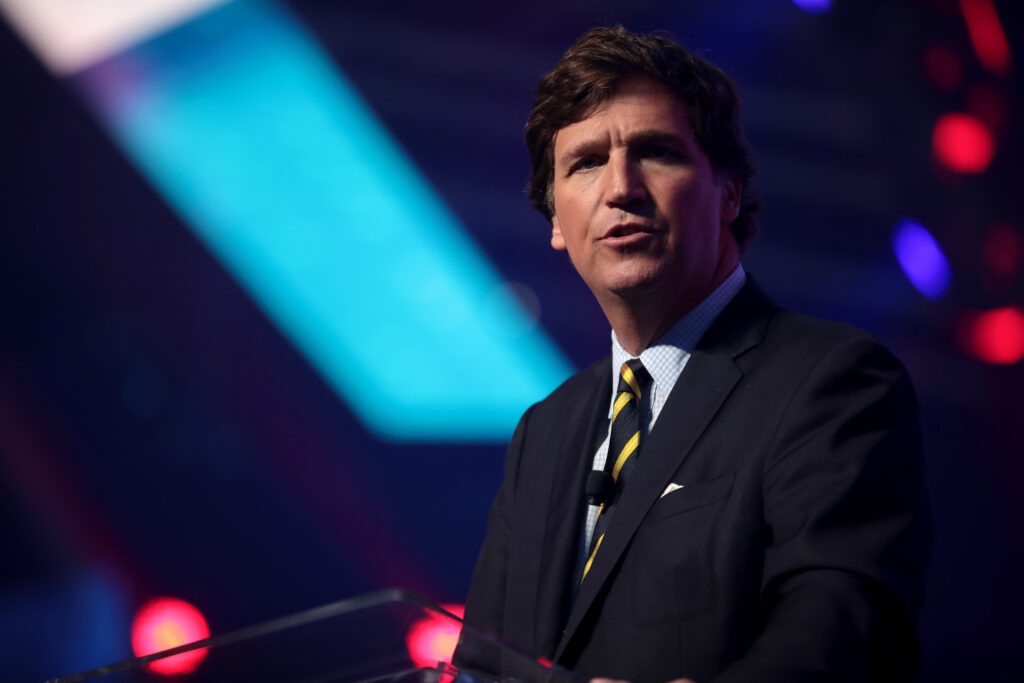
A new report is pulling back the curtain on a long-simmering and deeply personal dispute involving show host Tucker Carlson and an estranged stepsister, revolving around questions of family ties, inheritance, and identity.
Carlson has publicly claimed little to no relationship with Dr. Roberta “Bo” Hunt, even stating at one point, “I don’t know her.” But photographs and accounts presented in the report suggest a more connected past, showing the two at shared family events over the years.
The controversy appears to revolve around a broader dispute tied to the Swanson family fortune, into which Carlson became connected through his stepmother. A lawsuit filed by Hunt challenges whether adopted family members should receive distributions from a longstanding trust, raising both legal and emotional questions about who counts as an heir.
As with many family conflicts involving wealth, the details are complex and contested. What’s clear is that a private disagreement has become public, in part because of Carlson’s high profile—turning a personal fracture into a widely scrutinized story.
Russell Brand’s Admission Adds New Layer to Ongoing Legal Battle
Russell Brand is once again making headlines, this time following his own acknowledgment of a past relationship that he now describes as “wrong,” even as he maintains it was legal.
Speaking in a recent interview, Brand said he had a sexual relationship with a 16-year-old when he was 30—permitted by British law but widely viewed by criticized as ethically troubling.
Brand is currently facing multiple serious criminal charges, including rape and sexual assault, all of which he denies. His trial is expected later this year.
His admissions have intensified an already heated public debate—not just about legality, but about consent, influence, and accountability. Critics argue that legality does not resolve the ethical concerns, while others caution against conflating past legal conduct with unproven allegations.
Layered onto this is Brand’s recent public shift toward religion and personal reinvention, which some see as genuine and others as strategic given his legal situation.
Push to End TPS Signals Escalating Immigration Fight
On Capitol Hill, a new legislative push is targeting one of the country’s longstanding immigration programs.
Rep. Andrew Clyde has introduced a bill that would eliminate Temporary Protected Status (TPS) entirely—a program that allows individuals from crisis-stricken countries to live and work in the United States temporarily.
Supporters of the proposal argue TPS has drifted far beyond its original purpose, effectively becoming a long-term solution rather than a temporary one. Critics, however, say ending the program would upend the lives of hundreds of thousands of people who cannot safely return to their home countries.
The debate is particularly focused on Haiti, where TPS protections have been extended repeatedly since the devastating 2010 earthquake. Recent votes in Congress have exposed divisions even within the Republican Party over whether to extend or scale back those protections.
With related legal questions heading to the Supreme Court, the future of TPS may ultimately be shaped not just by lawmakers, but by the courts.
READ NEXT: Trump Administration Ends Temporary Protected Status For Somalia