





New reporting from NBC News is raising fresh questions about the early days of the U.S. war with Iran, particularly how much damage was done and how capable Tehran’s military remains.
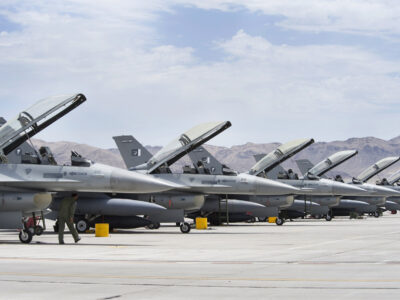
According to the report, Iranian F-5 fighter jets carried out successful bombing runs on U.S. military installations across the Middle East, including Camp Buehring in Kuwait. That detail had not been publicly disclosed before.
The strikes appear to have pierced what is typically described as a dense, layered U.S. air defense system. That includes Patriot missile batteries and radar coverage designed to detect and intercept incoming threats.
What stands out is not just the damage, but how it happened.
🚨 NBC News confirms for the first time: the Iranian Air Force bombed US military bases in the opening phase of the war.
— Brian Allen (@allenanalysis) April 25, 2026
This was not just missiles and drones.
This was the Iranian Air Force.
Conducting airstrikes on American bases.
And we’re only finding out now.
What else… pic.twitter.com/Ip6ykQ4sGS
Aging aircraft, modern impact
The F-5 is not a new platform. It dates back to 1959.
Instead of relying solely on drones or ballistic missiles, Iran used a variety of weapons systems to strike warehouses, aircraft hangars, command centers, and runways. Satellite communications systems and advanced radar installations were also hit, including an AN/TPY-2 X-band radar site in Jordan.
U.S. officials cited in the report said dozens of sites across seven countries were targeted.
Damage broader than first reported
The full extent of the damage is still coming into focus. Early public statements suggested limited impact. That no longer appears to be the case.
Repair costs alone could reach into the billions.
Images reviewed and geolocated by NBC News show clear signs of destruction. One example: an E-3 Sentry, or AWACS surveillance aircraft, heavily damaged at Prince Sultan Air Base in Saudi Arabia following a March 27 attack involving missiles and drones.
Taken together, the strikes suggest a wider operational reach than previously acknowledged.
Intelligence assessments contradict public messaging
The Pentagon’s intelligence arm has also weighed in, and its conclusions do not fully align with earlier political statements.
While the Trump administration had described Iran’s air capabilities as “obliterated,” intelligence officials now say Tehran retains significant military strength.
That gap between public messaging and internal assessment is likely to draw scrutiny, especially as more details surface.
Ceasefire holds, tensions remain
All of this comes as the U.S. and Iran sit in a fragile, open-ended ceasefire.
The pause in fighting has not resolved core disputes. The U.S. naval blockade of Iranian ports remains a sticking point, and neither side appears ready to concede.
The new reporting adds another layer of uncertainty. If Iran was able to carry out these kinds of strikes early in the conflict, it raises obvious questions about what it could still do if fighting resumes.
For now, those questions remain unanswered. But the picture of the conflict’s opening phase is becoming clearer, and it is more complicated than first described.
READ NEXT: Trump Drops Viral Bomb On Former MAGA Favorite





















And we haven’t learned lessons from their attacks?
Now we know what they can do, and we know how we can protect ourselves from that!
Nothing is ever a ‘sure thing’. We can be ‘hurt’.
Naturally!
So can they!
There will be problems, for sure … but we DO have the upper hand in this confrontation.
Are we a paper tiger who will bow down to them and let them construct ‘nukes’ and long range missiles with which to use on us?
Be assured! If they can … they will!