Charlotte Mayor Vi Lyles announced Thursday that she will resign effective June 30, a stunning move that comes less than six months after the five-term Democrat won reelection to lead the nation’s 14th-largest city.
“Serving as Charlotte’s mayor has been the honor of my life,” Lyles, 73, said in a statement to The Charlotte Observer and other local outlets Thursday. “I am proud of our record navigating various challenges, strengthening our economy, investing in our neighborhoods, and building a foundation for Charlotte’s continued success during a time of rapid growth.”
“As in all things politics, I am sure there will be speculation as to why I am making this decision now,” the statement continued. “Simply put, I am going to spend time with my grandchildren. Like many of us, I have missed some moments with them and intend to not miss anymore.”
Lyles, who was first elected mayor in 2017, easily cruised to reelection in 2025 after months of uncertainty over whether she would seek another term. But in recent months, questions had grown about her visibility and ability to actively lead the city.
According to The Charlotte Ledger, Lyles had been missing more City Council meetings than usual after years of routinely presiding over them. The outlet also reported that she had not attended most monthly zoning meetings for several months, possibly longer.
WFAE further reported that concerns had been raised within the community, the private sector, and city government about Lyles’ health and whether she could continue handling the demands of the office. The station noted that Lyles at times appeared confused during procedural discussions, including at one recent council meeting when she reportedly had to be reminded to cast a tiebreaking vote.
When approached Monday at the Government Center by a WFAE reporter and asked whether she intended to complete her term, Lyles declined to give a direct answer.
“We will see,” she said, just days before announcing her resignation.
WFAE reported that after the exchange, Lyles was escorted away from the reporter by an assistant and later by a Charlotte-Mecklenburg police officer.
Her resignation now leaves the Charlotte City Council responsible for selecting someone to serve out the remainder of her term.
Charlotte’s political and demographic backdrop is a major part of why Vi Lyles’ sudden resignation is drawing so much attention.
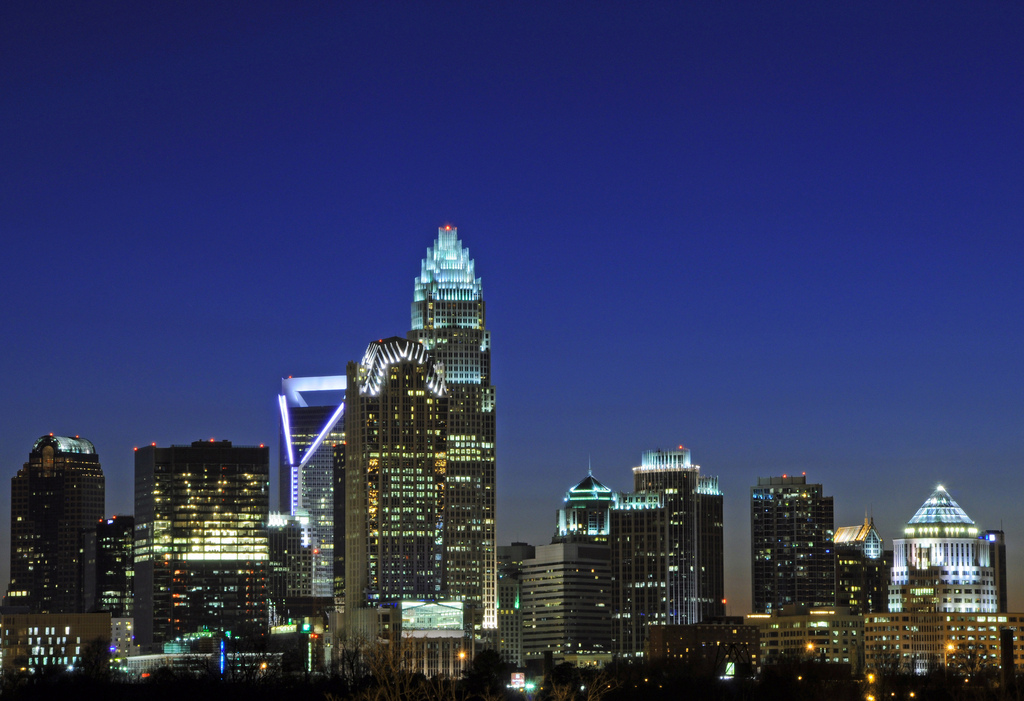
Charlotte has been one of the fastest-growing major cities in America for years, fueled by banking, finance, tech, and an influx of transplants from the Northeast and West Coast. The city now has a population approaching 950,000, while the broader metro area is well over 3 million people. Recent Census estimates show Charlotte continues to outpace many large U.S. cities in growth even as national population trends have slowed.
That rapid growth has transformed the city politically as well.
Historically, Charlotte was viewed as a business-oriented Southern city that often favored moderate politicians from both parties. Republicans controlled the mayor’s office for more than two decades, including former Mayor Pat McCrory’s long tenure from 1995 to 2009. But over the last 15 years, Charlotte has shifted sharply toward Democrats as younger professionals and out-of-state transplants moved into the region.
Today, Democrats dominate city politics. Charlotte City Council currently has a 9-2 Democratic majority, and Democratic mayoral candidates routinely win by large margins. In the 2025 election, Lyles defeated Republican challenger Terrie Donovan with more than 70% of the vote despite growing criticism over transparency and city leadership controversies.
Now, with Lyles stepping down unexpectedly, attention is quickly turning toward who could replace her.
No official field has emerged yet, but several names are already likely to generate speculation:
- Mayor Pro Tem Danté Anderson could immediately become a central figure because of his current leadership role on the City Council. As mayor pro tem, he is well-positioned if council members look for continuity.
- At-large council member Dimple Ajmera is viewed as a rising figure in Charlotte Democratic politics. She has built a profile around budget issues, infrastructure, and government accountability, and recently drew attention for opposing public funding connected to Bank of America Stadium renovations.
- Former Mayor Jennifer Roberts could also spark speculation. Roberts lost to Lyles in the 2017 Democratic primary but still maintains support among progressive activists and urban policy advocates. She declined to run in 2025, though a sudden open seat could potentially reshape calculations.
- Michael Barnes, a former acting mayor and longtime city council member, may also emerge as a possible consensus figure because of his prior experience in city leadership.
READ NEXT: Report: Ohio Attorney General To Issue Early Resignation