

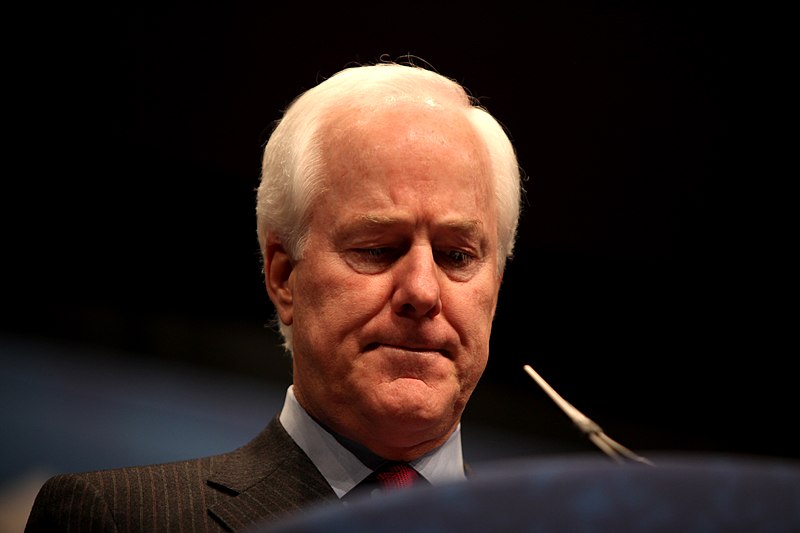
Senator John Cornyn’s defenders point to old endorsements and a familiar label, pro-Second Amendment. The question for Texans is not the label, it is the ledger. A serious assessment does not accuse, it tallies. When we trace the votes, the negotiations, and the downstream rules that followed, a pattern appears. Cornyn has often treated gun rights as a bargaining chip in broader legislative puzzles. He views himself as a broker of deals, not a sentinel. For a right that begins with shall not be infringed, a broker’s mindset can be corrosive. Six more years of it, with a final term and no electoral check, would invite more of the same.
EXPOSED: John Cornyn's Betrayal of the Second Amendment! He’s Not a Defender, But a Gun Control Enabler!
— RINO Removal Project (@RINO_Removal) October 14, 2025
Texas patriots, don't let Senator John Cornyn fool you with his NRA A+ sticker. His record screams anti 2A!
He's led "bipartisan" deals that expand federal databases, fund… pic.twitter.com/eeJefxp3Pk
Start with first principles. The Second Amendment protects an individual right to keep and bear arms. The Supreme Court has said so in clear terms. A right is not a favor extended by government but a constraint upon it. There is room for debate about how to balance public safety and liberty, but there is also a clear baseline. Any move that conditions exercise of the right on opaque bureaucratic processes, secret lists, expandable definitions, or subjective accusations lowers that baseline. The more the federal architecture of conditions grows, the easier it becomes for future administrations to tighten the screws without new votes in Congress. If you prefer an analogy, think of it like adding new valves and gauges to a pipeline. Each component can later be turned to restrict the flow. A vote that installs the valves is not neutral, even if today’s setting is moderate.
With that frame, examine 2022. In the wake of the Uvalde tragedy, Cornyn became the lead Republican negotiator for the Bipartisan Safer Communities Act. He did not merely allow a vote, he recruited the margin of victory. The law sent hundreds of millions of dollars to states that adopt extreme risk protection order schemes, it lengthened and deepened scrutiny for 18 to 20 year old buyers, it expanded the statutory reach of the prohibited person categories through new relationship definitions, and it rewrote who counts as engaged in the business of selling firearms. Each piece might sound modest in isolation. Together, they built new valves in the pipeline. Within two years, the executive branch pointed to that statute as authority to widen background check coverage to vast swaths of private sellers and gun show transactions, and to justify new rulemakings that inch toward universal checks through administrative interpretation. That was predictable, critics warned it in real time. The response from Cornyn’s office was surprise, as if the executive would not use new levers once Congress installed them.
A defender might ask whether the 2022 law was at least a reasonable trade to improve mental health funding and enforcement of existing law. The problem is structural. When Congress pays states to adopt red flag schemes, it scales a model that treats accusations and interim orders as grounds for disarmament. It does so even when the accused has not been charged, let alone convicted. Some states have better processes than others, but the federal role increases the footprint of a pre crime approach. When Congress tightens definitions of who must be a licensed dealer, it does not simply cabin dangerous actors, it exposes casual, lawful sellers to new risk unless they funnel transactions into the federal check system. These are not neutral nudges, they are architecture changes. A future White House, unfriendly to gun rights, now has more knobs to turn. That is not conjecture, it is what happened.
Look backward from 2022 and the pattern repeats. In 2018, Cornyn was the prime mover behind Fix NICS. The impetus was a real failure by the Air Force to transmit disqualifying records in a massacre case. Instead of narrowly correcting the reporting gap, Congress built a compliance regime that pushed millions of new entries into the background check database. Many entries involved administrative adjudications that carried no criminal conviction and offered little due process. Veterans who accepted fiduciaries for financial management were reported as mental defectives. People with old mental health episodes and unclear adjudications found themselves flagged. A database that is supposed to identify the genuinely dangerous grew into a dragnet that often confused administrative labels with criminal guilt. Again, the architecture grew. Again, future executives could use the larger system to justify wider denials and to pressure more transactions into the net.
A confused reader may ask whether more records are not always better. If the point is to catch prohibited buyers, why not require every possible record. The answer is that background checks are a blunt instrument. They deny purchases when names match entries. If the entries come from processes where the person had no lawyer, no hearing, or no notice, the denial is not a sign of danger, it is a sign of bureaucratic labeling. The more such records exist, the more false positives we generate, and the more citizens must spend time and money to clear errors before they can exercise a constitutional right. To say this is not to oppose enforcement of real prohibitions. It is to say that Fix NICS rewarded quantity over quality, and it did so in a way that was guaranteed to sweep in the innocent. A careful guardian of rights would have narrowed eligibility, tightened procedural safeguards, and insisted on strict, fast off ramps. Cornyn did not.
Go back further. In 2016, after the Orlando massacre, Democrats pushed to convert the No Fly List and assorted watchlists into gun purchase bans. The lists are secretive, error prone, and often impossible to challenge. The American Civil Liberties Union objected to using them as a basis for stripping rights. Instead of leading the charge against the premise, Cornyn proposed a 72 hour delay scheme keyed to the lists, with a rushed court process layered on top. The aim was to appear tough on terror while adding a veneer of due process. That is not a defense of first principles. It is a concession to the core idea that secret lists can trigger presumptive denials. Had it become law, many innocent Americans would have faced emergency litigation on the government’s timetable just to buy a firearm. The proposal failed, largely because Democrats wanted a stricter version. Texans should ask why their senior Republican senator framed the debate around how to implement a list based denial rather than how to repudiate it.
In 2013, in the post Sandy Hook push, Cornyn voted against the Manchin Toomey universal background check amendment, which was the right vote. Yet even here he behaved like a broker. He offered national reciprocity for concealed carry as a trade, signaling that he was willing to make the background check expansion palatable rather than lead the opposition to its premise. The vote failed for reasons largely outside his control, but the instinct is telling. When the pressure to do something rises, Cornyn looks for a bipartisan landing zone that moves the ball toward more federal control, then he claims credit for having moderated the outcome.
The record is older still. In 2007, Congress passed the NICS Improvement Amendments Act by unanimous consent. It infused mental health and other adjudicatory records into the federal database and provided money to the states to build the pipelines. The idea was to prevent another Virginia Tech. The risks were the same ones we see today, broad categories, unclear standards, and weak appeal rights. Cornyn did not object, did not demand debate, and did not fight for tighter definitions. In 2005, the Senate added a child safety lock requirement to handgun sales by licensed dealers. On the discrete amendment vote Cornyn opposed the mandate, which was sensible, but when the amendment passed he supported the final bill with the mandate intact. Again the pattern, symbolically protest the constraint, then accept it in the package so that business can continue.
Some will say this is all old history and that in other areas Cornyn has sponsored pro gun bills such as interstate carry reciprocity. That is true, and it does not repair the architecture he helped build. The right test is not the title of a bill, it is the expected effect on government leverage. Bills that add transactions to federal systems, that fund accusatory disarmament programs, that stretch the meaning of engaged in the business, that invite administrators to impose definitions year by year, these increase leverage. Once the leverage exists, it will be used. Courts can slow abuses, but they rarely dismantle the structure. The only reliable check is a Senate that refuses to install the valves in the first place.
Why does this matter now. Simple. If Cornyn wins again in 2026, the term would be his last by ordinary expectations. Age and time in office change the incentives of any politician. A final term senator who sees himself as a dealmaker and who has already shown comfort trading on gun policy will have fewer constraints. He will view a new tragedy as a chance to prove that Washington can act. He will call old allies across the aisle. He will be praised for courage in the press. The result will be another architecture bill, small in appearance, large in effect. A change to what counts as a dealer. A new funding stream for red flag style programs that skip indictment and conviction. A tweak to the prohibited list that captures more people based on administrative labels. A mandate that every commercial setting install more tracking. The details will vary. The direction will not.
Fairness requires a response to the strongest defense. One might say that Cornyn was operating in the shadow of a 60 vote Senate where the alternative to his compromise was a worse bill. That logic is not always wrong. Sometimes a narrow, time limited measure heads off a sweeping proposal. The trouble is that the pattern of results here does not fit that defense. The 2022 law was not narrow, it was the largest federal gun control package in decades. The 2018 law did not fix a single agency failure, it rewired incentives for every agency and state. The 2016 proposal was not a firewall against secret lists, it was an embrace with a delay. The 2013 posture did not rally the caucus, it suggested trade space. The 2007 and 2005 episodes installed the small parts that later made larger systems possible. This is the opposite of the narrow fix model.
Another defense appeals to political branding. Cornyn has long held a high rating from legacy gun organizations that often work inside the legislative process and that prioritize relationships. Ratings are not records. A group can grade on a curve, can put weight on votes that have no chance to pass, and can downplay the long tail of administrative consequences. Grassroots groups with fewer ties to leadership have been more consistent about warning what will happen when Congress grows the federal apparatus. Their warnings proved accurate. When a later administration points to your statute as authority for new bans, shows your definition in the Federal Register as justification for reclassifying sellers, and sends checks to states that adopt pre crime confiscation, the grade you want is not a talking point from a decade ago. It is whether the architecture grew because of your choices. On that test Cornyn’s grade is low.
A reader may wonder whether any Republican can win statewide in Texas if he is seen as a rigid absolutist on guns. The answer is that clarity and firmness about due process and limited federal power are not fringe positions in Texas. Texans are perfectly capable of supporting targeted enforcement of existing bans on violent felons and adjudicated dangers. Texans also understand that red flag systems that strip rights on accusations, without indictment or trial, are a bridge too far. They know that expanding the definition of who must be a licensed dealer should not be hidden in obscure language and then delegated to the ATF to interpret. They know that databases filled with administrative labels should not be a backdoor to permanent disarmament. Texans do not demand recklessness, they demand prudence that respects liberty first. There is a difference between careful and compromising. Cornyn’s career shows too much of the latter.
If the point of calling a politician a RINO is to say that his instincts and alliances run with the establishment that trades away core commitments, then the label fits on this issue. It is not a slur, it is a diagnosis of legislative behavior. Cornyn seeks the center of gravity defined by colleagues and editorial boards that want action after tragedy. He aims to be the Republican who can deliver. On spending, on judges, on other questions, voters can weigh the balance. On the Second Amendment, where the risk of permanent structural change is so high, the margin for error is thin. Texas cannot afford another six years of a broker’s mindset that treats the right to keep and bear arms as a variable in larger equations.
The conclusion is not that Cornyn is an enemy of the Second Amendment in the cartoon sense. It is that his choices have repeatedly built the scaffolding that enemies of the Second Amendment will climb. The scaffolding remains even when the negotiators go home. The better course is to send a senator who sees the architecture clearly, who refuses to add new levers that can later be pulled harder, who insists that any public safety measure must pass strict tests of due process and narrow tailoring, and who never trades away rights to prove that Washington can act. Texans deserve a sentinel, not a broker. They should demand one now, before the next tragedy provides the pretext for another comprehensive deal. The time to correct course is before a final term removes the last restraints.
If you enjoy my work, please share my work and subscribe: https://x.com/amuse.
Sponsored by the John Milton Freedom Foundation, a nonprofit dedicated to helping independent journalists overcome formidable challenges in today’s media landscape and bring crucial stories to you.
READ NEXT: Socialist Front-Runner Rocked By Shady Foreign Revelations



















Allow a person to remain in a position of power surrounded by others that are similarly steeped in corruption and he becomes irrevocably contaminated.
What a load of “pontificated” crap.
In your essay on Comryn, this is the heading that is published: “Why Texas Cannot 6 More Years”. What do you mean? There is a missing word/term or phrase so it will make sense. You need a better editor/reader!
Cornyn was loyal to McConnell when the Democrats were walking all over the Republicans. i do not trust him. I think he goes what allows him to stay in power. Not happy with him. There should be term limits of 2 terms in my opinion. He has served. Thank you John Cornyn. Time for new blood which should have terms limited also.