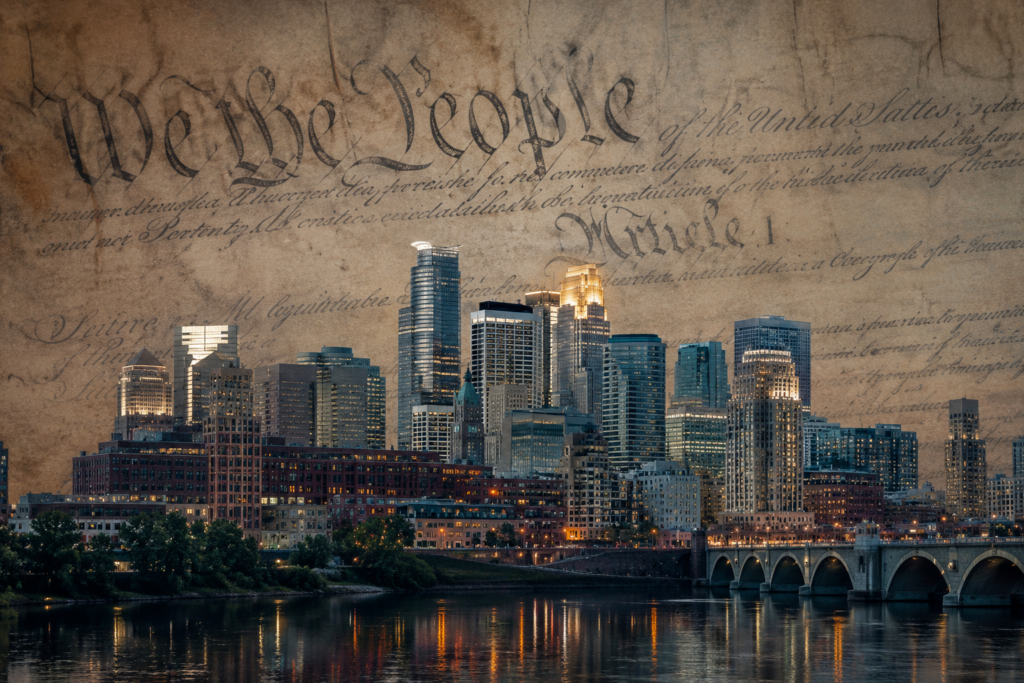
A major gun policy debate is unfolding in Minnesota after the Minneapolis City Council unanimously approved a sweeping gun control ordinance aimed at restricting assault-style weapons, high-capacity magazines, ghost guns, and firearm possession in certain public places.
The ordinance passed with support from all 13 council members and now positions Minneapolis at the center of a growing statewide discussion over firearm regulation, local government authority, and public safety.
While supporters described the measure as a necessary response to gun violence, critics immediately questioned whether the city has the legal authority to enforce it under Minnesota’s existing firearm preemption laws. Several legal experts and gun rights organizations have already indicated that court challenges are likely.
The Minneapolis City Council unanimously passes gun control ordinance story has quickly become one of the most discussed political developments in Minnesota this week, especially as state lawmakers continue debating broader gun legislation at the Capitol.
Why the Ordinance May Face Legal Challenges
Despite the unanimous vote, legal enforcement remains uncertain because Minnesota law currently limits the ability of local governments to enact firearm regulations that exceed state law.
Minnesota has firearm preemption statutes that generally reserve gun regulation authority for the state legislature rather than individual cities.
Because of this:
- Minneapolis may not legally enforce portions of the ordinance immediately
- Gun rights organizations are expected to challenge the measure in court
- The ordinance could become largely symbolic unless state law changes
The Minnesota Gun Owners Caucus has already signaled potential litigation against Minneapolis, similar to legal action filed after St. Paul passed a comparable ordinance last year.
What Opponents Are Saying
Critics argue the city exceeded its legal authority by adopting what they describe as an unenforceable ban, according to reporting from Bearing Arms:
In a letter to the Minneapolis City Council, MN Gun Owners Caucus General Counsel Rob Doar called the ordinance “facially invalid and immediately susceptible to legal challenge.”
The City of Minneapolis lacks the authority to adopt any ordinance that regulates firearms or ammunition, whether directly or contingently. No legislative gimmick — such as an indefinite effective date — can circumvent a statutory bar. Minnesota courts treat conflicting local enactments as invalid when they add requirements inconsistent with state law, and they do not require a futile local-law process where the proposed local measure conflicts with state law. An ordinance that is invalid today does not become valid merely because its enforcement is deferred until an unspecified future date.
While the language of the ordinance states it cannot be enforced until state law allows it to be enforced, if the state legislature ever acts to repeal the firearms preemption law that’s in place, Democrats will almost certainly have the votes to enact a statewide ban on modern sporting rifles and other firearms deemed “assault weapons,” as well as prohibitions on “large capacity” magazines, binary triggers, and “ghost guns.”
This ordinance is nothing more than a political stunt aimed at signaling support for a legislative ban on commonly-owned firearms. Had the city council framed this as a resolution and not an actual ordinance it would be on solid legal footing, but as Doar says, the state preemption law is clear that any local ordinance that seeks to regulate firearms, ammunition, or their respective components is unlawful, whether or not it’s actively being enforced.
Political Momentum Meets Reality
The city ordinance arrives as Minnesota lawmakers debate broader gun control legislation at the state level.
Recent proposals in the Minnesota Senate include:
- Assault weapon restrictions
- Magazine capacity limits
- Ghost gun prohibitions
- Binary trigger bans
However, the divided Minnesota House creates uncertainty over whether statewide measures can pass.
Analysis and Interpretation
Legal analysts suggest the ordinance may function more as a political statement unless Minnesota lawmakers amend existing state preemption laws.
Some observers believe Minneapolis leaders are attempting to increase pressure on state legislators by passing local measures despite enforcement uncertainty.
Others view the ordinance as part of a broader national trend in which cities seek stronger gun regulations when state or federal action stalls.
National Context: Cities and Gun Regulation
The Minneapolis City Council unanimously passes gun control ordinance development reflects a larger national pattern.
Across the United States:
- Cities have attempted local firearm restrictions
- Courts have increasingly weighed state versus local authority
- Gun violence prevention remains politically divisive
Many states maintain preemption laws similar to Minnesota’s, limiting municipal authority over firearms.
As a result, local ordinances often become symbolic political actions, legal test cases, or tools to influence broader legislative debates.
Potential Next Steps
Possible Legal Outcomes
Several scenarios could unfold next:
- Court injunctions
- Courts could block enforcement entirely
- Partial enforcement
- Certain provisions may survive legal scrutiny
- State legislative action
- Minnesota lawmakers could modify state statutes
- Symbolic impact
- The ordinance may primarily influence political discourse
What Residents Should Watch
Residents and legal observers are monitoring:
- Lawsuits filed against the city
- Statements from the Minnesota attorney general
- State legislative negotiations
- Potential federal constitutional challenges
Although the ordinance’s long-term legal future remains uncertain, the unanimous vote underscores growing pressure within Democratic-led cities for stricter gun regulations following recent violent incidents.
The decision also reflects increasing demands from residents and local officials for stronger measures aimed at addressing public safety concerns.
READ NEXT: Senate Candidate Drops Out Of Race After Trump Offers Him Administration Role