

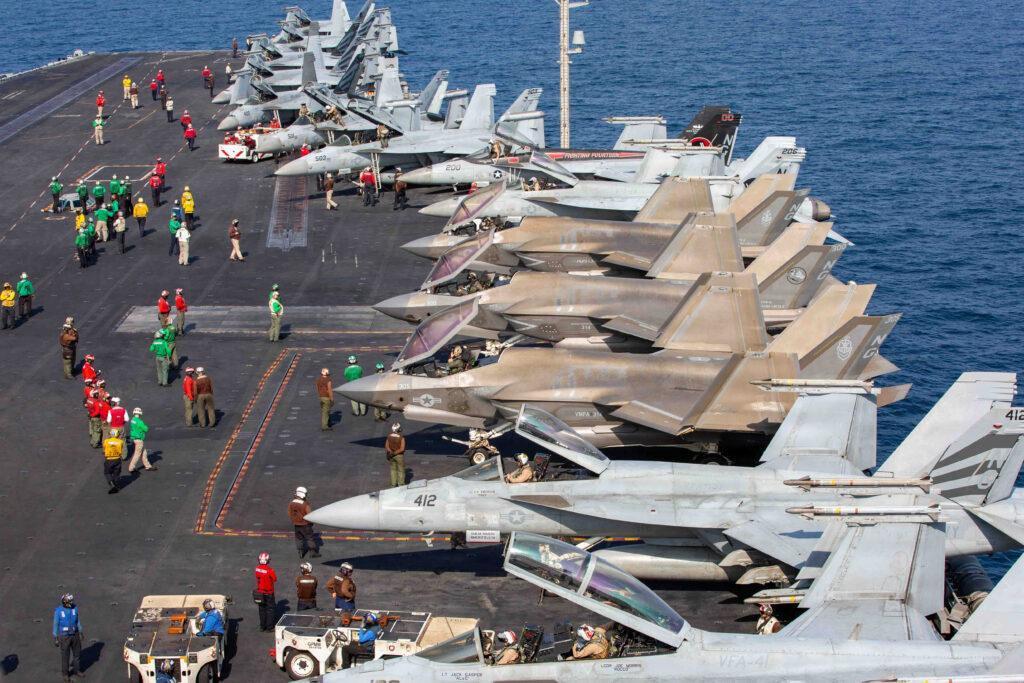
INTELLIGENCE REPORT: Long overdue. Much needed. Moving fast! Here is a brief summary of the initial joint U.S. and Israeli attacks on Iran over the weekend, followed by what the second wave of larger strikes, already begun, may and should include.
As of March 3, 2026, the U.S. and Israel have launched intense, coordinated military strikes against Iran, referred to as “Operation Epic Fury” (U.S.) and “Roaring Lion” (Israel).
Decapitation Strike: The campaign began on Feb. 28 with precision strikes that killed Supreme Leader Ayatollah Ali Khamenei and several senior Islamic Revolutionary Guard Corps (IRGC) commanders.
Initial strikes also targeted command and control infrastructure, naval forces, ballistic missile sites, and intelligence centers, with President Trump signaling that significantly larger, “heavier” strikes are expected to follow.
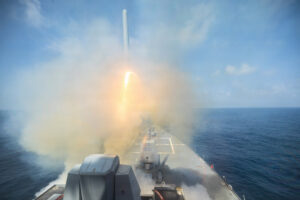
Initial Damage: The first waves of attacks, which included B-2 bombers, U.S. and Israeli fighters, as well as Tomahawk cruise missiles and drones, aimed to establish air superiority, destroying Iranian air defense systems and killing senior leaders.
Iranian Death Toll: U.S. and Israeli sources report that up to 1,500 Iranian military personnel have died, and the Iranian Red Crescent Society says at least 787 people have been killed in Iran due to the strikes.
“The Big One”: President Trump stated on March 2 that “the big wave hasn’t even happened,” indicating that a more significant phase of the operation is imminent, telling CNN’s Jake Tapper that the U.S. has “not even started hitting them hard.”
Timeline: According to President Trump, the U.S. military operation is expected to last four to five weeks, though it could be shorter or longer depending on the effectiveness of the strikes.
Trump has also stated that the U.S. is “substantially ahead” of its four- to five-week timeline but is prepared for a much longer campaign.
However, Israeli Foreign Minister Gideon Sa’ar stated the operation has no fixed end date and will continue as long as necessary to achieve its goals.
Objectives: The declared goals include destroying Iran’s missile capabilities, annihilating and sinking its Navy, preventing the development of nuclear weapons, and potentially forcing regime change.
Retaliation and Regional Impact
Iran Strikes Back: Iran has retaliated with missile and drone barrages against Israel and U.S. bases in the Gulf, including targets in Bahrain, Qatar, the UAE, and Saudi Arabia, pushing America’s Arab allies to take a stronger position against Iran.
Wider Conflict: The conflict has expanded to include Hezbollah in Lebanon, which launched strikes on Israel, leading to further Israeli strikes on Beirut.
U.S. Casualties: The fighting has resulted in the deaths of at least six U.S. service members, with many others seriously injured.
Global Economy: Oil and gas facilities have been hit, and shipping in the Strait of Hormuz has been disrupted.
Allied, Domestic U.S., and Iranian Response
Allied Support: While some European allies initially expressed concern about the lack of authorization, the U.K., France, and Germany have signaled support for “proportionate defensive measures” against Iranian retaliation.
Congressional Protest: Most Democrats, and a few Republicans, have protested the launch of the strikes, many focusing on process, arguing they were initiated without proper congressional authorization, while ignoring the strategic and moral imperatives justifying the campaign.
Domestic U.S. Support. While Democrats emphasize general polls showing widespread disapproval, reliable polls of registered voters show an even split with those supporting (41%) and opposing (42%) the attacks.
Domestic Iranian Response. There have been numerous reports of widespread spontaneous celebrations among the general population on the streets of Iran, cheering the U.S. attacks and the death of Khamenei. An encouraging sign.
But there have also been mostly government-sponsored pro-regime demonstrations and repressive crackdowns since the attacks began.
Second Wave of Attacks
As of March 3, 2026, the massive joint U.S.-Israeli military campaign has entered its fourth day of intensive strikes across Iran.
The operation has specifically transitioned into a “second wave” of larger strikes aimed at dismantling the regime’s nuclear capabilities and, more importantly, its repression apparatus to facilitate internal collapse.
Targeting Iran’s Repression Apparatus
In earlier analysis, I urged a concentrated attack on Iran’s entire repression apparatus as the only way to really weaken the regime and its ability to remain in power. I even provided specific targets, headquarters, facilities, and installations. And it appears this is part of the plan.
Recent reports from the ground and military briefings indicate the coalition is shifting its focus toward the infrastructure used to suppress the Iranian public:
Basij and IRGC Centers: Heavy airstrikes have targeted dozens of Basij (internal security force) and IRGC centers in Tehran, specifically those involved in suppressing previous protests.
Judicial & Intelligence Infrastructure: Notable targets destroyed include the Tehran Revolutionary Court on Shariati Street and the Ministry of Intelligence building in the Seyed Khandan area.
Command & Control: U.S. Central Command (CENTCOM) confirmed it was instructed to “dismantle the Iranian regime’s security apparatus,” leading to the leveling of the General Staff of internal security forces and the Thar-Allah Headquarters.
Intelligence Leadership: Precision strikes have reportedly killed key figures, including Gholamreza Rezaeian (head of the intelligence department of FARAJA police) and Mohammad Baseri (Ministry of Intelligence official).
Ultimate Objectives
Regime Change: President Trump and Prime Minister Benjamin Netanyahu have explicitly framed the operation as an effort to enable the Iranian people to “take over” their government and “cast off the yoke of tyranny.”
Whether this will be successful is yet to be seen, but the strategy and implementation have so far been solid.
The opinions expressed in this article are those of the author and do not necessarily reflect the positions of American Liberty News.
READ NEXT: What Iran Lost Long Before This Past Weekend
















Two things… The United States can’t wait on congress to make a war decision because congress can’t even pass a constitutional budget… and two six people die every weekend in democrat controlled cities and the democrats have never cared about them, so I highly doubt they care about the six soldiers killed, they just want to bash Trump and our nation!
People of Iran … .NOW is your time.
Your freedom is at hand. But you must go and get it!
We did it almost 250 years ago and it is certainly worth it!