

A Provision Pulled Amid Republican Pushback
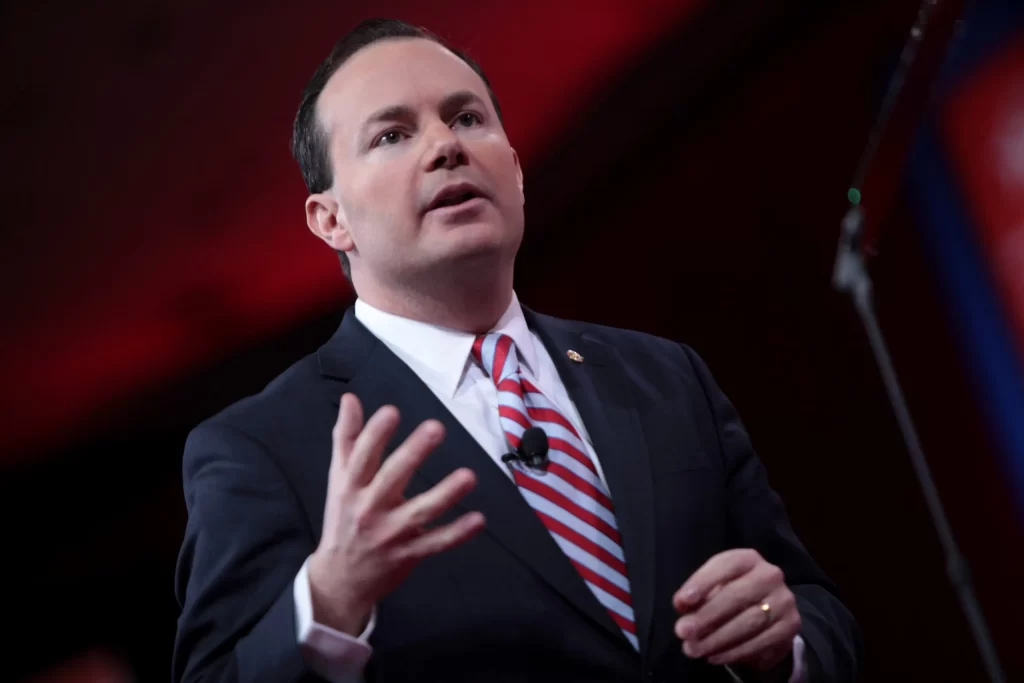
In June 2025, Senator Mike Lee (R-Utah) championed a controversial measure in a sweeping Republican budget bill – dubbed by President Trump as the “One Big, Beautiful Bill” – that would allow the federal government to sell off vast tracts of public land in the West. Lee presented the idea as a bold solution to boost affordable housing and infrastructure development in land-constrained communities. However, within weeks, he abruptly withdrew the provision after facing intense bipartisan opposition – including from several of his fellow Republicans who balked at the plan. The episode has spotlighted a tension between the GOP’s limited-government ideals and a longstanding conservative reverence for public lands.
Senator Lee announced the reversal on June 30, 2025, citing an unexpected hurdle: under the strict rules governing budget reconciliation in the Senate, he could not guarantee that only American families would be allowed to buy the land in question. “Because of the strict constraints of the budget reconciliation process, I was unable to secure clear, enforceable safeguards to guarantee that these lands would be sold only to American families – not to China, not to BlackRock, and not to any foreign interests,” Lee explained in a statement on social media. With that concern unresolved, he pulled the plug on the public land sale plan to avoid derailing the broader bill.
The bill itself is a massive tax-and-spending package advanced by Republicans under special budget rules, meaning it can pass the Senate with a simple majority. President Trump had pushed to get this “big, beautiful” legislation passed by July 4, packing it with GOP priorities like tax cuts, border security funds, and defense spending. Lee’s public lands measure was a small but highly contentious piece of the package. It underscored a core question for constitutionally minded conservatives: should Washington be in the business of owning and managing millions of acres of land, or should those lands be unleashed for private ownership and local benefit?
What Lee’s Land Sale Proposal Entailed
Lee’s now-withdrawn plan would have mandated the sale of a significant slice of federal real estate in 11 Western states, from Alaska down to New Mexico. Early drafts of the proposal called for selling up to roughly 3 million acres of lands administered by the U.S. Forest Service and the Bureau of Land Management (BLM). For context, 3 million acres is about 4,700 square miles – an area larger than Connecticut. Most proceeds from the sales were intended to help pay for the bill’s tax cuts and deficit reduction measures. Senator Lee framed the idea as a win-win: free up underutilized federal lands for housing development and economic growth, while generating revenue to offset government spending.
Originally, the plan cast a wide net. It would have allowed private developers to essentially nominate which parcels they wanted, with ultimate selections influenced by top federal officials. This raised eyebrows since it could invite politically connected interests to cherry-pick prime lands. In response to backlash and procedural hurdles, Lee revised the proposal mid-stream. He slashed the acreage and scope: all U.S. Forest Service lands were removed from the auction block, and only certain BLM lands would qualify – specifically those lying within 5 miles of existing towns or cities. The downsized plan envisioned selling between roughly 600,000 and 1.2 million acres of BLM holdings across the Westl, targeting areas near population centers that might be suitable for new housing or infrastructure. Montana was even carved out entirely after that state’s Republican lawmakers objected to losing federal lands back home.
Lee’s adjustments were also driven by the Senate’s “Byrd Rule”, which bars non-budgetary provisions in reconciliation bills. The Senate parliamentarian warned that a sweeping public lands sell-off, especially including national forests, was likely out of order. To salvage the idea, Lee publicly vowed, “We are NOT selling off our forests,” and narrowed the focus to BLM parcels near communities. He insisted these would be lands “put to work for American families,” not vast wilderness tracts. But even the trimmed-down version failed to quell the uproar.
Housing and infrastructure were the stated rationale behind the plan. Lee and supporters argued that exorbitant housing costs in Western cities are driven in part by a scarcity of developable land – a scarcity they blame on Washington’s extensive land ownership in those regions. In states like Utah and Nevada, the federal government controls the majority of land (nearly two-thirds of Utah is federally owned). That, Lee contends, constrains communities from expanding and drives up the price of land for homebuilding. By auctioning off some of that land to private hands, more housing could ostensibly be built, making homes affordable for young families. “Locked-away land in my state of Utah…drives up taxes and limits the ability to build homes,” Lee argued in defense of his proposal.
However, experts note that simply selling public land doesn’t guarantee affordable housing will follow. Housing advocates cautioned that much federal land is remote, arid, or lacks infrastructure like roads and water, making it less practical for developmen. Indeed, one of the largest real-world experiments in public land disposal for housing – a 1998 federal law that allows Nevada communities to buy BLM land cheaply for affordable housing – has yielded only a handful of projects to date. Bureaucratic delays and limited local uptake have meant very few homes have been built on those lands so far. This history suggests that land sales alone are no silver bullet for the West’s housing crunch, a point even some skeptics of big government have raised.
A scenic lake and undeveloped hills on public land in California. Conservationists argue that America’s public lands are a treasured legacy for recreation and wildlife, while some conservatives say certain tracts could be put to better use for communities.
Backlash from Western Republicans and Public Land Defenders
What made Senator Lee’s provision politically untenable was the fierce pushback it drew from many of his own Republican colleagues, particularly those representing Western states. Almost as soon as the idea surfaced, alarms went off among lawmakers who typically champion both limited government and the great outdoors. For these conservatives, selling off public land crossed a line. “I do not support the widespread sale or transfer of public lands,” declared Rep. Ryan Zinke (R-Mont.), who served as Interior Secretary in Trump’s first term. “Once the land is sold, we will never get it back. God isn’t creating more land.” Zinke’s blunt rejection in May effectively killed a similar public land sale clause in the House version of the bill. He was not alone – at least five GOP House members from Western states (including Rep. David Valadao of California) vowed to oppose the measure, prompting House leaders to strip it out even before sending the legislation to the Senate.
In the Senate, opposition spanned party lines. Multiple Republican senators quietly objected, worried about the implications for their states. Montana’s delegation succeeded in exempting their state entirely from the sales. Senators from Idaho and other Western states likewise signaled they would vote against the whole budget package if it included Lee’s land provision. All told, at least four GOP senators from the West were prepared to help Democrats remove the language had it stayed in the bill – a rebellion that would have sunk the proposal on the Senate floor. Facing these numbers, Lee had little choice but to retreat.
Democrats, for their part, were uniformly opposed. Senator Martin Heinrich (D-N.M.), the top Democrat on the Energy and Natural Resources Committee, warned that Lee’s plan would “exclude Americans from places where they fish, hunt and camp”. He doubted it would even achieve its housing goal: “I don’t think it’s clear that we would get substantial housing as a result… What I know would happen is people would lose access to places they know and care about”. Across the West, conservationists, hunters, and outdoor recreation groups mobilized against the land sale idea with unusual intensity.
Public protests erupted in mid-June at a Western Governors’ Association meeting in Santa Fe, New Mexico, where chants of “Not for sale! Not one acre!” echoed outside the venuepropublica.org. The demonstrators included ranchers, anglers, hikers, and even employees of federal land agencies – a constituency that cuts across the usual partisan dividepropublica.org. They viewed the mandated sell-off as a fundamental threat to America’s public lands heritage. Many Westerners consider these lands an essential part of their lifestyle and economy, whether through grazing, outdoor recreation, or tourism.
Conservation advocacy groups celebrated when Lee’s proposal was finally scrapped. “This is a victory for everyone who hikes, hunts, explores and cherishes these places,” cheered Athan Manuel of the Sierra Club’s lands program, while cautioning, “it’s not the end of the threats to our public lands”. Chris Wood, CEO of Trout Unlimited (a sportsmen’s conservation group), noted that defending public lands has long been a bipartisan cause in the West. “This is certainly not the first attempt to privatize or transfer our public lands, and it won’t be the last,” Wood said. “We must stay vigilant and defend the places we love to fish, hike, hunt and explore”. His words underscored how proposals like Lee’s tend to revive an ages-old tug-of-war between those who see public lands as priceless commons to be conserved and those who see them as underutilized assets that could serve the public better through private hands.
Even within the Republican Party, this issue revealed a philosophical split. Traditional conservation-minded Republicans trace their values back to President Theodore Roosevelt, who established national parks and forests, believing in stewardship of natural resources. Modern GOP voters, too, include avid hunters and anglers (Donald Trump Jr., an enthusiastic hunter, has publicly stated he “want[s] federal lands to remain federal”). On the other side are property-rights advocates and libertarian-leaning conservatives who argue that federal ownership over such vast acreage is an overreach of government power. In this instance, those advocating a constitutionally limited government – like Mike Lee – ran up against colleagues with a more conservationist streak. The result was a rare intra-party rebuke: limited government vs. legacy of conservation.
Constitutional Principles and the Limited Government Critique
From a constitutionally limited-government perspective, Mike Lee’s impulse to reduce federal landholdings is rooted in both the text of the Constitution and the nation’s early history. The U.S. Constitution (Article IV, Section 3) grants Congress authority over federal territory – including the power to dispose of land. Indeed, for much of the 19th century, federal policy was to transfer public lands into private or state hands as quickly as possible to encourage settlement and development. This was seen as fulfilling the Founders’ vision that individual citizens could acquire property and prosper, rather than an elite central authority hoarding land. Lee often points out that the Homestead Acts of the 1860s and later disposed of 270 million acres of federal land to ordinary Americans – “Civil War veterans, penniless immigrants, emancipated African-Americans” – allowing them to build farms, homes and communities. That legacy, he argues, reflects the true constitutional ethos of America as a land of opportunity and widely dispersed property ownership.
Equal Footing and Broken Promises: Many Western states, upon joining the Union, expected the federal government to eventually sell off most of the lands within their borders. When Utah was admitted as a state in 1896, its statehood enabling act explicitly provided that “public land located within the state shall be sold by the United States subsequent to the admission” of Utah. In Senator Lee’s view, “the promise to sell federal lands in Utah is right there, enshrined in federal law” – but “unlike states farther East, the commitment to us was never honored.” Western states like Utah, Nevada, Idaho and others still have between half and 80% of their landmass under federal control, whereas eastern states saw most federal lands disposed of long ago. This discrepancy, Lee argues, runs afoul of the “equal footing” doctrine – the principle that all states enter the Union with the same rights and sovereignty. From a limited-government constitutional perspective, holding Western states in a kind of landlord-tenant relationship with Washington is an imbalance the Framers never intended.
Lee has drawn historical analogies to drive the point home. He likens vast federal landholdings to the “royal forests” of medieval England – enormous swaths set aside by the crown for the recreation of the elite, off-limits to the common folk. In a 2018 speech, Lee noted that at one point a third of Southern England was locked up as the king’s forest reserves, and local peasants were evicted or barred from using those lands. America’s founding, he argued, was a rejection of Old World feudalism. “In America, there would be no king. No feudal master. No royal forests,” Lee said, recalling that George Washington envisioned a republic where “an enterprising man with very little money may lay the foundation of a noble estate.” That is, individuals of modest means could acquire and improve land, forming the backbone of a free and prosperous society – a stark contrast to feudal societies where an aristocracy controlled the land. To Lee and like-minded conservatives, the modern proliferation of federally owned parks, forests, and wilderness – now roughly 28% of the nation’s land area, including over 245 million acres managed by BLM alone – begins to look uncomfortably like the royal preserves of old.
Limited government adherents assert that the federal government should operate only within its constitutionally enumerated powers, and argue that managing real estate is not an intrinsic federal function except for specific purposes (such as military bases, post offices, or national capital facilities explicitly allowed in the Constitution). They point to the Tenth Amendment, which reserves undelegated powers to the states and the people, and contend that local communities are often better suited to decide how land should be used or conserved. The 2016 Republican Party platform even included a call for Congress to enact a mechanism to transfer certain federal lands to willing states, reasoning that “residents of state and local communities know best how to protect the land where they work and live.” This reflects the same philosophy: decentralization of land ownership and management is more in keeping with constitutional federalism than a one-size federal monopoly.
Senator Lee’s critique of federal land management isn’t just theoretical. He and others argue that Washington has “mismanaged” many public lands, leaving them prone to wildfires, invasive species, or economic stagnation. “The federal government owns far too much land – land it is mismanaging and in many cases ruining for the next generation,”Lee said in his statement withdrawing the proposal. Especially under Democratic administrations, he claimed, “massive swaths of the West are being locked away from the people who live there, with no meaningful recourse.” In the limited-government view, such policies deprive Western communities of jobs (for example, in logging or mining) and even raise housing costs by preventing development. Private ownership or state control, proponents argue, would ensure land is put to economically productive use and subject to local accountability rather than distant federal rules. They often cite examples like thriving state-managed trust lands (which many Western states use to fund schools) as proof that states can steward lands responsibly while generating revenue.
However, it’s important to note that not all conservatives agree on this issue. The Roosevelt-style conservation ethic still runs deep in parts of the Republican Party. Figures like Rep. Zinke and many GOP sportsmen see federal public lands as part of America’s unique heritage – lands that every citizen can enjoy for hunting, fishing, camping, and solitude. They worry that once land is privatized, public access is lost forever, and market forces might favor corporations or the wealthy over local families. This skepticism was evident when the public lands sell-off was floated; it “ran into bipartisan opposition in the Senate and the House” almost immediately. Even Donald Trump, despite his push for resource extraction, remarked during his 2016 campaign that he didn’t love the idea of divesting national lands wholesale. The constitutional debate thus mirrors a cultural one: How to balance the limited-government imperative to check federal power against the broadly popular notion of preserving public lands for public use?
Future Prospects: Will the Idea Resurface?
Although Senator Lee’s provision was sidelined this time, the question lingers: Could a change like the one Lee proposed come to fruition down the road? In his announcement, Lee pointedly wrote, “I continue to believe the federal government owns far too much land,” and indicated he intends to revisit the issue in the future He was buoyed by President Trump’s support – Trump campaigned on promises to unlock federal lands for development, or as Lee put it, “to put underutilized federal land to work for American families.”Now, with Trump in office again and Republicans in control of Congress (as of 2025), the political leadership is at least ideologically inclined to consider such ideas. Powerful interests also favor privatization or state transfer of federal lands, from some Western ranching and mining sectors to conservative think tanks that have long decried federal land ownership.
That said, the obstacles remain significant. The recent revolt by GOP lawmakers from public-lands states shows that any future proposal must be far more limited or carefully tailored to avoid sweeping impacts. One possible path forward could be a narrower initiative focusing only on truly “surplus” lands that the government no longer needs and that have low environmental or recreational value. For example, Republicans might craft a stand-alone bill directing agencies to identify small parcels on the fringes of urban areas that could be sold or leased for housing developments – essentially a more surgical approach. If coupled with explicit protections barring foreign buyers and preserving public access to prized recreation sites, such a plan might mollify some critics. Lee’s failure to secure the “Americans only” buyer restriction under reconciliation rules was a technicality; in a normal legislative process, a provision to exclude foreign or corporate purchasers could be included to address national-security and anti-monopoly concerns. Future proponents will likely insist on such language from the start to blunt the China buying our land fears that even Senator Lee shared.
Another avenue could be pursuing state-federal partnerships instead of outright sales. Some Western lawmakers favor giving states a greater role in managing federal lands or sharing revenue from them, short of transferring title. This concept was hinted at in the GOP’s platform and by figures like Donald Trump Jr., who suggested states might take a larger role without full privatization. We might also see revived efforts to transfer certain federal lands to state ownership– a cause popular in state legislatures across the West about a decade ago. If, for example, a Western state can make a case that it can manage a particular tract more efficiently for local benefit (while still conserving it), Congress might entertain pilot programs for land transfer. However, past attempts at sweeping transfers have faltered due to lack of votes and public resistance, and any such move would undoubtedly trigger legal challenges and passionate public debate.
Critics of the public land sale idea are already on guard. They point out that even with this recent victory (Lee’s retreat), the broader agenda to divest or commercialize public lands is far from dead. The Trump administration has been rolling back land protections – for instance, lifting limits on road-building in national forests – which to conservationists is a sign of things to come. If economic pressures mount or if housing affordability worsens, proponents might seize the moment to repackage the land sale concept in a more palatable form. On the other hand, the enduring cross-party love for public lands suggests any large-scale sell-off will continue to face an uphill battle. Public opinion polls consistently show Americans view national parks and public open spaces as a proud inheritance to be safeguarded, even if they also complain about federal bureaucracy.
In summary, Senator Mike Lee’s withdrawn provision reflects a classic conservative argument – that a constitutionally limited government should not be America’s biggest landlord – and a perennial Western grievance over federal land control. It also revealed the deep well of popular support for keeping public lands public. Moving forward, any attempt to revive this idea would require navigating constitutional considerations, intra-party politics, and the court of public opinion. Lee’s vision of homesteader empowerment and local control will need to address the valid fears of selling off America’s natural crown jewels. Whether a compromise can be forged (for example, selling or leasing small parcels for specific needs while strengthening protections on core public lands) is uncertain. But given the ideological commitment of lawmakers like Lee, the push to “dispose” of some federal lands is likely to resurface whenever opportunities arise – perhaps in a friendlier Congress or attached to a must-pass bill in the future.
One takeaway is clear: the debate is far from over. As conservationist Chris Wood observed, “this is certainly not the first attempt…and it won’t be the last”. The coming years will tell whether the constitutional limited-government perspective on public lands can finally translate into policy, or whether America’s public lands will remain off-limits to the auction block.




















Politicians, you all got a choice to make. Either PAY OFF the national debt that CONGRESS created by sending and spending money everywhere in the world but here, or the NATION goes bankrupt in a few years. SELL THE LANDS OR LEASE THE LAND TO RECOVER THE RARE EARTHS WITH A REQUIREMENT OF RECLAMATION OF THESE LANDS! Then sign a BALANCED BUDGET amendment so you all can never create this problem again. By the way, the money also seems to turn back up in the US by way of NGO’s that contribute to certain political causes. This also needs to stop!!! With USAID being shut down, at least one spigot has been turned off. You all started this problem of debt by NOT balancing the budget. FIX THE PROBLEM WITH THE ONLY THINGS WE HAVE TO PAY IT OFF WITH! Anyone that disagrees with that is either severely without knowledge of the actual problem or they are complicit with those that want to enslave US youth to pay off the problem that they have created. With the money that is collected through taxes in this Country, there should be no problem with a balanced budget if the Congress actually budgets like they used to 30 years ago instead of making an arbitrary “guess” at how much you will need. By the way, an actual budget filled out line by line also precludes problems with money going to places it should not be going.
You know, this is a bit overboard in determining that this is a party rift. The Republican Party is not quite in the lockstep mode that the Democrats are in. I have always been a die-hard environmentalist…not the green revolution type…but one with a great deal of common sense. My common sense tells me that, in no circumstance should we be selling off public land, scraping off nature and pouring concrete on it. With a decreasing birth rate, and less need for space, why are we looking for more? There is plenty of already destroyed land that can stand re-development. It’s time we delineate the land that people will live on and destroy, and that which nature can live on without the threat of human incursions. There are a great many Republicans who are environmental realists and will take a stand on nature in Congress. Lee’s concept is senseless. He comes from a state where making money takes precedence much of the time. I’m downright Conservative, but I’m also a Conservationist, which should fit right in with a Party who wants to see a great (and clean) country with its purple mountain majesty and lots of room for bluebirds and eagles to be comfortable in, as well as giving endangered plants enough room to exist where humans are not selfishly scraping the land for their own privileged uses. Is there a rift? No. Does intelligence still exist in Washington (at least in the Republican Party)? Yes. (let’s think about scraping off human territory and returning it to nature).
Lee wants to put the land into “economic good use”. Maybe the good use is to just leave it alone. It certainly could be better managed, and hopefully, the members of the Trump Cabinet that deal with these things should be on this. The land all over the country needn’t be a total economic asset. If that were the case, homeowners would be leasing out their idle backyards for economic gains. We need to get a mental hold on the fact that there are millions of other residents on this planet, and everything is not there strictly for the use of humans. It’s time that even more land should be put aside (decommissioned??) and humans relegated to limited amounts of land. Lee comes from a culture in Utah, where everything is seen through a dollar sign. I think that a few less MacDonald’s and Walmart box monuments would be a good sacrifice for a little more land remaining in (and returning to) nature.