

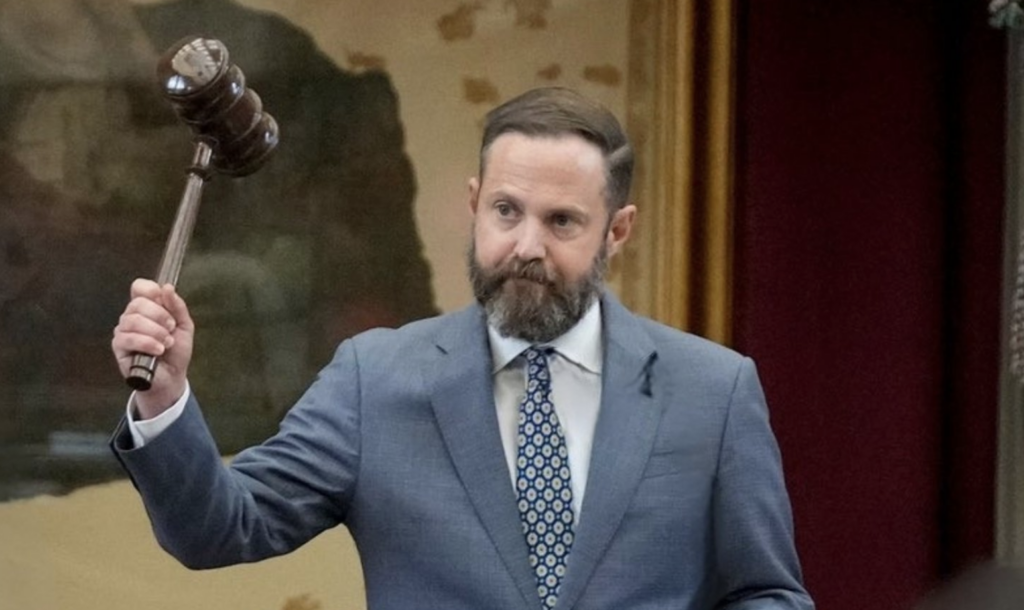
On April 9, 2025, the Texas House of Representatives voted 141-2 to table a privileged resolution introduced by Representative Brian Harrison. That number, with its commanding margin, has been wielded as a rhetorical cudgel by defenders of Speaker Dustin Burrows, who interpret the vote as a sweeping reaffirmation of his authority. Among them is Rep. Carl H. Tepper of Lubbock County, who claimed that the vote had been “confirmed with a supermajority of Republican votes.” This interpretation, while politically expedient, collapses under scrutiny. It misrepresents the character of the vote and distorts the procedural reality of Harrison’s maneuver. A careful reading of the Texas House Rules and the actual context of the resolution suggests something quite different. The vote to table was not a ringing endorsement of Burrows’s legitimacy. Rather, it was a procedural sidestep, an act of avoidance by a Republican caucus deeply fractured and intimidated, unsure whether to confront the awkward truth staring them in the face: the speakership has been captured, not by the will of the GOP majority, but by a coalition of Democrats and pliant Republicans willing to sacrifice institutional integrity for short-term gain.
To understand the significance of the episode, we must begin with the nature of a privileged resolution. Under Rule 8, Section 13 of the House Rules of the 89th Legislature, such a resolution may be brought forward when it concerns the integrity, dignity or essential operations of the House. The language is broad, by design. It permits members to challenge not just decorum, but the legitimacy of the House’s leadership when necessary. The framers of these rules understood that legislative bodies can be corrupted not only by bad actors but by complacent ones, and that any member should retain the right to challenge the leadership when that leadership becomes a threat to the institution’s constitutional purpose.
Harrison’s resolution did precisely that. By charging Speaker Burrows with securing his position through a coalition of Democrats, thus circumventing the will of the Republican majority and the rules of the Texas GOP, Harrison was not engaging in a mere political stunt. He was raising a constitutional and procedural concern. That concern, whether one agrees with it or not, met the bar of privilege on its face: it alleged a betrayal of the House’s governing structure and an affront to the integrity of the body. The question is not whether it was politically inconvenient. The question is whether it was procedurally valid. And by the plain text of the rules, it was.
Yet, the practical enforcement of privilege in the Texas House does not rest solely on the content of the resolution. It rests also, perhaps entirely, on the discretion of the speaker. Speaker Burrows, rather than acknowledging the privileged nature of the motion on April 1, redirected Harrison to submit it in writing. When Harrison complied, Burrows then allowed the motion to be tabled almost immediately, effectively sidestepping a substantive debate. This, too, is allowed under the rules, but it is a legalism that hides a deeper problem: the speaker’s discretion has been weaponized to immunize himself from challenge.
The tabling of the motion does not constitute a debate on its merits. It does not entail a vote on whether Burrows should remain speaker. It is, at most, a vote to not talk about the problem. It is legislative denial, institutional head-burying. And the fact that 141 members—including the majority of Republicans—voted to table the resolution should not be read as support for Burrows, but as a collective act of political cowardice. They did not vote for Burrows. They voted for silence.
The procedural effect of tabling is important here. Rule 11, Section 4 of the House Rules permits privileged resolutions to be taken up without delay unless another privileged matter is already under consideration. There was no such competing matter on April 9. The Speaker had every opportunity to recognize the resolution as privileged and to allow the chamber to consider it. He declined. Instead, he permitted an immediate motion to table, thereby denying the resolution any hearing on the floor. The privileged nature of the resolution was therefore nullified not by rule, but by fiat.
This is not what the rule was designed to allow. The concept of privilege exists precisely to allow the House to self-correct when the leadership strays. It exists to protect the majority from becoming subservient to a minority, to prevent backroom deals from supplanting open governance. In neutering that protection through procedural maneuvering, the House has set a dangerous precedent. It has affirmed that privilege is not a function of substance, but of recognition—that a resolution may allege the most damning accusations, but if the Speaker refuses to acknowledge it, it becomes inert.
Such a regime benefits only the entrenched. It turns the speaker’s gavel into a shield against criticism rather than an instrument of order. And it leaves the Republican majority in a legislative house built by Republican voters subject to the whims of a speaker who ascended by Democratic hands. That reality—not the content of Harrison’s resolution, not even the procedural dodge that buried it—is the true crisis.
The political implications are no less troubling. The Republican caucus is fractured. Many of its members are deeply dissatisfied with Burrows’ leadership but are too cautious, too calculating or too hopeful that backroom negotiations will yield personal legislative wins. They remain silent not out of agreement, but out of fear and transactional self-interest. They hope to extract amendments or bills from a speaker who, for all intents and purposes, answers to the Democratic bloc that empowered him. This, in effect, hands the legislative agenda of a Republican-majority chamber over to the minority.
Those few who stood with Harrison—two men in a chamber of 150—did not do so because they hoped to win. They did so because the rules and the Constitution matter. Because if no one is willing to say the truth, even if only to lose, then eventually even the mechanisms of resistance will be lost. Their vote was not a rebellion. It was a reminder.
This is the paradox of proceduralism in modern legislatures. The rules are written to preserve the institution, but they can be used to subvert it. A speaker can invoke the letter of the rules to deny their spirit. And a majority can cloak its retreat in the garments of order, pretending that silence is the same as consent.
But the record is clear. The vote to table was not a confirmation. It was a suppression. The speaker was not endorsed. He was shielded. And those who say otherwise are not mistaken. They are misrepresenting the facts.
What must now be recognized is that the only remaining check is collective action. The members of the Republican caucus who privately bristle at Burrows must find the courage to publicly defy him. They must shut down the House’s business until the speaker resigns or is removed. No appropriations, no legislation, no motions. A constitutional strike, not in defiance of the rules, but in their defense.
For if the Speakership can be captured by the minority, sustained by silence, and protected by procedural theater, then it is not merely Burrows who must go. It is the entire edifice of performative self-government that must be torn down and rebuilt. The time for strategic patience is over. The time for institutional courage is now.
UDPATE: It was not Speaker Burrows who tabled the resolution—but Rep. Tony Tinderholt. Blizzard stated that Burrows had already done the math the night before and knew he had the votes to prevail. That’s precisely why he allowed the resolution to come to the floor; had he lacked the support, it would have died a quiet procedural death. Instead, it was Tinderholt who approached the dais and worked to table the motion—strategically, not to kill it outright, but to preserve it. Hopper, for his part, echoed the frustration simmering among many in the GOP caucus over Rep. Brian Harrison’s maneuver, suggesting that what masqueraded as principle may have been political theater with little appetite behind it.
Sponsored by the John Milton Freedom Foundation, a nonprofit dedicated to helping independent journalists overcome formidable challenges in today’s media landscape and bring crucial stories to you.
READ NEXT: Unlocking Secrets: How Your Money Fuels Controversial Government Research


















Damn Deep State RNC actions
Is it impossible to vote him out?