

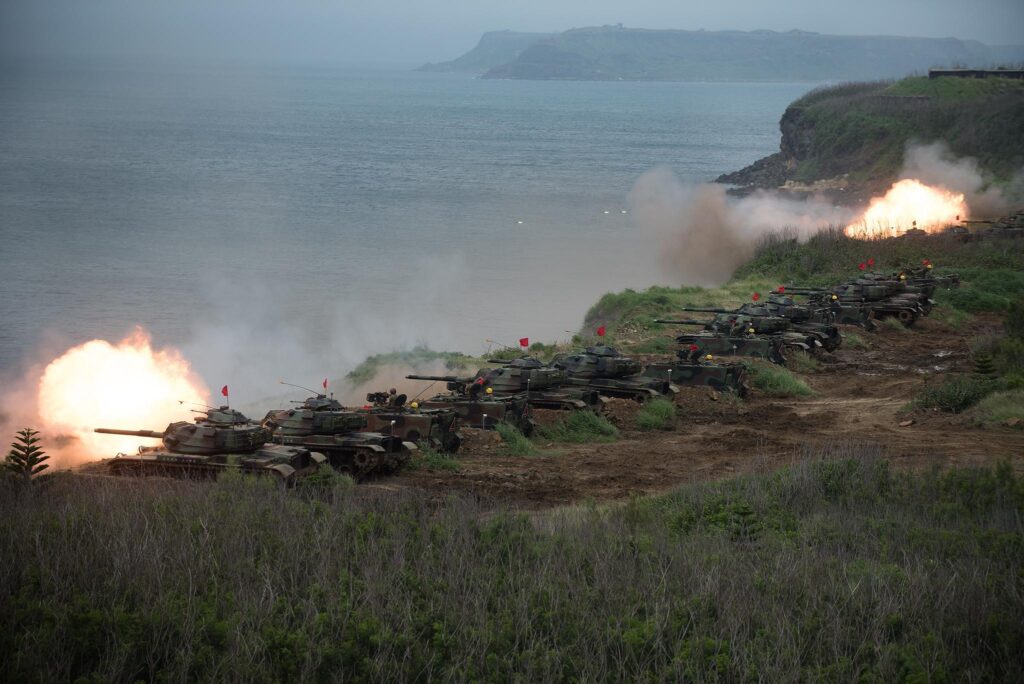
The 23 million men, women, and children on Taiwan live under steady military, economic, and psychological pressure from the People’s Republic of China (PRC). Beijing’s Communist leadership has never hidden its intent: it claims Taiwan as part of China and says “reunification” will happen — by “peaceful” means if possible, by force if necessary. That is not a Western interpretation; it is written into PRC law. Article 8 of China’s 2005 Anti-Secession Law authorizes “non-peaceful means” if Beijing decides peaceful options are “completely exhausted.”
For decades, deterrence — rooted in Taiwan’s will to defend itself and the expectation of U.S. support — has kept Beijing at bay. But Xi Jinping’s China is probing for cracks: testing whether Washington will falter, and whether Taiwanese society can be softened into surrender without a fight.
A Washington Lunch, a Capital in Question
When the United States switched diplomatic recognition from the Republic of China (ROC) on Taiwan to the PRC in late 1978, Americans had to adjust not just their foreign policy but even their vocabulary. “Peking” became “Beijing” with the U.S. Board on Geographic Names’ adoption of the Pinyin system in 1979. During that swirl of confusion, a Washington Post reporter once asked a waiter in a Chinatown restaurant how to spell China’s capital. The waiter famously replied: “T-A-I-P-E-I.” His point was unmistakable — Taiwan was his capital.
Taiwan’s Survival as a Rebuke to Communism
Taiwan’s government, driven from the mainland after the Chinese Civil War, quickly rebuilt on the island into a prosperous, democratic society. For decades it served as proof that prosperity and freedom could thrive in Chinese culture — an implicit rebuke to Mao’s totalitarian rule across the strait.
Mao, however, did not abandon his dream of seizing Taiwan. In October 1949, just days after proclaiming the founding of the People’s Republic of China, the People’s Liberation Army attempted to storm Kinmen (Quemoy), a small island controlled by the ROC just off the coast of Fujian Province. The plan was brutal but simple: seize Kinmen as a springboard, then launch a larger invasion of Taiwan itself.
The gamble failed catastrophically. In the Battle of Guningtou, ROC forces, many battle-hardened from the civil war, ambushed the PLA landing troops as they came ashore. Over several days of intense fighting, the PLA lost thousands killed and thousands more captured, along with much of its landing equipment. The defeat shocked Beijing. It exposed how difficult an amphibious invasion could be even across a narrow strait, and it convinced Mao that a direct assault on Taiwan, across more than 100 miles of open water, would be vastly more dangerous.
Still, the PRC never gave up. In the 1950s, Beijing shelled Kinmen and the nearby Matsu Islands relentlessly, triggering the First and Second Taiwan Strait Crises. The U.S. responded with naval escorts, air defense support, and a blunt warning that any all-out attempt on Taiwan would invite American involvement. These clashes never ended in a formal peace; they froze into the uneasy standoff that continues today.
Beijing’s Campaign: Pressure Without War
Military intimidation. Chinese aircraft and naval ships now cross into Taiwan’s defense zones almost daily. In 2024, Beijing staged “encirclement” drills around Taiwan in direct response to President Lai Ching-te’s inauguration.
Economic coercion. Beijing has banned key imports such as pineapples and grouper fish to punish Taiwan’s farmers. It has also cut Chinese tourism to the island to hit local businesses.
Diplomatic isolation. Taiwan has watched its roster of allies dwindle; Nauru switched to Beijing in January 2024, leaving Taiwan with just a dozen formal diplomatic partners.
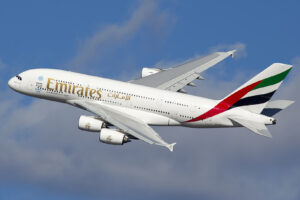
Corporate pressure. Airlines and global corporations are pressured to list Taiwan as part of China. In 2018, the White House called these demands “Orwellian nonsense” — but most airlines complied anyway.
Espionage and infiltration. Taiwan’s National Security Bureau has documented Chinese “cognitive warfare” and uncovered spying cases against officials and military officers.
Taiwan’s Politics: A Divided but Democratic Front
Taiwan’s democracy is vibrant but contentious. In 2024, voters elected Democratic Progressive Party (DPP) candidate Lai Ching-te as president, even as the opposition Kuomintang (KMT) won a legislative plurality. The DPP insists Taiwan is already a sovereign state and rejects Beijing’s “one country, two systems” model. The KMT favors dialogue under the “1992 Consensus,” but even many KMT supporters now distrust Beijing after Hong Kong’s freedoms were crushed.
Recent recall efforts aimed at KMT politicians viewed as soft on Beijing highlight a growing reality: Taiwanese voters increasingly expect their leaders to treat Chinese influence as a direct threat.
The Strategic Equation: Blockade vs. Invasion
Could Beijing invade Taiwan? Military analysts agree it would be among the hardest operations in modern warfare. A failed invasion could ruin Xi Jinping’s rule. A blockade may seem more attractive: strangling Taiwan’s economy, cutting off its trade routes, and daring the world to respond. Studies by CSIS and RAND, however, show that even a blockade could falter if Taiwan, the U.S., and regional partners coordinated effectively.
Why It Matters
Taiwan is not just a symbol of democracy in Asia. It is the world’s leading manufacturer of advanced semiconductors, producing chips critical to everything from smartphones to fighter jets. If Beijing seized Taiwan, the shockwaves would cripple global supply chains and imperil international stability.
For Washington, credibility is on the line. The Taiwan Relations Act declares that attempts to decide Taiwan’s future by coercion are “of grave concern” to the U.S. But deterrence is only credible if both Taiwan and America show they are prepared to act.
Explainer: Key Terms in the Taiwan Debate
- One China Policy (U.S.): Washington acknowledges Beijing’s claim to Taiwan but does not endorse it; the U.S. insists Taiwan’s future must be settled peacefully.
- One China Principle (PRC): Beijing’s stance that Taiwan is an inalienable part of China and must be unified, by force if necessary.
- Taiwan Relations Act (1979): U.S. law committing Washington to support Taiwan’s self-defense and view coercion as a threat to peace.
- Six Assurances (1982): U.S. commitments to Taipei, including no set end-date for arms sales and no mediation role between Taipei and Beijing.
- Anti-Secession Law (2005): PRC law mandating “non-peaceful means” if peaceful reunification is deemed impossible.
- First Island Chain: A strategic line of U.S. allies and partners (Japan, Taiwan, the Philippines) that China seeks to break to expand power projection.
China’s Communist Party has tried and failed to subdue the island before — from the bloody beaches of Kinmen in 1949 to today’s relentless air incursions. The difference now is that the stakes are higher than ever: Taiwan stands as both the heart of the global semiconductor industry and the frontline of democracy in Asia.
The opinions expressed in this article are those of the author and do not necessarily reflect the positions of American Liberty News.
READ NEXT: Pro-Trump Mission Earns New Medal — History Made













Taiwan is Asias Alamo & we all know how TX Alamo turned out