
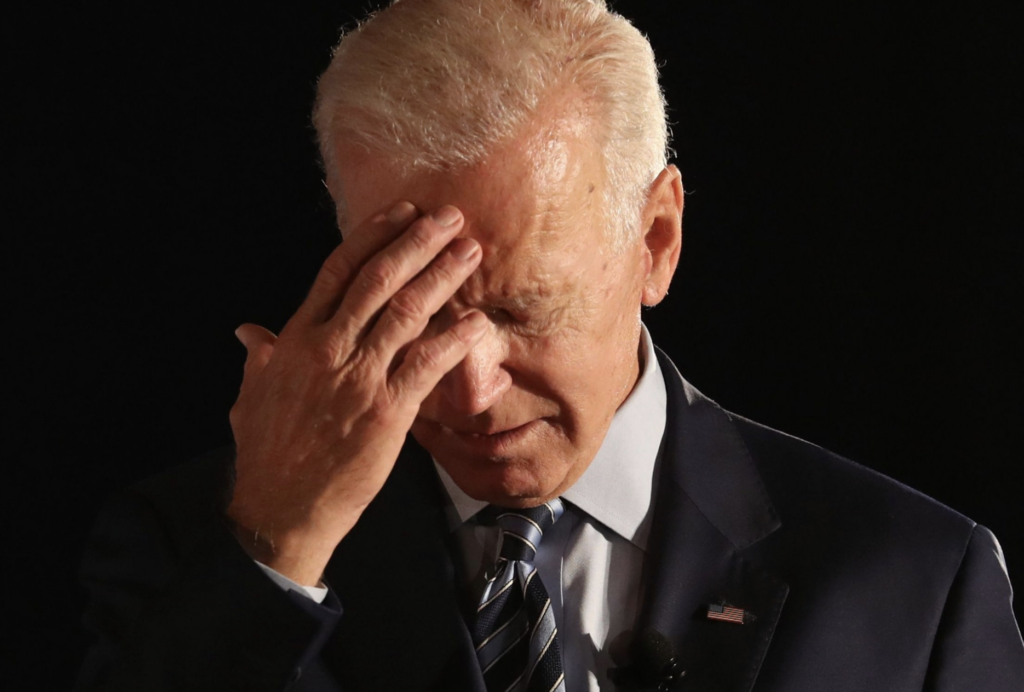
President Biden is reportedly considering a series of preemptive pardons that could drastically reshape the landscape of accountability and expose him to even greater legal peril. If Biden issues blanket pardons to everyone involved in the alleged sale of his influence—including his brother Jim Biden and those connected to various foreign dealings during his vice presidency—as well as those implicated in the aggressive lawfare against former President Trump, such as Attorney General Merrick Garland, Special Counsel Jack Smith, NYC DA Alvin Bragg, acting Justice Merchan, Big Fani Willis and others, it could be a move fraught with danger. What Biden intends as a shield for himself and his allies may, in fact, rip away their defenses and lead to a tidal wave of exposure and consequence. This decision could unintentionally dismantle his network of protection and turn once-loyal allies into vulnerable liabilities, accelerating his own unraveling.
The Biden Family’s International Influence Market
The claims about influence peddling go back years. Biden’s connections in Ukraine, China and other foreign powers have been proven beyond a shadow of a doubt with evidence ranging from emails, documents, bank statements and call records. As vice president, Biden—through his son Hunter—is alleged to have been involved in a variety of dealings that even raised ethical eyebrows of the Obama administration. The most famous, of course, is Hunter Biden’s lucrative position on the board of Burisma, a Ukrainian energy company, where he earned upwards of $50,000 a month despite lacking experience in the energy sector. What exactly was being purchased with those payments remains the question—and President Biden’s alleged preemptive 10-year pardon for Hunter Biden during his tenure at Burisma coincides perfectly with Biden’s own diplomatic overtures in the region. Similarly, ties to Chinese firms and the controversial mention of the “10% for the big guy” in leaked emails suggest a sprawling network of alleged corruption that stretches far beyond Ukraine. If Biden were to issue pardons for all of those involved in these dealings, including his brother Jim Biden, who has also faced scrutiny for his business activities, one could hardly imagine it would silence critics. Instead, it would likely raise the stakes of the controversy.
The Lawfare Brigade: The Target on Trump
In recent years, an entirely unprecedented breed of political lawfare has emerged, one used primarily to undermine former President Donald Trump. The prosecutorial crusades by Jack Smith, Fani Willis, Alvin Bragg and others have all culminated in various attempts to legally disable Trump’s path to reelection. To those following this saga, their coordinated efforts—backed by Attorney General Merrick Garland—are seen as an abuse of prosecutorial discretion, weaponizing the legal system to quash political competition. The involvement of Matthew Colangelo, the number three official in the U.S. Attorney General’s office, who took an unusual step to become a line prosecutor in the NYC DA’s office specifically to handle the lawfare against Trump, illustrates the lengths to which this coordination has gone. Notably, lawfare such as this cannot simply be erased by a presidential pardon, making it an even more insidious tool of political suppression. Furthermore, both Fani Willis and Nathan Wade from the Fulton County DA’s office met with White House lawyers on multiple occasions to discuss strategy on the Georgia RICO cases against Trump. Additionally, credible reports of prosecutorial misconduct by members of Jack Smith’s legal team targeting Trump were submitted to the DOJ’s Office of the Inspector General from members of his own team, yet no investigation has been initiated. If Biden were to preemptively pardon these actors, he may think he is safeguarding allies from potential retaliation. But in doing so, he paradoxically removes one of their key defenses: the Fifth Amendment.
The Fifth Amendment and the Paradox of Immunity
Here lies the twist. By issuing pardons, Biden removes the ability of these figures to invoke their Fifth Amendment rights. The Supreme Court case Burdick v. United States (1915) confirmed that once an individual is pardoned, they can no longer refuse to testify on the grounds of self-incrimination, as they no longer face legal jeopardy. In the absence of any jeopardy—thanks to their immunity from prosecution—they can no longer refuse to testify against others. In simple terms, if called to testify under oath, they would be compelled to answer truthfully or face charges of perjury or obstruction. Thus, a sweeping preemptive pardon for those connected to both Biden’s alleged influence market and the lawfare against Trump could transform former allies into reluctant witnesses. Imagine the irony of Attorney General Merrick Garland, once leading the charge against Trump, being forced to testify about the coordination and motivations behind those actions—all under oath, and all without the protection of the Fifth Amendment.
Moreover, preemptively pardoned individuals would be vulnerable to prosecution if they lied under oath or refused to cooperate. Such a position—immunity without impunity—could make them dangerous liabilities rather than the shield Biden may hope them to be.
The Self-Pardon Conundrum
All of this begs the question: would Biden ultimately need to pardon himself? The notion of a presidential self-pardon is both unprecedented and constitutionally murky. Some legal scholars argue that a president cannot be the judge in his own case, thereby making self-pardons invalid. Others suggest that the Constitution’s broad grant of executive clemency powers makes no explicit prohibition against such an act. The legal ambiguities alone would be sufficient to send the country into uncharted waters, triggering a constitutional crisis of epic proportions. It would almost certainly face judicial challenges and lead to an extended battle in the Supreme Court.
But there’s an alternative, and a rather Machiavellian one at that. President Biden could follow a similar playbook to the one he used during his last colonoscopy, when Vice President Kamala Harris temporarily assumed presidential powers while he was under anesthesia. Under Section 3 of the 25th Amendment to the U.S. Constitution, the president may declare themselves unable to discharge the powers and duties of their office, temporarily transferring authority to the vice president, who then becomes acting president. This provision was specifically designed to ensure continuity of power in situations where the president is incapacitated, even briefly. Picture this: Biden goes in for a routine medical procedure, invokes the 25th Amendment, Harris becomes acting president for those few hours, and during that window, she issues a pardon for Biden himself. This would be constitutional, clever and provide Biden with plausible deniability. There is even precedent for such temporary transfers of power. For example, in 1985, President Ronald Reagan transferred power to Vice President George H.W. Bush during surgery, and more recently, Vice President Dick Cheney assumed the role of acting president twice when George W. Bush underwent medical procedures. Kamala Harris herself already did this once before during Biden’s medical procedure. It may sound far-fetched, but stranger things have happened in American politics—especially under the Biden-Harris administration.
Conclusion
The strategic use of pardons could backfire spectacularly for President Biden. While preemptive pardons might initially appear as an all-encompassing insurance policy, they could very well become the key to unraveling the very web of influence and protection Biden seeks to maintain. Pardoning individuals involved in his own alleged influence-peddling operation—or those prosecuting his political rival—would strip these individuals of their ability to plead the Fifth. Far from securing their silence, it could transform them into vulnerable witnesses, forced to testify truthfully under threat of perjury. In a desperate attempt to shield himself, Biden may ultimately consider pardoning himself, an act fraught with constitutional peril and political fallout. The possibility of using Vice President Harris to execute this pardon under anesthesia adds a surreal twist that seems almost poetic for this administration. Ultimately, Biden’s gambit may not be as clever as he believes—and in the end, it could make him easier to prosecute rather than harder.
Sponsored by the John Milton Freedom Foundation, a nonprofit dedicated to helping independent journalists overcome formidable challenges in today’s media landscape and bring crucial stories to you.
READ NEXT: Mexico’s Outrageous $10 Billion Lawsuit Leads To Supreme Court Appeal













The Supreme Court case Burdick v. United States (1915) confirmed that once an individual is pardoned, they can no longer refuse to testify on the grounds of self-incrimination, as they no longer face legal jeopardy.
Anyone that wants to invoke the 5th amendment protection can, and will argue that case was decided incorrectly. Even if they decision is upheld, it will delay any testimony until such a ruling.
I don’t support any such pardons, but independent reading of the 5th amendment lead me to an argument that the text can be read to support the protection NOT requiring legal jeopardy.
The relevant language reads: No person shall … nor shall be compelled in any criminal case to be a witness against himself
Arguing on behalf of the client, I would point out that it does not specify a criminal case in which the person is the defendant. It says any criminal case, period. I would further argue that requiring someone to give testimony, even if it can’t be used against them, constitutes compelling them to be a witness against themself. I suspect a counter argument would be the 6th amendment provision granting the accused a compulsory process for obtaining witnesses in his favor. To that, I point out that the accused has that right protected. I can’t find anywhere in the Constitution, including all of the amendments, where the accuser is said to have a right to compel testimony, even from an independent witness.
Note: I am not presenting these as definitive. I am attempting to fill the role of “Devil’s Advocate”.
The Legal Definition of a pardon is: “a governmental decision to absolve an individual for a criminal conviction, often times freeing him from all or part of the punishment imposed at sentencing. Pardons are typically granted by the President, or by individual state governors”.
The currently made up term “preemptive pardons” is an oxymoron. No such thing exists or has ever existed in law in the United States.
Thus most of Joe Biden’s ‘pardon’ of Hunter Biden is illegal and beyond the powers granted the President in Article II, Section 2 of the U.S. Constitution. Similarly, any such ‘preemptive pardon’ speculated in this article is unconstitutional and unlawful.
Rope is reusable!
The Hunter pardon is illegal to extend blanket coverage
So if he murdered 20 people 5 years ago, he’s free and clear even if the murders were not discovered until 2026? Total BS and illegal
There has to be a legal override to illegal blanket pardons. Otherwise, how can any law be upheld? No one would ever have to be held accountable.
Next up governors etc handing out blanket pardons to criminals of all kinds, or gangs, cartels, non-citizens illegally in the USA