






The proposition is simple, and it is ancient: humanity thrives not when it rests, but when it reaches. The reach, not the grasp, is what elevates a civilization. This is not a claim about productivity, though that often follows. It is a claim about meaning. And there is no contemporary figure whose reach is more emblematic, or more consequential, than Elon Musk’s ambition to settle Mars.
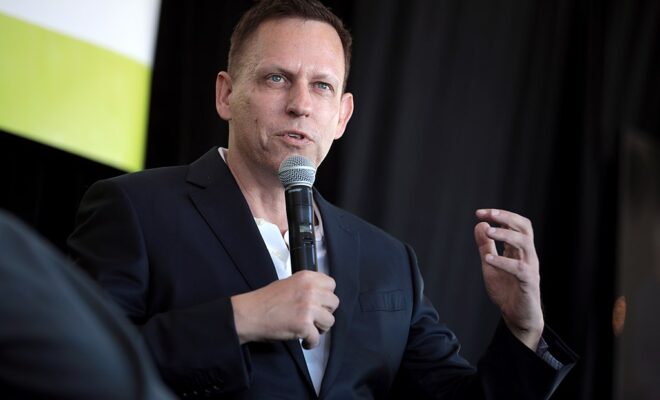
Peter Thiel, a former ally of Musk and a man not given to emotional hyperbole, recently suggested that Musk may no longer believe in the project. In a June 2025 interview with Ross Douthat, published in UnHerd, Thiel claimed that “2024 is the year Elon stopped believing in Mars,” interpreting Musk’s support for Trump and a conversation with DeepMind’s Demis Hassabis as signals that Musk now sees Mars as merely a technological problem, not a civilizational one. Thiel’s inference was drawn in part from the chilling suggestion that AI could simply follow us to Mars, importing our problems with it. Thiel suspects Musk may be emotionally retreating from the dream.
UPDATE: In a response to Mario Nawfal Elon seemed to clarify that he hasn’t given up on the Mars project, but acknowledged that while moving to Mars isn’t currently an option it will be in 25 years (Elon and I will be 78 years old).
Of course moving to Mars is not yet an option, but it will be if civilization can last another 25 years or so
— Elon Musk (@elonmusk) June 27, 2025
And perhaps he is. Then again, perhaps not. In a Fox News interview from May 2025, Musk reaffirmed his commitment to Mars, stating plainly that making life multiplanetary remains essential for our survival as a species. The timeline he proposed, landing humans by 2028, is as ambitious as ever. His actions, too, continue to signal dedication. SpaceX has suffered setbacks before, and the recent explosion is part of a known cycle of iteration. Even a casual reading of Musk’s public commentary suggests no overt retreat from Mars. Thiel may be misreading Musk, or, more charitably, projecting his own philosophical concerns. Either way, the truth about Musk’s inner belief is ultimately irrelevant to the most important question: should we still reach for Mars?
Yes. Emphatically, yes.
Even if we never get there, the pursuit is vital. That proposition may seem paradoxical in a culture increasingly obsessed with deliverables. But human flourishing is not measured only in achievements. It is measured in aspirations.
Consider the Apollo program. For a nation embroiled in Cold War anxieties and domestic unrest, the Moon mission served as a unifying project. As JFK put it, we chose to go “not because it is easy, but because it is hard.” Those words were not rhetorical fluff. They were ontological instruction. To choose the hard thing, to aim at the impossible, is to organize society around its most noble faculties: courage, reason, imagination, and sacrifice. The mission trained 400,000 minds, created entire industries, and accelerated digital computing by decades. Whether it put a man on the Moon was, in a curious sense, secondary.
The benefits of striving toward seemingly impossible goals are well-documented in psychological research. Viktor Frankl, the Viennese psychiatrist and survivor of Auschwitz, observed that man is not destroyed by suffering, but by suffering without meaning. Purpose, especially one directed at the horizon of the impossible, inoculates the human soul against despair. Modern empirical research confirms Frankl’s insight. A 2020 study published in Psychology Research and Behavior Management found that setting and pursuing high goals significantly correlates with life satisfaction, even when those goals are not achieved. The striving itself generates psychological resilience.
On the societal level, the sociologist Arnold Toynbee argued that civilizations grow in response to challenges. Societies that face no great task stagnate. Societies that choose difficulty flourish. Mars is that kind of difficulty. Not existential in the narrow sense, not like climate change or war, but existential in the deeper philosophical sense: as a test of whether humanity still has the will to strive.
Even where failure is likely, the enterprise is justified. The Apollo 1 tragedy did not end the Moon mission. Nor did the near-catastrophe of Apollo 13. In fact, those failures strengthened the moral and technical resolve of the nation. They also taught us an essential truth: setbacks in the pursuit of greatness are instructive, not invalidating. Likewise, even if no human ever sets foot on Mars, the cascade of benefits from trying, technological, psychological, moral, will have justified the attempt.
Economically, the benefits are not hypothetical. Every dollar spent on the Apollo program is estimated to have generated between $7 and $40 in return, thanks to technology transfer and industrial stimulation. Memory foam, modern avionics, satellite GPS, cordless power tools, and countless other advances emerged as “spinoffs.” SpaceX’s development of reusable rockets, which drastically reduce launch costs, is already revolutionizing telecommunications, weather forecasting, and disaster relief. It is not unreasonable to assume that further work on Martian colonization will produce technologies we cannot now anticipate but will one day consider indispensable.
Culturally, too, ambitious goals do something rare: they unify. In an era of fragmentation, political, cultural, epistemological, a vision like Mars offers a shared horizon. We may disagree on everything else, but if we can agree that a red dot in the sky is worth reaching, then we have something to hold us together. As Elon Musk once put it, “There need to be reasons to get up in the morning. You know life can’t just be about solving problems. There have to be things that are exciting and inspire you.”
The cynic might reply: inspiration is no substitute for practicality. But the cynic misunderstands the point. Inspiration is not a distraction from practicality, it is its fuel. The age of discovery, the industrial revolution, the moonshot, none were born of practicality. They were born of audacity, and their practical benefits came later. Often, they came precisely because the initial dream was not fettered by immediate feasibility.
There is, of course, a risk. Some goals are not merely difficult, but delusional. We should not encourage utopianism or reckless abstraction. But Mars is neither. It is scientifically plausible, economically generative, and civilizationally unifying. It satisfies the Siderian standard: a goal worth pursuing even if it turns out to be unreachable, because in pursuing it, we become more than we were.
If Musk has truly lost faith in Mars (and I personally doubt it), that would be a great loss. But it would not invalidate the mission. It would only underscore our responsibility to carry it forward. Others can and must inherit the banner. Civilization needs something hard to do, something that calls forth its best selves.
Musk’s vision matters, not only because of what it might achieve, but because of what it demands. It demands courage in the face of uncertainty, investment in the face of risk, and hope in the face of entropy. It reminds us that to be human is to strive, and that the impossible, even when unreachable, is never wasted.
If you enjoy my work, please consider subscribing: https://x.com/amuse.
Sponsored by the John Milton Freedom Foundation, a nonprofit dedicated to helping independent journalists overcome formidable challenges in today’s media landscape and bring crucial stories to you.
READ NEXT: Game-Changing Technology Debuts: Cheaper Than Gas, Smarter Than Biden
Sponsored
Stuck in a Tough Spot? What Would History’s Greatest Leaders Do? Victor Davis Hanson Has the Answer





















Hes best running his companies & DOGE then when on DOGE
& we have yet to have a Moon Base since 1969 viisit