





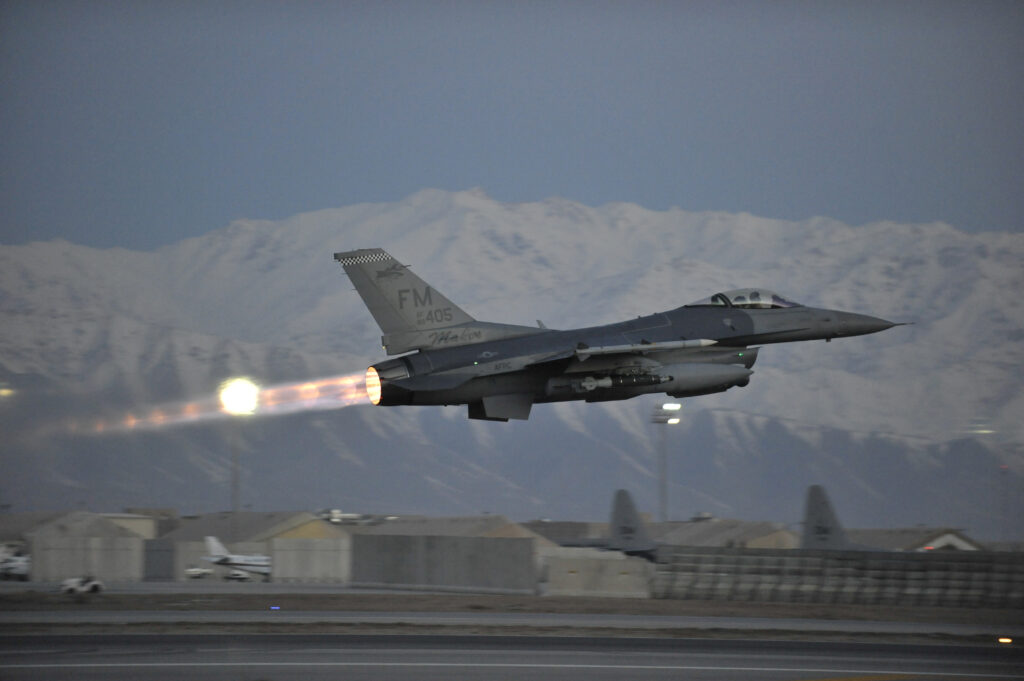
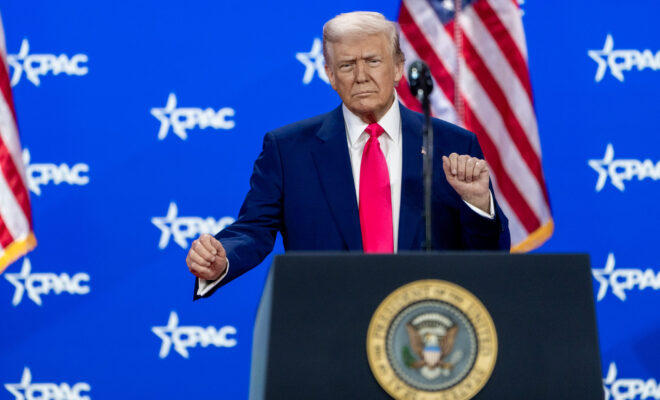
At a joint press conference in London with U.K. Prime Minister Keir Starmer on Thursday, President Donald Trump said the U.S. is looking to “get it back” — referring to Bagram Air Base in Afghanistan, which was abandoned and quickly fell under Taliban control after the Biden administration’s chaotic 2021 withdrawal.
🚨 BREAKING: President Trump just said the U.S. is seeking to *RECLAIM* Bagram Air Base in AFGHANISTAN, where Biden botched the withdrawal. Whoa.
— Eric Daugherty (@EricLDaugh) September 18, 2025
"That could be some breaking news. WE WANT THAT BASE BACK!"
"One of the reasons – it's an hour away from where CHINA makes its… pic.twitter.com/gN6O8B9CkQ
Trump framed Bagram’s strategic value in terms of China, noting its proximity — “about an hour away,” he said — from where the Chinese Communist Party is believed to develop nuclear weapons. He also claimed China has some level of influence or presence near the base. So far, no independent verification has backed that claim, and both the Taliban and Beijing have denied it.
The Taliban didn’t wait long to push back. Zakir Jalaly, a senior official at the Taliban-run foreign ministry, said Afghanistan would never accept a renewed U.S. military presence. Taliban spokespersons called the idea “ridiculous” and “completely rejected.” A state-linked outlet, Hurriyat Radio, went further: “Not even a fraction of Bagram’s land will be relinquished,” it said.
Even without Taliban resistance, the idea raises more questions than answers:
Military and Logistical Headaches
Retaking Bagram wouldn’t be a quick operation. It’s a massive base, and securing it would require a significant deployment of troops, air defenses, and logistical support. Since the U.S. exit, the base has reportedly suffered looting and neglect. Restoring it to operational status would mean starting almost from scratch.
Diplomatic and Legal Hurdles
Getting back into Afghanistan in any official capacity would require some kind of agreement with the Taliban — the same group the U.S. spent two decades trying to defeat. That’s not just a diplomatic long shot; it’s a legal and political quagmire. Any move seen as violating Afghan sovereignty would likely spark international backlash and complicate relations with regional powers.
Symbolism vs. Strategy
For Trump, Bagram represents more than a piece of lost military real estate. It’s tied to a broader narrative: Biden lost control, and Trump wants it back — literally. It’s a message aimed at projecting strength, reversing perceived weakness, and countering China. But a symbolic win on paper can turn into a real-world disaster if it’s not backed by a viable plan.
Security Threats
Even if the U.S. were to somehow reestablish a presence at Bagram, it would be planting a flag in the middle of a still-volatile region. Insurgent threats remain, and force protection would require constant resources, vigilance, and risk tolerance. That’s a hard sell in an era of fatigue over “forever wars.”
Trump’s remarks may play well with voters who saw the Afghanistan withdrawal as a national embarrassment. But retaking Bagram — assuming that’s even on the table — would be more than a campaign slogan. It would be a commitment with steep costs and serious consequences.
The opinions expressed in this article are those of the author and do not necessarily reflect the positions of American Liberty News.
READ NEXT: Senate Republicans Hand Trump Massive Victory




















How can he?
Make deal first
IF not taken then what
Send in force to take base
seize weapons from Taliban?>
another war?