

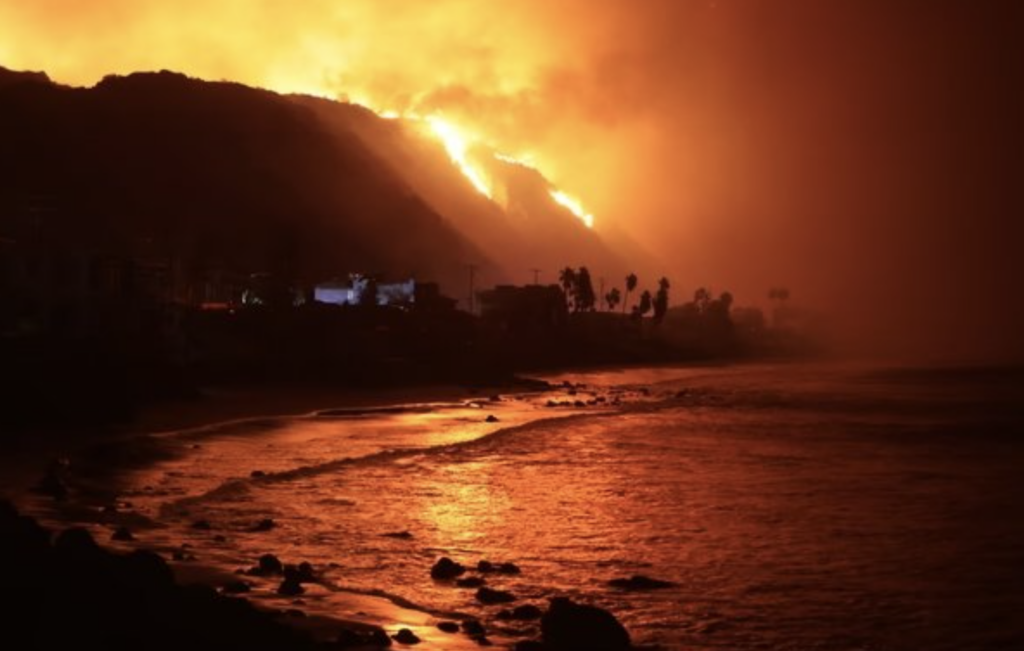
Los Angeles, perched on the edge of the Pacific Ocean and forever under siege by raging wildfires, seems like the ideal candidate for seawater-based firefighting. Yet, in this age of technological marvels and seemingly infinite possibilities, L.A. persists in using precious freshwater to combat flames. What gives? Why isn’t a city with so much saltwater on its doorstep putting it to use? The answer lies in a tangled web of chemistry, engineering, economics and environmental prudence.
Drinking Water vs. Fire Hydrants
To understand why seawater remains untapped, let’s first take stock of L.A.’s water infrastructure. The city’s lifeblood flows from a precariously diverse mix: the Los Angeles Aqueducts, local groundwater and water imports from the Metropolitan Water District (MWD). The fire hydrants, however, don’t draw directly from pristine mountain springs or aqueducts. Instead, they’re tied to strategically placed water tanks scattered across the city—a network designed to ensure pressure and availability, even in emergencies.
This system, while generally effective, reveals its flaws in challenging terrains like the Pacific Palisades. Here, recent wildfires exposed a grim reality: the fire tanks emptied, leaving firefighters scrambling. It’s tempting to imagine the Pacific Ocean stepping in to save the day. However, seawater’s allure quickly dims under scrutiny.
Why Firefighters Fear Saltwater
Seawater is a harsh mistress. Laden with salt and minerals, it’s an arch-nemesis to metals, pipes, and pumps. The corrosive properties of salt can ravage firefighting equipment faster than a Californian wildfire devours a drought-stricken hillside. Hoses, pumps and engines subjected to repeated saltwater exposure deteriorate rapidly, leading to costly replacements and potential failures in critical moments.
And the damage isn’t confined to firefighting gear. L.A.’s water infrastructure—already aging and groaning under the weight of overuse—would buckle under the strain of saltwater’s abrasive touch. Pipes, pumps and distribution systems would suffer salt-induced corrosion, threatening both drinking water supplies and public health. Introducing seawater into the firefighting equation might address one problem while creating a cascade of others.
Saltwater and the Ecosystem
Even if we managed to shield equipment from seawater’s corrosive wrath, the environmental costs would remain formidable. Saltwater doesn’t evaporate cleanly. The residue it leaves behind can decimate vegetation, rendering the soil inhospitable to regrowth. This is no small consideration in a state already grappling with environmental fragility.
Furthermore, pumping massive quantities of seawater inland could disrupt marine ecosystems. The intake systems would pose a deadly hazard to marine life, sucking in fish and other organisms. It’s an ecological domino effect that few coastal cities, let alone L.A., can afford.
Fighting Fire Smarter, Not Saltier
So, if seawater is a nonstarter, what’s the path forward for fire-prone cities like Los Angeles?
- Recycled Water: L.A. already dabbles in recycling treated wastewater for non-potable uses. Expanding this initiative to firefighting could alleviate pressure on freshwater supplies. However, scaling this solution requires significant investment in infrastructure and public buy-in—a heavy lift in a city notorious for bureaucratic inertia.
- Enhanced Storage: The fire tank system, though flawed, can be improved. Larger tanks, real-time pressure monitoring and better placement in high-risk zones could provide a more reliable water supply during emergencies.
- Fire-Resistant Materials: Updating building codes to require fire-resistant construction materials would reduce the need for water-intensive firefighting. Prevention, after all, is the best cure.
- Aggressive Vegetation Management: Controlled burns and strategic clearing of dry brush can limit the fuel available to wildfires. Public education campaigns can also help foster a culture of fire prevention.
Conclusion
In the final analysis, the decision not to use seawater in L.A.’s fire hydrants isn’t a failure of imagination but a triumph of pragmatism. The corrosive nature of seawater, its impact on the environment, and the limitations of existing infrastructure make it an impractical choice. Instead, Los Angeles must look to innovation and prevention, crafting a multi-pronged approach to its wildfire woes. By prioritizing sustainable and efficient practices, the city can safeguard both its people and its future—without turning the Pacific into a firehose.
Sponsored by the John Milton Freedom Foundation, a nonprofit dedicated to helping independent journalists overcome formidable challenges in today’s media landscape and bring crucial stories to you.
READ NEXT: Government Department With Rocky History Offers Veterans A Stunning Deal



















This should be a reason to start thinking about using small nucellar plants on the ocean coast along with desalination plants to supply water to this dry land. Start the infrastructure now as the rebuilding begins.
While the information contained here is interesting. The negatives of fighting a fire with seawater do not outweigh the need (for a water restricted area) to make use of this resource and to do it enthusiastically.
Tap the navy for how to effectively, efficiently, and (with preservation techniques for the equipment) to use seawater for fire fighting. There is no excuse for letting the city burn to the ground in this manner. It is more akin to a wealthy brat folding their arms and complaining about not getting their way while watching the city burn.
Perhaps California should take note from other areas that are also water deficient (and less wealthy) to see how seawater is used to fight fires. The Bahamas fights fires with seawater and certainly does not have the financial resources to throw around like California. Even better! Implement methods to avoid the fires and the rampant spread with tried and true methods and decrease the cost of fire fighting by decreasing the risk of fires altogether.
Perhaps “salting the Earth” during these wildfires would temorarily inhibit the UNDERGROWTH in forests after the fires? That would be a good thing. Sinct it would not be a deep watering or ongoing watering of sea water, within a few natural rains, any salt would be diluted .
Years ago, Colorado was in an 9 year drought and lost entire forests to beetle kill, littering the mountains with downed trees, as dry as match stick. Our local developments opened up “wood days” to come in and take as much dry/downed trees out of their firelanes. 100’s of residents showed up. It does help.
Colorado also offers low cost logging to resident who want to use downed trees as lumber for personal building.
Colorado has had it share of wild fires, but usually up in the mountains, away from homes. CO does do due diligence. However, no state retains enough surplus water for extreme fire fighting like what is going on in CA ALL THE TIME.
Even smaller ranches and farms are smart enough to log out wooded area to protech their crops, buildings and livestock.
Hopefully, CA will get smart. Its a tragedy as to what happened, but I’m sure there are water bags full of ocean water being flown in over the CA fires right now.
Not once is the word desalinization used. Why not? The technology for removing sea salt from sea water has been around for ages. Where else do we get our sea salt for salting our food but from sea water? Why aren’t the storage tanks for water used in fighting wildfires filled with desalinated sea water?
They should have built desalinization plants up and down the Left Coast decades ago. Hiring politicians with a lick of common sense might also have been helpful. Use sea water, it’s free, not just with air delivery but with a system of hydrants on the ground. The bad part is that crops won’t grow well for a period and salt water would corrode existing pipes and hydrants. Of what use are those things now in the areas that have burned? Waiting will ensure we go through the same thing again. Redesign the hydrants, pipes, and valves and use modern materials that are not affected by salt water. Talk to the Navy about it. Or you can consider the desalination route.