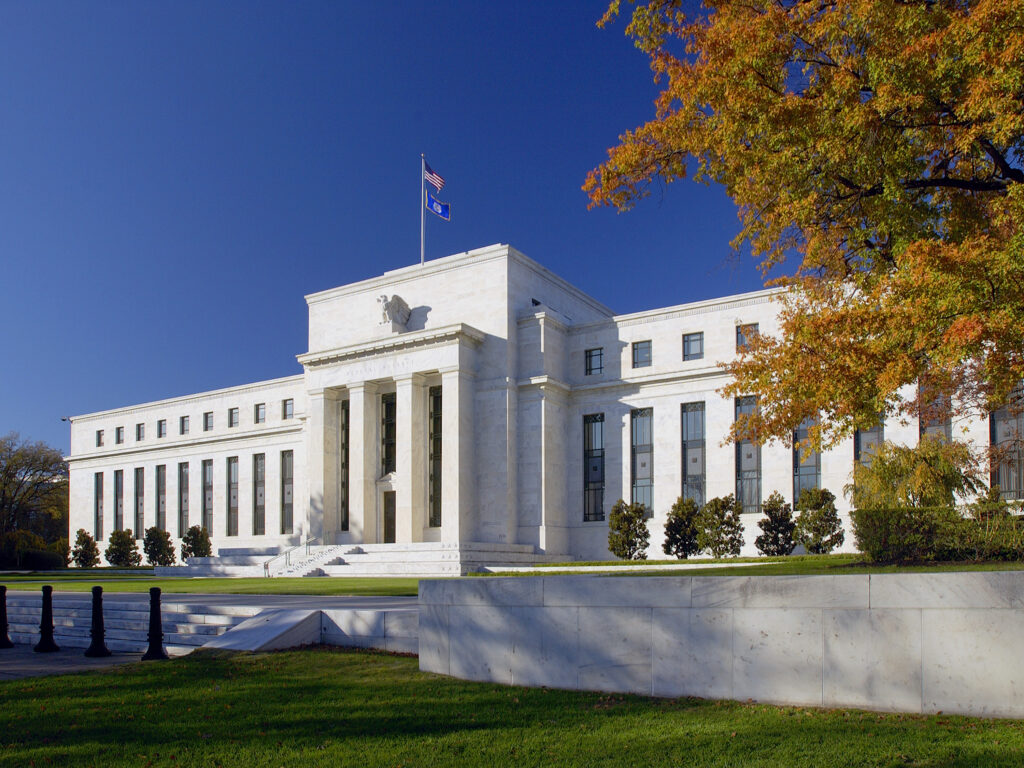
Alan Greenspan, the influential economist who led the Federal Reserve through nearly two decades of economic booms, market shocks, and political change, died Monday at the age of 100. His wife, veteran NBC News journalist Andrea Mitchell, said he passed away from complications related to Parkinson’s disease.
Greenspan served as chairman of the Federal Reserve from 1987 until 2006, spanning the administrations of Ronald Reagan, George H.W. Bush, Bill Clinton, and George W. Bush. During that time, he became one of the most powerful unelected figures in America, earning a reputation as the economic “Maestro” whose words could move global markets.
JUST IN: Alan Greenspan, the longtime chairman of the Federal Reserve, has died, his wife confirmed. He was 100 years old. https://t.co/kxf3wQyeRo pic.twitter.com/4dPumjuUHH
— ABC News (@ABC) June 22, 2026
Appointed by Reagan in 1987, Greenspan immediately faced one of Wall Street’s biggest tests when the stock market crashed that October. His response helped calm investors and established his standing as a steady hand during periods of financial turmoil. Over the next 19 years, he guided monetary policy through the 1990s technology boom, the Asian financial crisis, and the economic aftermath of the September 11 terrorist attacks.
For many Americans, Greenspan became synonymous with economic prosperity. He famously warned of market “irrational exuberance” during the dot-com era, a phrase that entered the political and financial lexicon and remains associated with speculative bubbles today.
Yet his legacy remains deeply contested.
While supporters credit Greenspan with helping oversee one of the longest periods of economic expansion in modern U.S. history, critics argue that his support for financial deregulation and extended periods of low interest rates contributed to the housing bubble and financial excesses that culminated in the 2008 financial crisis. Years later, Greenspan publicly acknowledged flaws in his assumptions about the ability of financial institutions to regulate themselves.
Born in New York City in 1926, Greenspan studied economics at New York University and later served as chairman of President Gerald Ford’s Council of Economic Advisers before ascending to the Federal Reserve. Even after leaving office in 2006, he remained a prominent voice on economic policy through books, consulting work, and public commentary.
Alan Greenspan, an economist who served nearly two decades as chairman of the Federal Reserve, died Monday at 100.
— PBS News (@NewsHour) June 22, 2026
His wife, NBC News correspondent Andrea Mitchell, said in a statement that Greenspan died from complications of Parkinson's disease. She called her husband "a giant… pic.twitter.com/mZHd3Roaga
In a statement announcing his death, Mitchell described Greenspan as “a giant of a man” who helped shape the American economy for decades while remaining willing to acknowledge his mistakes. She said he would be remembered not only for his brilliance but also for his kindness.
READ NEXT: Documents Renew Questions About Influence Of Spiritual Leader On Tulsi Gabbard’s Political Career