Incident Raises Fresh Questions About Military-Civilian Airspace Coordination
A U.S. Air Force refueling tanker reportedly came within seconds of colliding with a U.S. commercial airliner Friday after failing to communicate its position, according to pilot audio and flight data reviewed after the incident.
The near miss occurred at cruising altitude over the southern Caribbean. While the JetBlue pilots were shaken, passengers aboard the civilian flight were unaware of how close the aircraft came to disaster.
What Happened
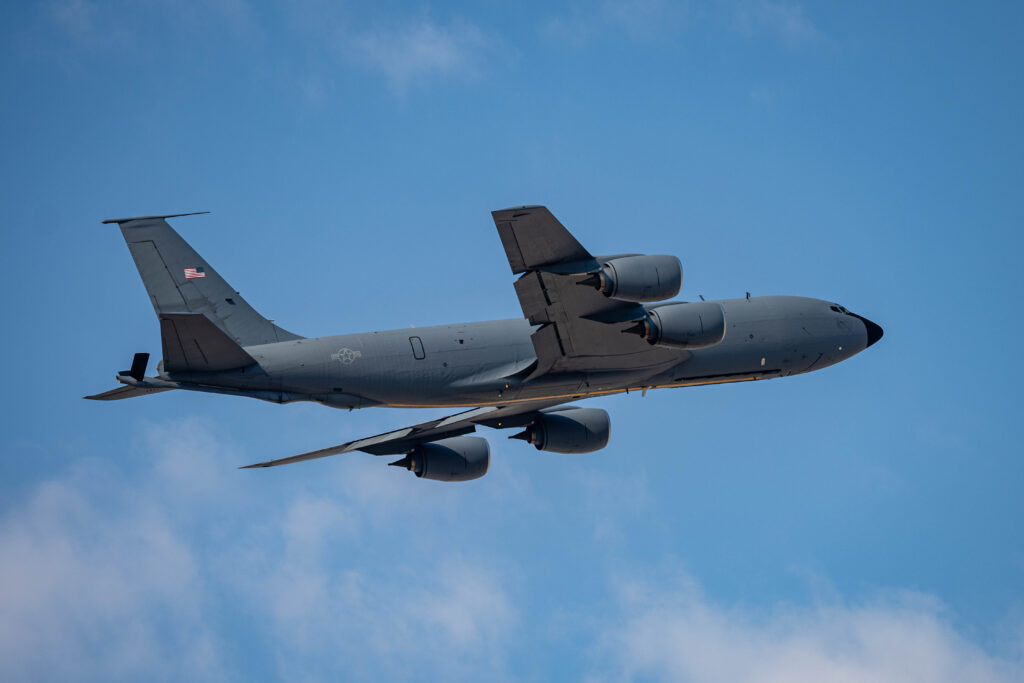
JetBlue Flight 1112 was en route from Curaçao to New York when it encountered a U.S. Air Force KC-135R tanker at about 34,000 feet. The military aircraft’s transponder was turned off, making it invisible to air traffic control radar used to manage civilian flights.
As the JetBlue aircraft climbed, its pilots spotted the tanker directly ahead and halted their climb to avoid a collision.
Audio posted online later captured the JetBlue pilots telling air traffic controllers they were separated from the tanker by only 2 to 3 miles horizontally. Based on speed and altitude, that translated to roughly 20 seconds of separation.
Pilot Audio Captures Alarm
In the recording, one pilot expressed frustration and concern in real time.
“They don’t have their transponder turned on; it’s outrageous,” the pilot said. “We almost had a midair collision up here.”
The tanker did not communicate its position to the civilian crew before crossing their flight path, according to the audio.
JetBlue Flight 1112, an Airbus A320 which had departed from Curaçao bound for John F. Kennedy International Airport in New York City, nearly collided Friday with a U.S. Air Force KC-135R Aerial-Refueling Tanker that did not have its transponder on at 34,000ft over the Southern… pic.twitter.com/f5Jt8JUFlm
— OSINTdefender (@sentdefender) December 14, 2025
Mediaite’s Willa Pope Robbins reports additional details:
Air traffic control communicated to the JetBlue pilot that they were also not able to see the tanker on radar, telling him that the unidentified military aircraft was not the first.
“They’ve been outrageous with the unidentified aircraft within our airspace,” a controller told the pilot.
It remains unclear where the tanker was heading at the time, though the commercial pilot told controllers that it had been flying northeast, toward Venezuelan airspace.
A spokesman for the U.S. Southern Command, Col. Manny Ortiz, said the military was “aware of the recent reporting regarding U.S. military aircraft operations in the Caribbean and are currently reviewing the matter.”
Emphasizing caution as the review continues, he added, “Safety remains a top priority, and we are working through the appropriate channels to assess the facts surrounding the situation.”
Military Operation Underway
The KC-135R was operating as part of Operation Southern Spear, a U.S. military surveillance mission conducted off Venezuela’s coast. The operation focuses on monitoring regional threats, including narcotics trafficking and activity linked to the Maduro regime.
There has been no public indication that the tanker was engaged in an emergency or that it attempted to contact civilian air traffic controllers at the time.
Broader Safety Concerns
While no collision occurred, the incident has renewed debate over how military aircraft operate in or near civilian air corridors, particularly when transponders are disabled.
The close call echoes recent warnings from the National Transportation Safety Board, which has raised concerns about an increase in near-miss incidents in crowded airspace. The agency has urged better coordination, clearer procedures, and stronger safeguards to prevent catastrophic errors.
READ NEXT: Conservative Court Issues Major Firearms Ruling