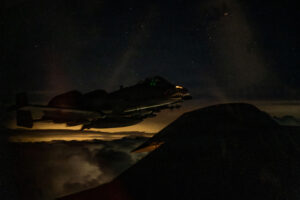
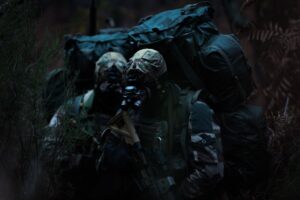
A U.S. F-15E pilot shot down over Iran in April told intelligence officials he saw Iranian drones moving in a synchronized “jellyfish” formation moments before ejecting from his aircraft.
The pilot, who was later rescued by U.S. special forces, described larger drones flying together with smaller drones beneath them that resembled legs, according to the report. He called the sight “real alien sh*t” during debriefings after the crash.
The incident took place during Operation Epic Fury and has since prompted debate inside the U.S. intelligence community over whether Iran has developed a more advanced drone swarm capability than previously understood.
What the Pilot Reportedly Saw
The formation was described as a coordinated group of drones moving as one, with larger units appearing interconnected and smaller drones hanging below.
Officials are still assessing the account, including whether the pilot’s recollection may have been affected by the crash and ejection. But the description has raised new questions about Iran’s unmanned aircraft program and its ability to coordinate multiple drones in combat. (RELATED: Ukraine Captures Russian Position Using Only Robots In First-Of-Its-Kind Operation, Zelensky Says)
The American pilot of a U.S. Air Force F-15E Strike Eagle that was shot down over Iran in April, requiring a high-risk rescue mission by special forces, described a shocking sight before ejecting from his aircraft: multiple Iranian drones hovering in the air, moving as one, in a… pic.twitter.com/6IQxPtybxF
— OSINTdefender (@sentdefender) June 23, 2026
Why It Matters
Drone swarms are groups of unmanned aerial vehicles that operate together, often using peer-to-peer communications, mesh networks or artificial intelligence to coordinate movement. (RELATED: The AI Data Center Story Everyone Believes Is Backwards)
Rather than relying on one aircraft or one command node, swarms can spread tasks across many drones. Some may surveil, others may jam signals, act as decoys or carry explosives.
That makes them difficult to defend against.
A swarm can:
- Overwhelm radar and air defenses through sheer numbers
- Force militaries to spend expensive interceptors on cheap drones
- Keep operating even if several drones are shot down or jammed
- Combine surveillance, electronic warfare, and attack roles in one formation
A Growing Threat to Manned Aircraft
The reported “jellyfish” formation could point to a more complex use of unmanned systems, including larger drones acting as hubs or “mother ships” for smaller units.
If accurate, the sighting would suggest a formation designed not just to fly together, but to share information, confuse sensors, or create a moving aerial barrier.
That would represent a serious challenge for U.S. pilots operating in contested airspace.
US Military Faces New Countermeasure Questions
The incident comes as militaries around the world are racing to develop ways to defeat drone swarms. (RELATED: America’s Not Ready For 21st Century Warfare)
Possible defenses include layered radar and infrared sensors, electronic jamming, drone-on-drone interceptors, directed-energy weapons, and high-power microwave systems designed to disable multiple drones at once.
But swarm technology is evolving quickly, especially in conflicts where cheap drones have already reshaped the battlefield.
For U.S. forces, the reported encounter over Iran underscores a central problem of modern warfare: relatively low-cost drones can create major risks for high-value aircraft and crews.
The pilot’s account remains under review. But even if some details are still unresolved, the report highlights a growing concern for U.S. defense planners — the next major threat in the sky may not be a single missile or fighter jet, but a coordinated cloud of drones moving as one.
READ NEXT: Suspect In Horrifying Toddler Crocodile Pit Case Released On Bail