


Vice President JD Vance announced early Sunday that high-stakes negotiations between the United States and Iran ended without an agreement on a permanent ceasefire, marking a setback in efforts to ease escalating tensions.
The talks, which stretched over 21 hours, were part of a broader diplomatic push initiated after President Donald Trump ordered a temporary two-week pause in military strikes. That pause was intended to give Iran time to agree to a series of demands, including long-term limits on its nuclear ambitions. The deadline passed without a breakthrough.
Vance led the American delegation, joined by Special Envoy Steve Witkoff and Trump’s son-in-law Jared Kushner, who previously played a key role in negotiating the Abraham Accords. The negotiations were hosted in Pakistan, where officials, including Prime Minister Shehbaz Sharif and military leader Asim Munir, facilitated discussions between the two sides.
While Vance described the talks as “substantive,” he ultimately confirmed that no agreement had been reached. He emphasized that the lack of progress was not due to the efforts of the Pakistani hosts, whom he credited with attempting to bridge differences between the United States and Iranian delegations.
According to Vance, the United States is seeking firm, long-term assurances that Iran will not pursue nuclear weapons or develop the capacity to produce them quickly. Despite extensive discussions, American officials said they have yet to see the level of commitment they consider necessary.
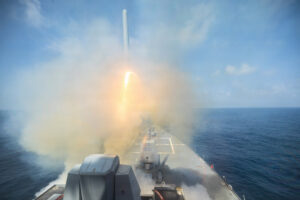
The failed negotiations come amid heightened tensions following recent military action targeting facilities connected to Iran’s nuclear capabilities. In June, American forces struck sites in Fordow, Natanz, and Isfahan—key locations tied to Iran’s nuclear infrastructure—using heavy bunker-busting munitions delivered by stealth bombers. The strikes were part of a broader effort to degrade Iran’s enrichment capabilities and pressure its leadership into negotiations.
The diplomatic effort also followed earlier warnings from Trump, who had threatened additional strikes, including on Iranian energy infrastructure, if Tehran refused to scale back its activities. However, the administration held off on further escalation during the negotiation window.
Despite the setback, Vance indicated that the United States remains open to continued dialogue. He expressed hope that Iran may still offer the assurances Washington is seeking, though no timeline for renewed talks has been announced.
The collapse of the ceasefire discussions leaves the situation uncertain, with the risk of renewed military escalation looming if diplomatic efforts stagnate in the coming days.
READ NEXT: JD Vance Addresses Speculation About His Position On Iran War














Time to hit the other targets we avoided for the most part the first time.