






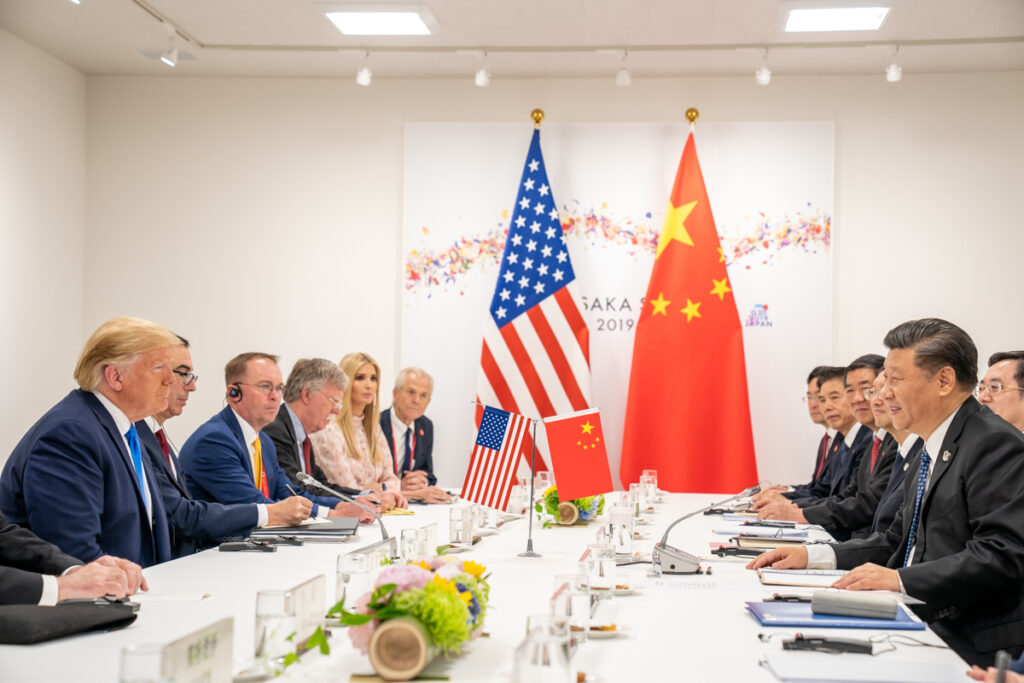
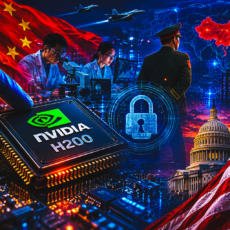
WASHINGTON — The Trump administration has cleared Nvidia to sell its H200 AI chips to a select group of vetted customers in China — rolling back months of export limits and giving the U.S. a 25% cut of the sales. The move reopens Chinese access to one of Nvidia’s top-tier AI and high-performance computing chips, though the company’s newest powerhouses — the Blackwell and Rubin lines — are still strictly off-limits.
A Looser Policy, With Caveats
Nevertheless, the H200 ranks among Nvidia’s most powerful chips for massive data tasks and cutting-edge AI training. Earlier this year, the administration blocked China from buying the previous-generation H20. By midyear, officials loosened the rules slightly, moving to a licensing system that allowed limited exports.
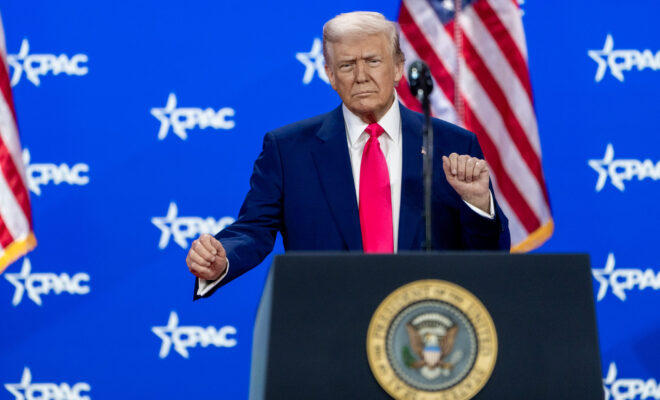
Trump’s latest announcement — posted Monday on Truth Social — goes even further, approving wider sales while still requiring customer vetting and maintaining the ban on Nvidia’s most advanced chips.
Whether Chinese companies will actually buy the H200 is another question. Beijing is considering its own curbs on foreign-made chips, especially in sensitive industries.
Criticism Over Strategic Risk
The decision drew quick pushback from critics who argue the United States is giving up ground at a moment when AI capability is increasingly tied to national strength. Advanced chips support everything from rapid data analysis to autonomous systems, raising concerns about dual-use military applications.
Some policy analysts say the shift could accelerate China’s AI development, where it already benefits from enormous data scale and technical talent. U.S. firms still lead in frontier AI research, but that edge is narrower than it once was.
According to reporting from CNBC, several Republicans, including Sens. Lindsey Graham and Josh Hawley, as well as the GOP-controlled House Select Committee on China, have voiced varying degrees of concern following Trump’s announcement:
“Alarm bells go off in my head here,” Sen. Lindsey Graham, R-S.C., told CNBC on Tuesday when asked about the chip sales agreement.
“I don’t mind doing normal business with China. But if you can prove to me this will accelerate their military capability, I’ll oppose it,” Graham said.
“My general view on this is that China’s progress on AI is almost entirely parasitic on our technology, in particular on our hardware,” Sen. Josh Hawley, R-Mo., said on Capitol Hill earlier Tuesday.
“So I don’t want China to win the AI race. I want to win the AI race,” Hawley said. “But if we want to beat China, I think we need to constrain their ability to leverage our own technology, and I think we would want to reduce their access to our hardware, not increase it.”
CNBC noted that while Hawley avoided criticizing the president outright, he made it clear that, as a broader principle, he favors placing strict limits on the transfer of American technology and equipment to China. The House Select Committee on China — created specifically to confront the challenges posed by the Chinese Communist Party — echoed similar concerns.
Right now, China is far behind the United States in chips that power the AI race.
— Select Committee on China (@ChinaSelect) December 9, 2025
Because the H200s are far better than what China can produce domestically, both in capability and scale, @nvidia selling these chips to China could help it catch up to America in total compute.…
A Pivotal Moment in the Tech Race
Experts describe the move as a deliberate pivot in U.S. tech-trade policy. For nearly two years, Washington has tried to slow China’s progress by denying it access to high-end computing. Allowing H200 exports signals a more open posture that could reshape how both countries compete.
The Council on Foreign Relations called the change a “major development,” noting that China remains the United States’ top strategic challenger. The decision also gives Nvidia access to a huge market at a time when chip demand is surging.
Implications Across Key Sectors
AI and Big Tech:
- Chinese companies regain access to chips capable of supporting large-model training and faster innovation cycles. That increases pressure on U.S. and European firms.
Military and Security:
- High-performance chips can strengthen intelligence analysis, cyber operations, and autonomous systems. That’s the core of national security objections.
Global Supply Chains:
- With access restored, Chinese firms may move faster on AI deployments and could double down on building domestic chip alternatives.
U.S.-China Trade:
- The approval shows Washington trying to balance economic interests with strategic ones. It’s a notable shift from the more restrictive posture earlier in the year.
What to Watch
Several questions remain unresolved. How many H200 chips will Chinese firms actually buy? Will Beijing impose new limits on their use? And how will Congress respond, given bipartisan skepticism toward loosening export controls?
Domestic chipmakers in China could also react in two ways: rely more on Nvidia’s hardware, or race harder to build homegrown alternatives.
What happens next won’t just affect U.S.-China relations — it will influence who controls the next era of AI, and with it, the shape of the world to come.
READ NEXT: Congress Launches Probe Into Walz Allegations Too Serious To Ignore


















I can not understand why the Trump administration has cleared Nvidia to sell its H200 AI chips to China. in the end China will just use the techknowledge agents America