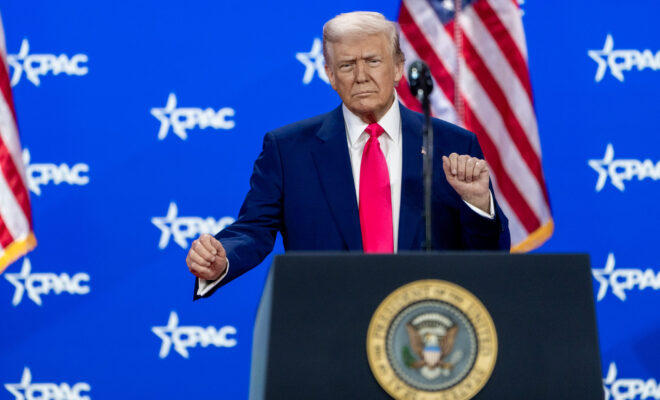



Following his summit with Russian President Vladimir Putin in Alaska, President Donald Trump is offering Ukraine strong U.S.-led security guarantees — similar to NATO’s Article 5 — but stopping short of full NATO membership.
U.S. Special Envoy Steve Witkoff called the breakthrough “game-changing,” saying it could serve as a powerful deterrent to further Russian aggression once peace is on the table.
For the first time, according to Witkoff, Russia agreed during the Anchorage talks to let the U.S. and European allies extend binding security assurances to Ukraine — a potential diplomatic breakthrough.
🚨 BREAKING: Trump envoy Steve Witkoff just announced that to get a peace deal with Russia, the US and European countries, instead of giving Ukraine NATO membership, can offer them Article 5-like protections…a strong security guarantee.
— Eric Daugherty (@EricLDaugh) August 17, 2025
Zelensky – please don't F this up.
"We… pic.twitter.com/RJQbi3Hjyu
After weeks of presenting a ceasefire as an ultimatum to the Kremlin, Trump is now steering toward a peace deal — one built on clear U.S. commitments and Ukraine remaining outside NATO. In return, Kyiv may be pressed to consider territorial compromises.
Not surprisingly, Ukrainian leaders are cautious. They’ve been burned before — most notably with the 1994 Budapest Memorandum. After giving up their nuclear arsenal, Ukraine was promised protection. Then came Crimea.
After the Soviet Union’s collapse, Ukraine inherited the world’s third-largest nuclear arsenal. Under the Budapest Memorandum on Security Assurances, Kyiv agreed to surrender those weapons and join the Nuclear Non-Proliferation Treaty (NPT) as a non-nuclear state.
In return, the U.S., U.K., and Russia pledged to respect Ukraine’s sovereignty, territorial integrity, and independence. They also promised not to use force or economic coercion against Ukraine and to seek U.N. action if Ukraine were threatened.
But the guarantees were political assurances, not legally binding defense commitments. Unlike NATO’s Article 5, they lacked enforcement mechanisms. In 2014, Russia annexed Crimea and fueled separatist conflict in eastern Ukraine — a direct violation of the memorandum.
Western signatories condemned Moscow but did not intervene militarily, deepening Ukraine’s sense of abandonment.
On Monday, European leaders including Ursula von der Leyen and Emmanuel Macron will join President Volodymyr Zelensky in Washington. Their goal: project a united Western front and press for guarantees that actually mean something.
Fox News continues:
Over the weekend, the Ukrainian leader acknowledged his last White House visit – cut short by a shouting match between Trump and Vice President JD Vance – and told reporters in Brussels he hopes Monday’s meeting “will be productive” rather than a repeat of February’s encounter.
The upcoming meeting comes on the heels of Trump’s summit with Russian leader Vladimir Putin in Anchorage on Friday, where the U.S. leader shifted from demanding a ceasefire to calling for a final peace deal.
Trump’s special envoy Steve Witkoff told CNN that Putin agreed to allow the U.S. to provide Ukraine “robust security guarantees.”
…
NATO’s Article 5 – the cornerstone of the alliance – stipulates that an attack on one member is an assault on all, obligating allies to come to each other’s defense. The proposed security guarantees for Ukraine would not come through NATO, but rather from select European allies in the event of a Russia-Ukraine peace deal.
This time, Europe appears to be drawing a hard line: no borders redrawn by force, no backroom deals over Ukraine’s future. Any agreement must include Kyiv at the table — not made over its head.
READ NEXT: [WATCH] Deadly Consequences After Illegal Immigrant Receives THIS