The United States has launched strikes on Iranian port facilities in a significant escalation of the ongoing confrontation in the Gulf, according to multiple reports citing U.S. officials. The targets reportedly included infrastructure near Bandar Abbas and areas around Qeshm Island, both key nodes in Iran’s maritime and energy logistics network.
Tensions at sea escalated sharply in the Strait of Hormuz, where the USS Truxtun (DDG-103) and USS Mason (DDG-87) were reportedly targeted during transit.
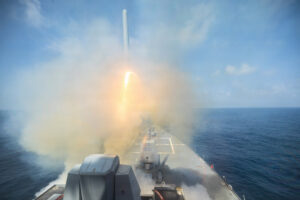
Early accounts describe a multi-vector engagement involving fast attack boats, drones, and missiles. U.S. forces are said to have responded with layered defenses — from 5-inch naval guns and CIWS systems to small arms fire and air support, including Apache helicopters.
The ships were not struck, and no confirmed damage was reported despite competing claims from Iranian sources.
While full operational details have not been publicly released, the strikes mark one of the most direct actions taken by the U.S. against Iranian territory-linked assets in the current crisis.
As Fox News reports:
The U.S. military also struck Iran’s Bandar Kargan naval checkpoint in Minab, officials confirmed.
Following reports of strikes in Minab, Iran, @JenGriffinFNC has said that a senior U.S. official has confirmed to her that U.S. forces also just conducted a strike Iran’s Bandar Kargan naval checkpoint. pic.twitter.com/iSXSQ66Xat
— OSINTdefender (@sentdefender) May 7, 2026
The development came as Iran’s state-run IRNA news agency also reported air defense activity in western Tehran.
Two other loud explosions were heard Thursday night, while eyewitnesses told Iran International they heard multiple blasts in Chitgar.
Iran’s state-run Mehr News Agency also reported attacks and exchanges of fire across Iran’s southern Hormozgan province near Bandar Abbas, Bandar Khamir, Sirik and Qeshm Island, according to reports.
What Was Targeted
Early reporting indicates the strikes focused on port infrastructure tied to shipping and naval logistics. Bandar Abbas, in particular, is a strategic hub for both commercial exports and Iranian naval operations in the Persian Gulf.
The strikes come amid growing concerns that the confrontation between Washington and Tehran is shifting back toward open conflict, following reports of a temporary one-page memorandum earlier Thursday outlining a possible pause in hostilities and a framework to end the war.
The United States and Iran are edging toward a temporary agreement to halt their war, sources and officials said, with Tehran reviewing a proposal that would stop the fighting but leave the most contentious issues unresolved https://t.co/osiaHZ7svR pic.twitter.com/gCPymPBQek
— Reuters (@Reuters) May 7, 2026
Key details reported so far:
- Targets included port facilities near Bandar Abbas and Qeshm Island
- Infrastructure reportedly tied to shipping and naval logistics
- The operation follows weeks of escalating maritime confrontations in the Gulf
Information is still trickling in from the region.
According to a report from CBS, citing U.S. officials, the USS Truxtun (DDG 103) and the USS Mason (DDG 87) came under intense attack from Iranian fast attack boats, drones, and missiles in an engagement that has been characterized as far fiercer than the past engagement the two… pic.twitter.com/UmGNhToc60
— OSINTdefender (@sentdefender) May 7, 2026
Footage of US strike target Bandar Abbas in South Iran. pic.twitter.com/zaSOEYfZfo
— Osint World (@OsiOsint1) May 7, 2026
Since I’m always late to the party, here’s a quick recap of what happened:
— OSINTWarfare (@OSINTWarfare) May 7, 2026
• Two hostile drones were reportedly shot down over Bandar Abbas and Qeshm Island, while airstrikes also targeted both locations.
• U.S. Navy vessels allegedly attempted to seize or attack two Iranian… pic.twitter.com/1uFoY4TaCG
A Rapidly Expanding Gulf Crisis
The strikes come against the backdrop of an already volatile situation in the Strait of Hormuz, where U.S. and Iranian forces have repeatedly clashed in recent days.
Tensions have included naval intercepts, drone and missile threats, and disruptions to commercial shipping lanes. The Strait remains one of the most strategically sensitive waterways in the world.
Even limited disruptions in the region tend to have immediate global economic consequences, particularly in energy markets.
Why These Ports Matter
Ports like Bandar Abbas are central to Iran’s ability to move both commercial goods and military-linked shipments. They also serve as staging points for the Iranian Revolutionary Guard Corps’ naval operations.
Striking these locations signals more than symbolic pressure. It directly impacts Iran’s logistics capacity and its ability to sustain operations in the Gulf.
The broader concern among analysts is that this cycle of escalation is accelerating.
This is a breaking news story. Please check back for updates.
READ NEXT: Senator’s Remarks In Child Victim Case Draw Widespread Outcry