Pentagon Considers “Dark Eagle” for First Combat Use
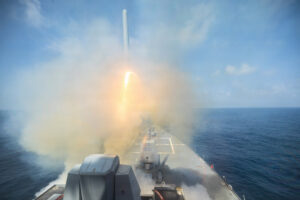
The United States is moving closer to deploying its long-range hypersonic missile system — known as “Dark Eagle” — to the Middle East for potential use against Iran, marking what could be the weapon’s first operational deployment.
U.S. Central Command has reportedly requested the system to target Iranian missile launchers that have been moved deeper inside the country, beyond the reach of current U.S. precision weapons.
What Makes Hypersonic Weapons Different
The Dark Eagle system represents a new class of weapons capable of:
- Traveling at speeds above Mach 5 (five times the speed of sound)
- Maneuvering mid-flight, making them extremely difficult to intercept
- Striking targets at distances of roughly 1,700-2,700 kilometers
As Business Insider reports, these capabilities allow the U.S. to hit deep, hardened targets that conventional missiles cannot reach:
Dark Eagle, as the Army’s long-delayed Long Range Hypersonic Missile is known, has been a priority system for the Army to defeat all existing air defenses. Its potential deployment to the Middle East was floated amid stalled negotiations between the US and Iran, the ongoing blockade and closure of the Strait of Hormuz, and the US’ continued military presence in the region should fighting continue.
Bloomberg reports that U.S. Central Command has requested deployment of the Army’s Long-Range Hypersonic Weapon (LRHW), known as Dark Eagle, to the Middle East for possible use against Iran.
— Visegrád 24 (@visegrad24) May 1, 2026
Dark Eagle would provide longer-range strike options as Iran has moved ballistic… pic.twitter.com/QSpz0R3q3D
Dark Eagle could give US forces a weapon to hit Iranian targets at long distances beyond weapons like the Army’s Precision Strike Missile, but it doesn’t add new capabilities to the current war, given that the US and Israel have crippled Iran’s air defenses — the kind of systems Dark Eagle was built to evade.
🚨 BREAKING: U.S. CENTCOM Commander just BRIEFED President Trump about a “FINAL BLOW” to Iran 🚨
— Jesse Watters (@JesseBWatters) May 1, 2026
Hypersonic DARK EAGLE MISSILES, bombers SURGING, carriers STACKED 🔥
POTUS says “They’re sitting in a CAVE. THEY WANT A DEAL… BADLY” 💣
24 HOURS before the CLOCK EXPIRES! 😳 pic.twitter.com/QnNW4RdMSR
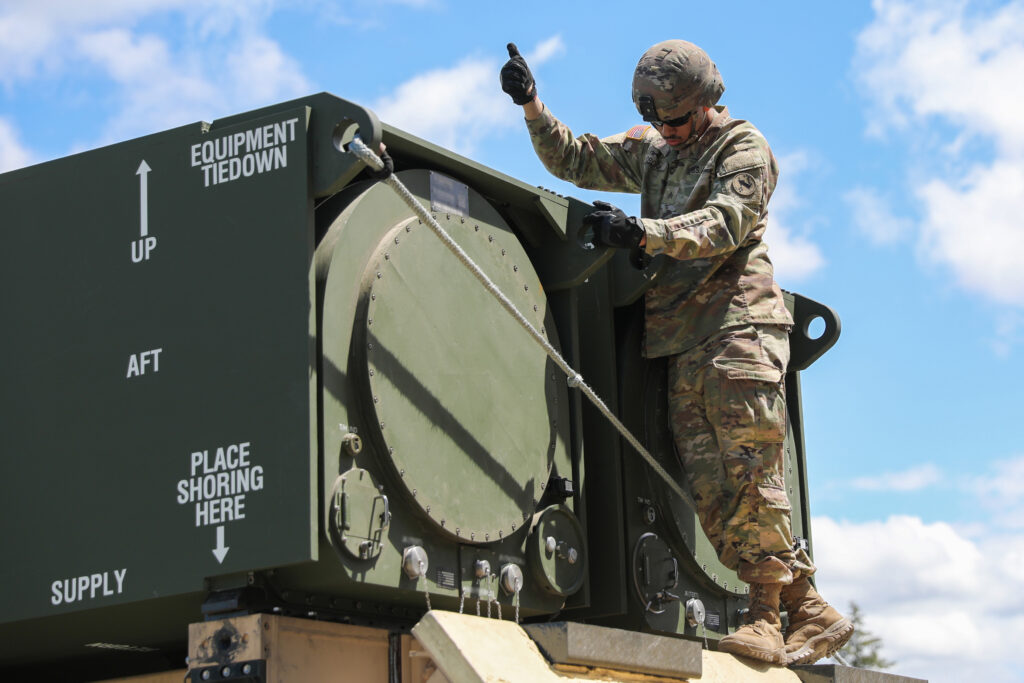
Dark Eagle is deployed via a truck that sets up a transport-erector launcher carrying the missile. What makes its yet-to-be-seen capabilities potentially a generation beyond ballistic missiles is its ability to maneuver towards its target. Existing air defenses rely on the prediction of a projectile’s path, but the Dark Eagle, if it works, can scramble that by using control surfaces like fins to change its movement, similar to a jet maneuvering to avoid incoming missiles at many times the speed.
The Pentagon has said Dark Eagle is a critical capability for engaging enemy high-value and time-sensitive targets, and this maneuverability would make it difficult to intercept in flight. The US, China, and Russia are in a race to develop their own hypersonic missiles. US and Russian developments were delayed by the now-shuttered Intermediate-Range Nuclear Forces Treaty, which prohibited the use and development of ground-launched ballistic and cruise missiles with ranges of between 500 kilometers to 5,500 kilometers.
Despite its advanced capabilities, the Dark Eagle program has faced delays and only reached initial operational capability last month, raising questions about its readiness for real-world use.
Fewer than a dozen missiles are believed to exist, underscoring the experimental nature of the deployment.
While the Army has begun delivering equipment to units, Pentagon testers have noted a lack of sufficient data to fully evaluate Dark Eagle’s combat effectiveness, with a more complete assessment not expected until early 2027.
READ NEXT: The Subtle Obstacle American Technology Can’t Ignore